Winchelsea Vaults
On 1st August, Ghost, Skyframe, Shades and Jo went off on an expedition to explore the underground vaults below the remarkably strange and peculiar town of Winchelsea.
This incredible little town is a mass of peculiarities and incongruities with some stunningly beautiful wine cellars (vaults) underneath. But why peculiar? Well, there are several major points about the place that makes it very unusual.
First is the way that the entire town is arranged to a grid-square format. This means that, quite unlike anywhere else in the UK, Winchelsea looks more like the layout of somewhere in New York! It also means that most of the roads have numbers rather than names.
Secondly, it is peculiar in that it is almost impossible to age any of the buildings just by looking at them! Some will look blatently Victorian in appearence, but with odd timber framed sections peeping out that hint at a far older building hiding beneath. Similarly, there are what appear to be Georgian timber clad buildings.... but looking carefully through the windows reveals something a lot older hiding underneath! Curious...
Winchelsea was originally a large and particularly important port. The town as it exists today is the second incarnation of the town, the first one was completely destroyed in a storm. The main import at Winchelsea was wine & mead from Gascony in France and Iberia, and this is the reason that the vaults have come about: wine storage. An important factor in Winchelsea's role was it's very convenient location at the eastern end of the English Channel, where the distance to France is the least. It was also well placed to allow for wine to be transferred to other vessels for onwards journeys to London, Sandwich and Southampton, amongst other important locations in Southern England.
It has been estimated that the amount of wine imported into Winchelsea at its peak in 1301 would have needed the ongoing use of 70 cellars. In total there are 58 known vaults under Winchelsea, ranging in size from 25m/sq up to 126m/sq. The most recent vault was found under the school in Friars Road. Most of the vaults date from the 1300's but a few appear to have been built in the 15th century. They are all situated in the North-eastern side of the town, nearest to where the river would have been (it has long since silted up and now appears to be a large, flat area of immensely fertile farmland!!)
The (legitimate) tour we were on today took us to 3 of the 33 accessible vaults.
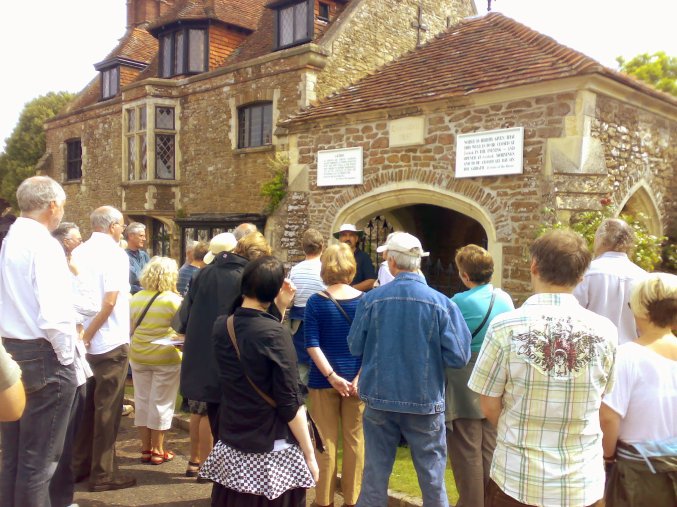
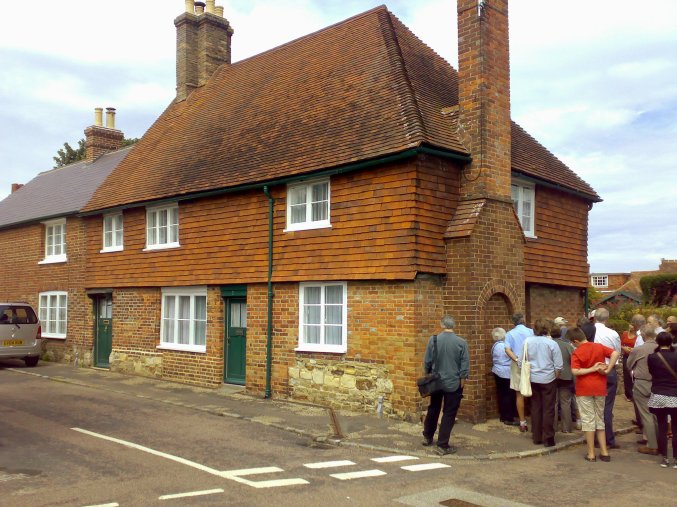
ABOVE & BELOW: This building was originally the town's armoury and (like most of the buildings in this insane place) is totally all over the place. The facade looks really old but was built in the turn of the century, yet the main bulk of the building beneath the facade is actually very old indeed, dating from around 1300. The smaller building on the right is the town's well. The fact that the whole town appeared to drink very little other than wine gives some indication as to the quality of the water.
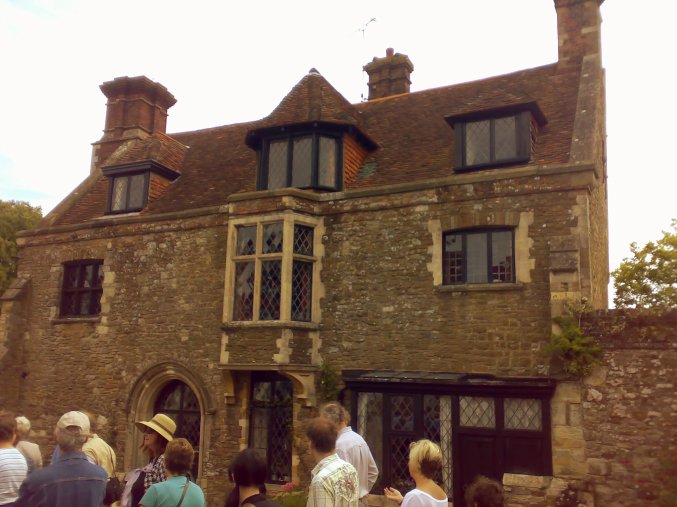
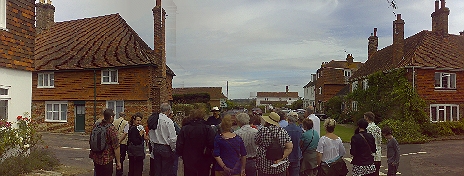
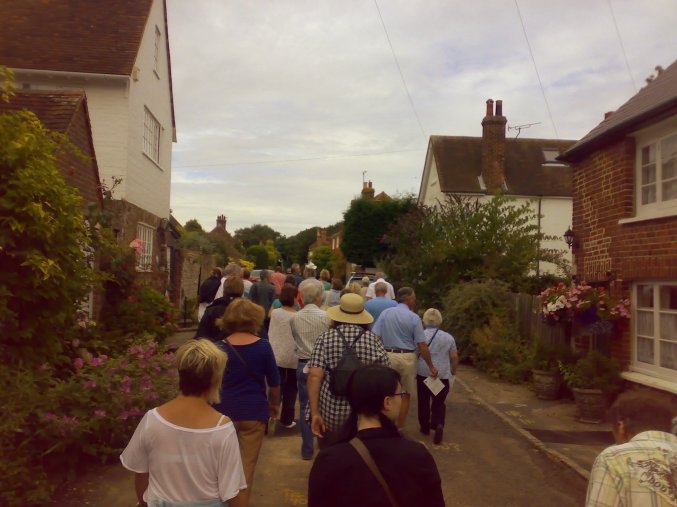
ABOVE & BELOW: After an introduction to the town and it's history, the group moved on towards the first of the 3 vaults in the northeastern part of the town. There were a good 30 people in the group and Skyframe and I weren't sure everyone was going to fit into these vaults! Mind you, if there was any kind of problem like that, they probably wouldn't have advertised so many places online...
****************************************************************************
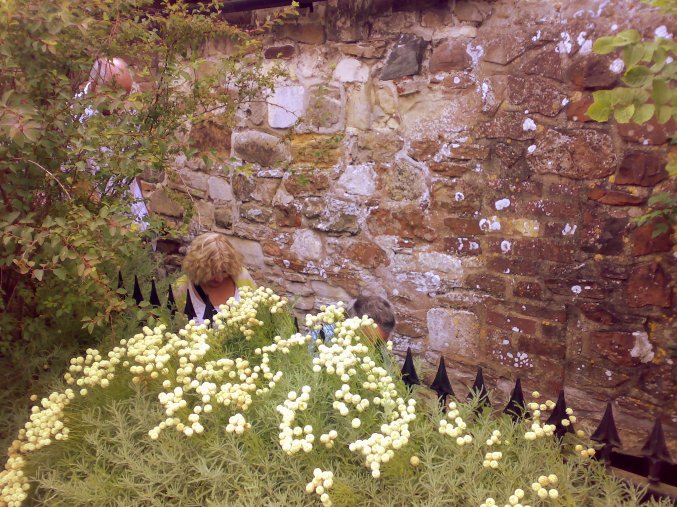
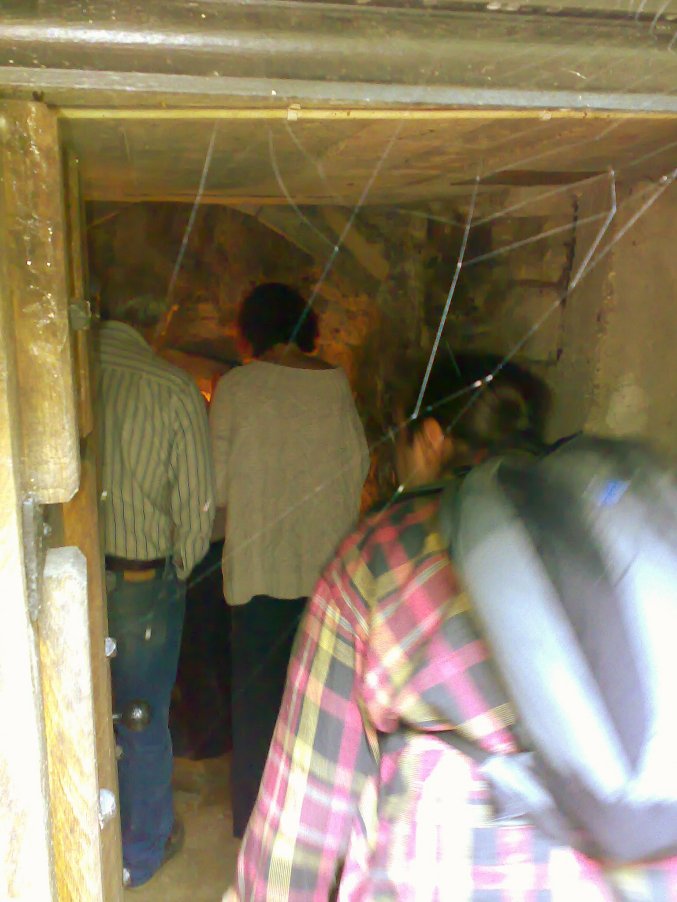
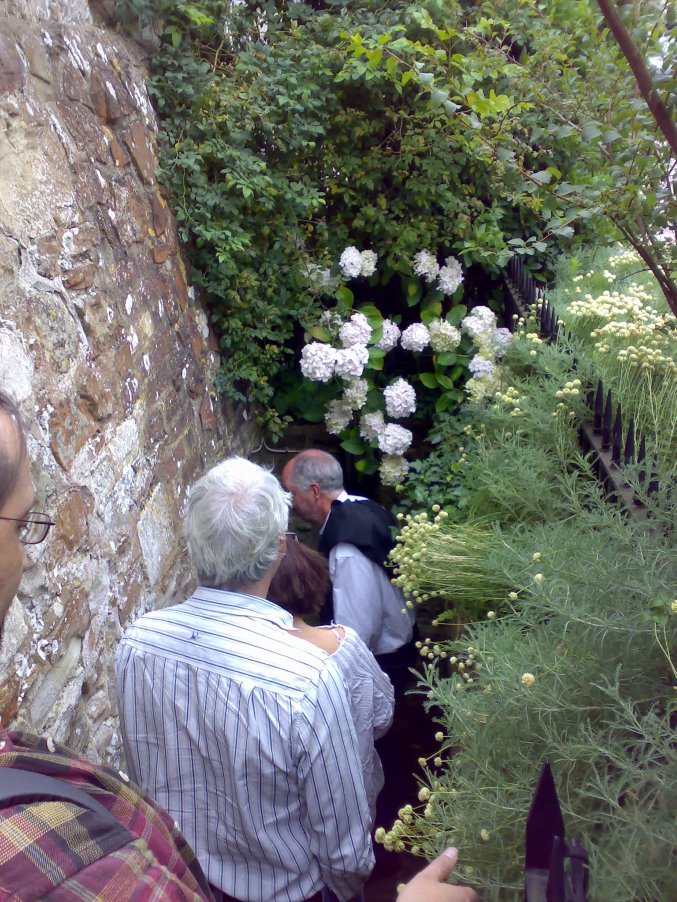
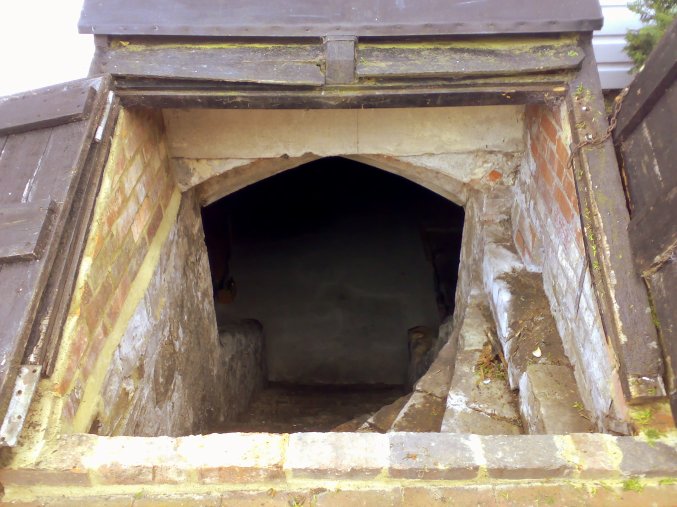
CLOCKWISE FROM TOP LEFT: This is the enterance to the first vault: blink and you'd miss it! All of the vaults are at the front of the property's plot and their enterances were originally direct from the street rather than from within the boundaries of the buildings above them.
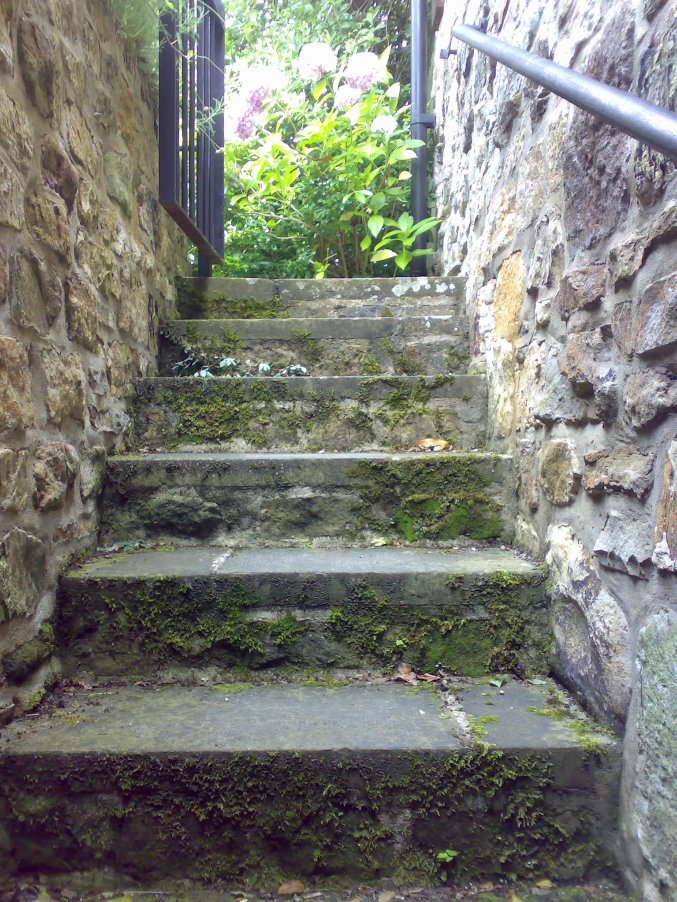
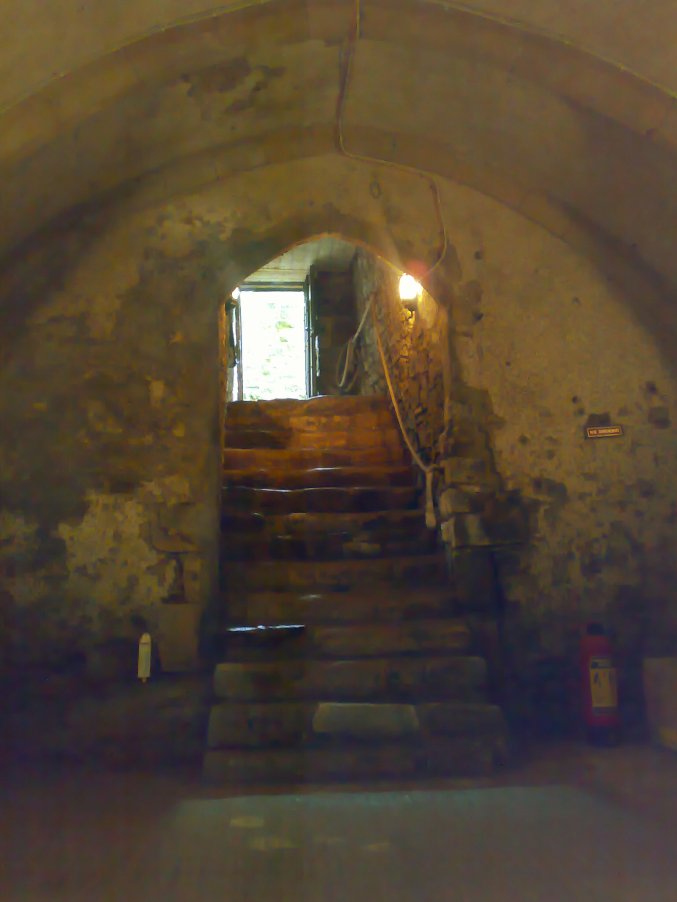
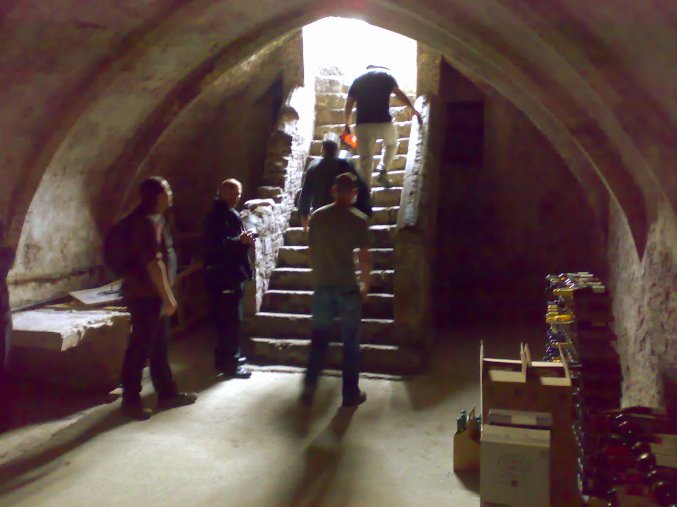
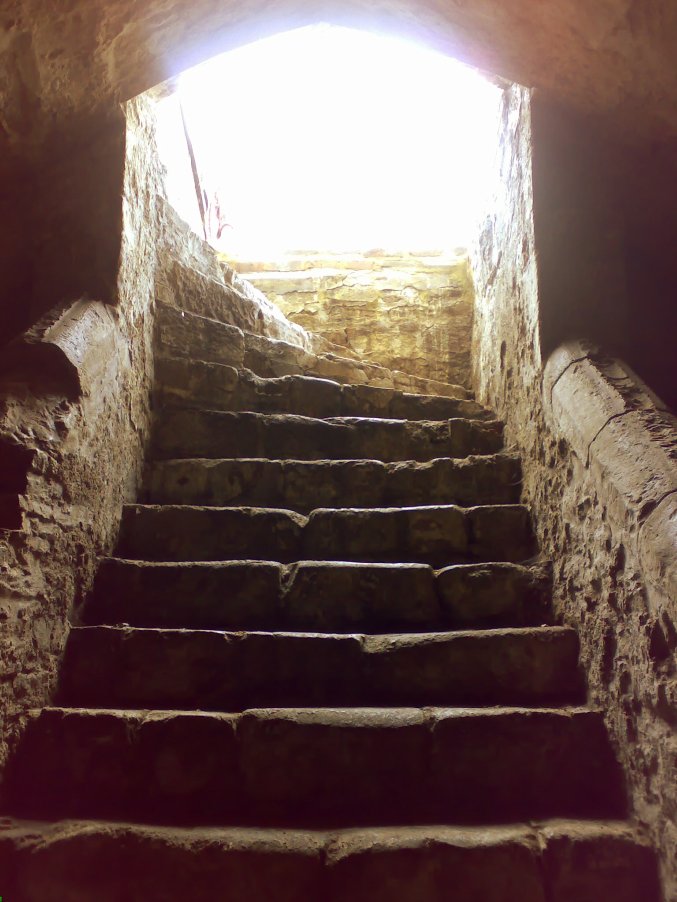
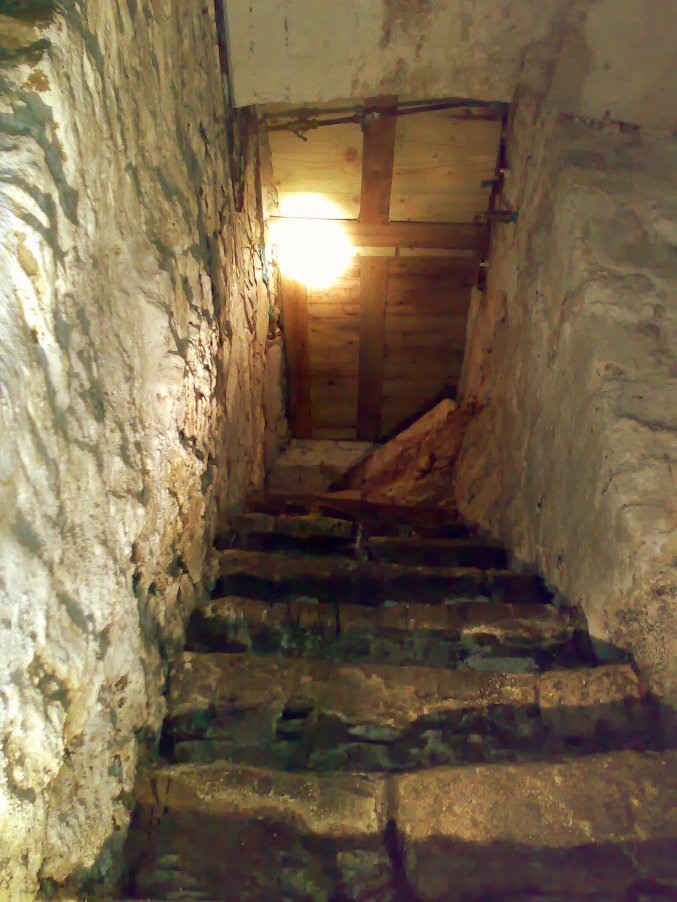
BELOW: The vaults abutting the street are all entered down straightflights of steps, typically between 4ft and 5ft 2 ins in width. In at least 19 of the surviving vaults, the stairs to the street are the only way in.
BELOW: The end walls of most vaults are straight-jointed to the side walls and this reveals the sequence of their construction: side walls came first, then the ceiling, then the end walls were constructed last.
The ceilings of the vaults without windows (as seen here) were lined with wooden slats which were sprung between grooves in the outer curve of the vault's stone ribs. The ribs would have been built first, then the wodden slats put in and the mortar placed on top. Then stone slabs were placed into the mortar from either side until they met at a "key" in the middle of the arch span, similar to the construction of a brick arch. As there are no wooden slabs present in the current day (some 700 years after construction in some cases!!) it isn't clear if the wooden slats were removed once the mortar had set or left in place.
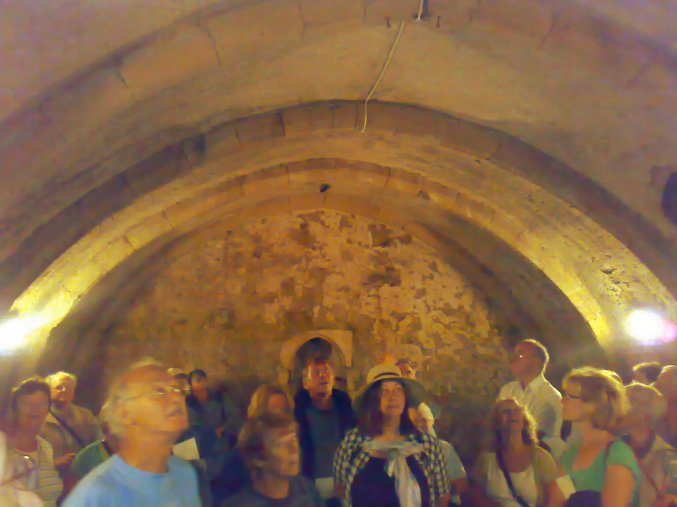
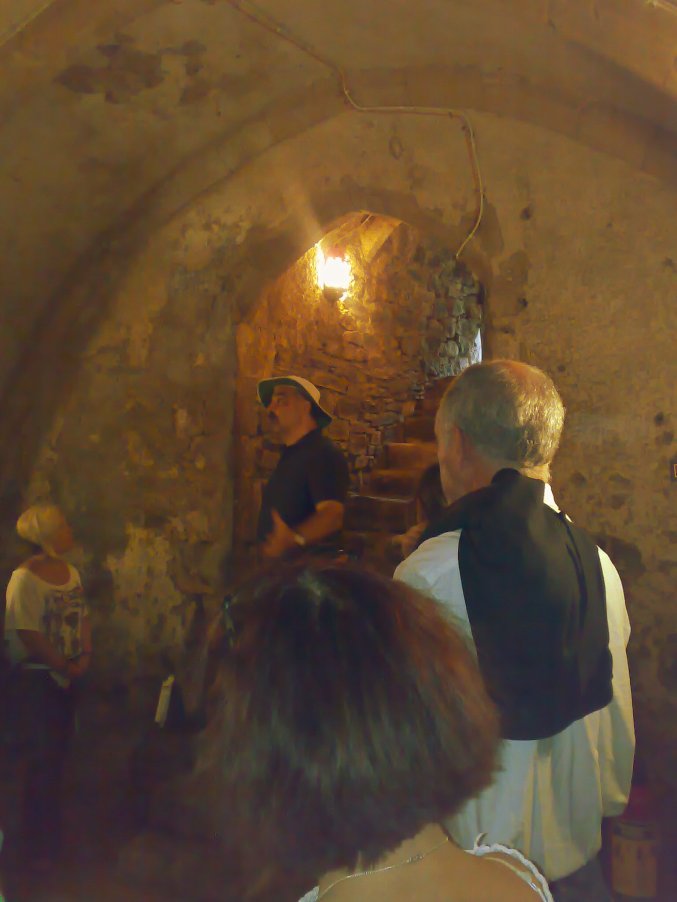
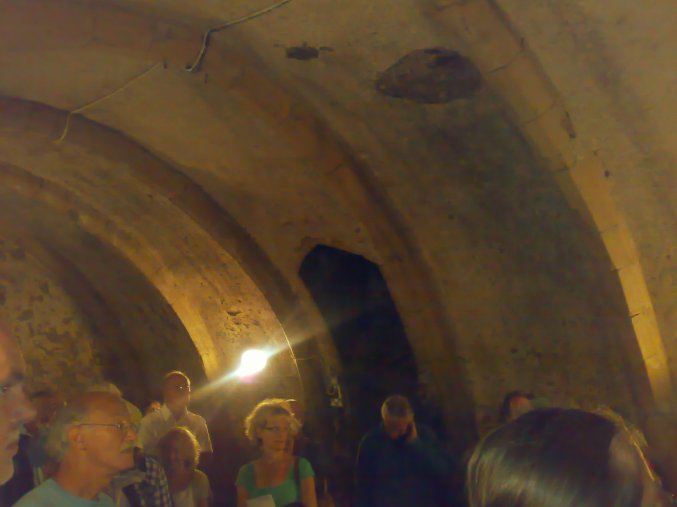
TOP< LEFT & RIGHT: The walls of the vaults are built up from slabs of Tilgate Stone which is laid in rough courses. The faced surface is just a rough cement render apart from those withing vaults with windows, where the walls were quite highly decorated.
Some of the arches are not quite true and look rough: it has been suggested that in some instances, the arches are made from stone salvaged from the original village.The ribs are not entirely load bearing and a lot of vaults have proven to be self-supportingwhere their ribs have collapsed!
BELOW: The main enterances to the vaults all lead directly onto the street and not into the confines of the property above them. This indicates that the vaults were built primarily for commercial purposes, as the business area of a property at this time is typically kept seperate from domestic parts of the building. It is worth noting that access to the vaults is independent from the dwellings above, so it is possible (and quite feasible) that the vaults were not necessarily used by the people who lived in the houses up above.
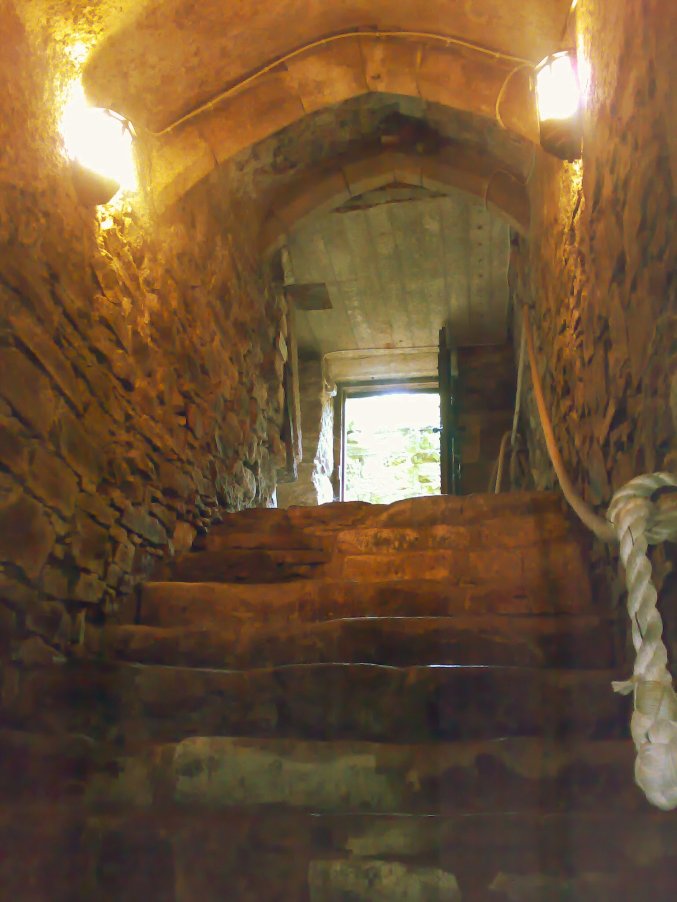
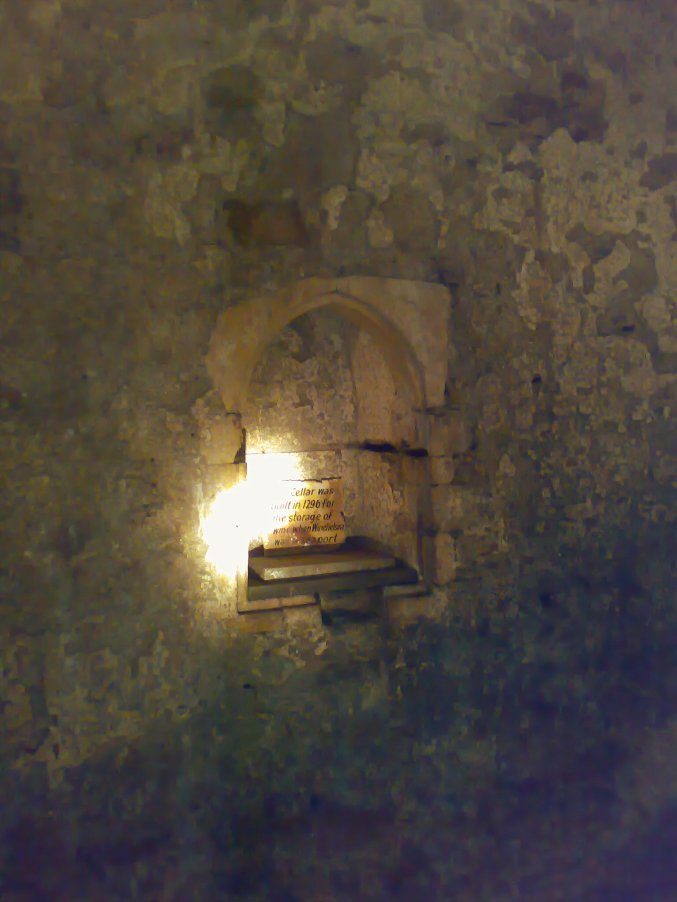
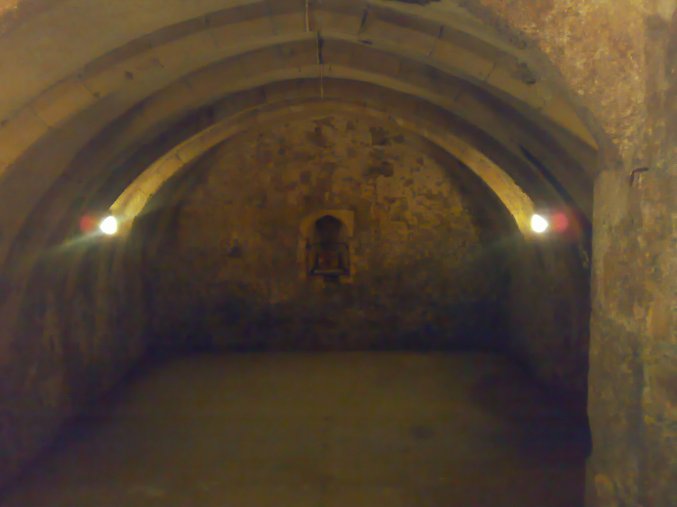
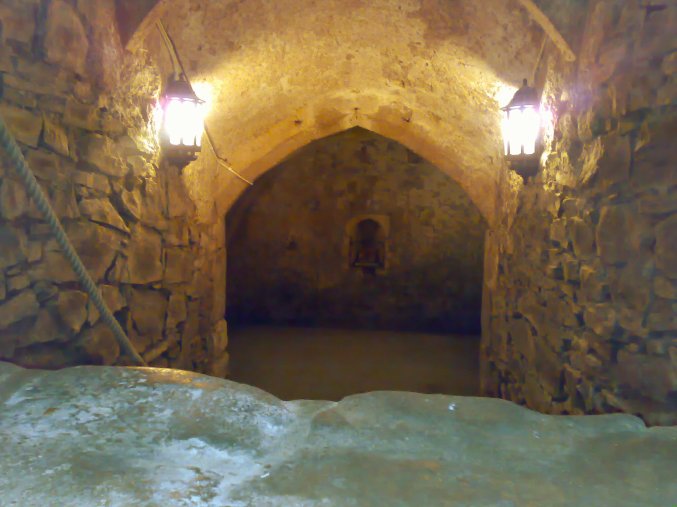
BELOW LEFT: About half of the vaults have a small cupboard (or cupboards) at the back of them called "Aumbries". These were recessed into the wall and would have had doors fitted to them, giving the appearence and functionality of a medieval safe. In some of the vaults, they are positioned in or around the front or rear staircase.
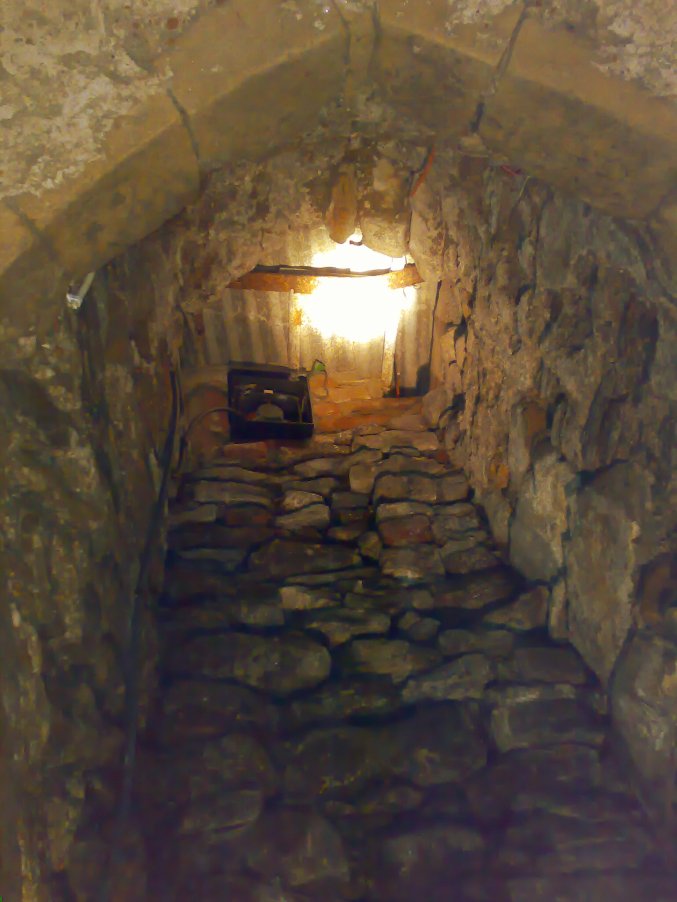
BELOW RIGHT: Sometimes the vaults have odd shafts in the ceilings. Occasionally these could be a kind of "serving hatch" arrangement leading to the room above. There are known instances elsewhere of fireplaces in some larger vaults. The one seen here was possibly for ventilation.
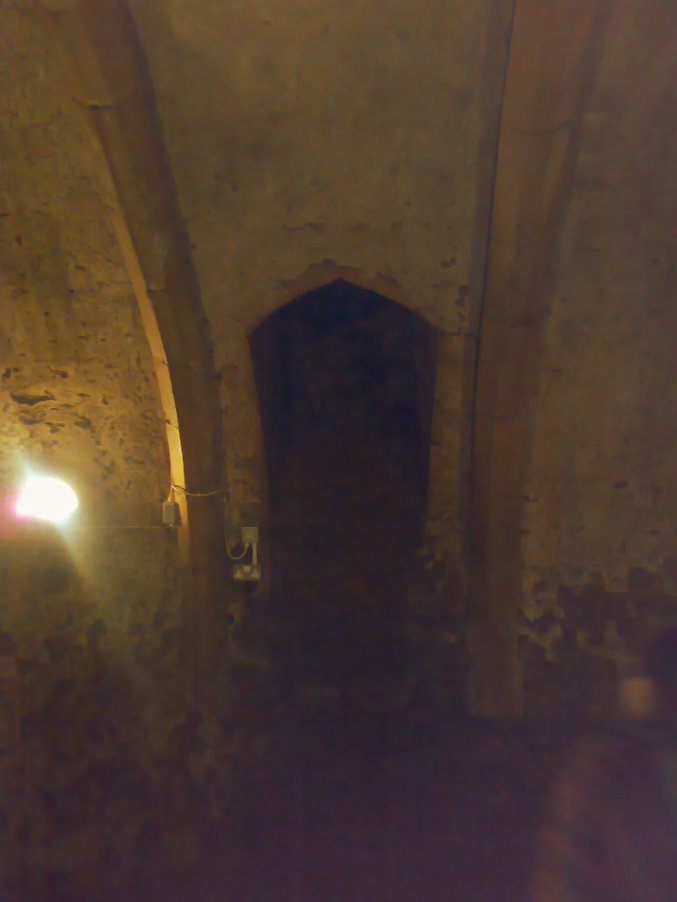
BELOW: Bricked up or removed window / light well: About two thirds of the vaults would have had windows set into the front wall (occasionally a side wall if it was on a corner plot) and they would have had very steep sills as seen in the picture below. A lot of the vaults would have just relied on natural light from the doorway to illuminate them. This was alright when the vault was a single room, but in the case of the 3rd vault we saw, the light quickly faded after the first room and was virtually non-existant by the third room in, which would have made them quite spooky.
BELOW: The vaults are incredibly secure, being patrolled by a 7 foot tall man-eating rubbish sack... or it could just be Rick stooping to get under the low doorframe, not that Rick has any resemblance to a 7 foot tall rubbish sack. Right, I'll shut up now.
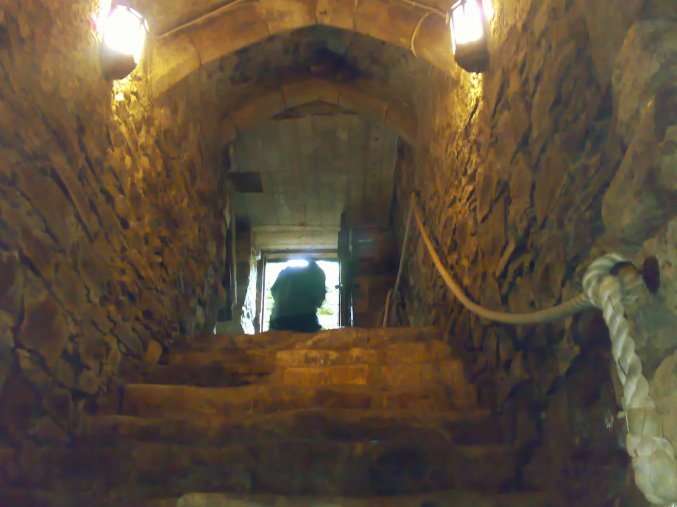
BELOW: The floors of the vaults were usually made of compacted earth or slabs of Tilgate Stone, as in the construction of the walls. In some vaults, the floor has been dug out to the level where the stone is naturally occurent as strata (ie: there already - very lazy!)
It is possible that there were quarry pits already dug out in the north-east side of the town and these may have pre-dated the town. They could have been used to make the best possible use of the land.
****************************************************************************
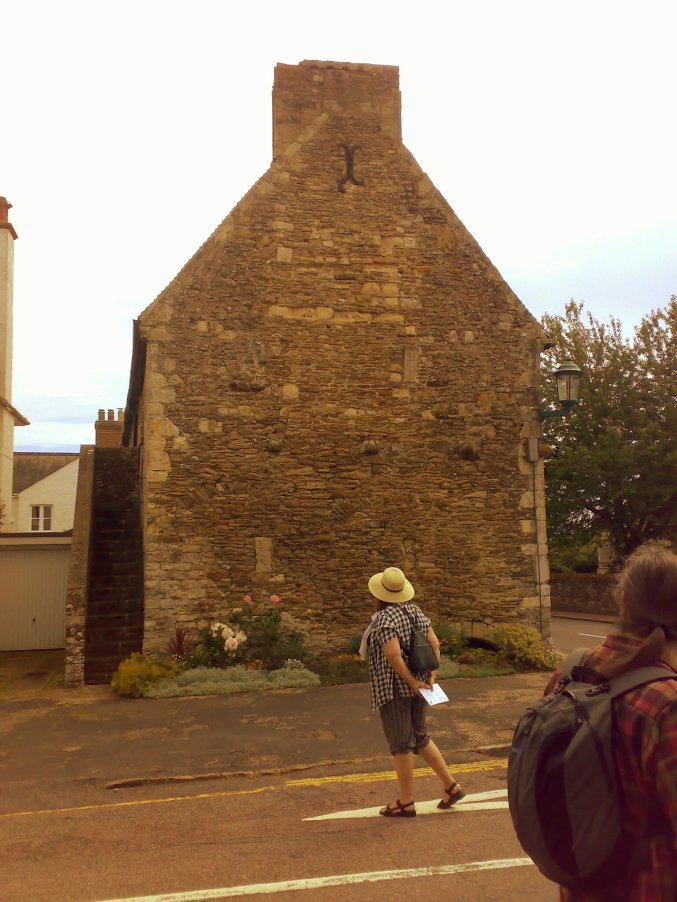
ABOVE: As I've mentioned elsewhere in this part of the website, Winchelsea was a mass of architectural contradictions and this building was no exception. It is a mass of blocked up windows and doorways, all in stone of course. There were so many different types and sizes of stone used, sometimes rendered also, that the place looked like a huge patchwork quilt. As the requirements of the building have changed, the walls are as readable as a notebook. Incredible.
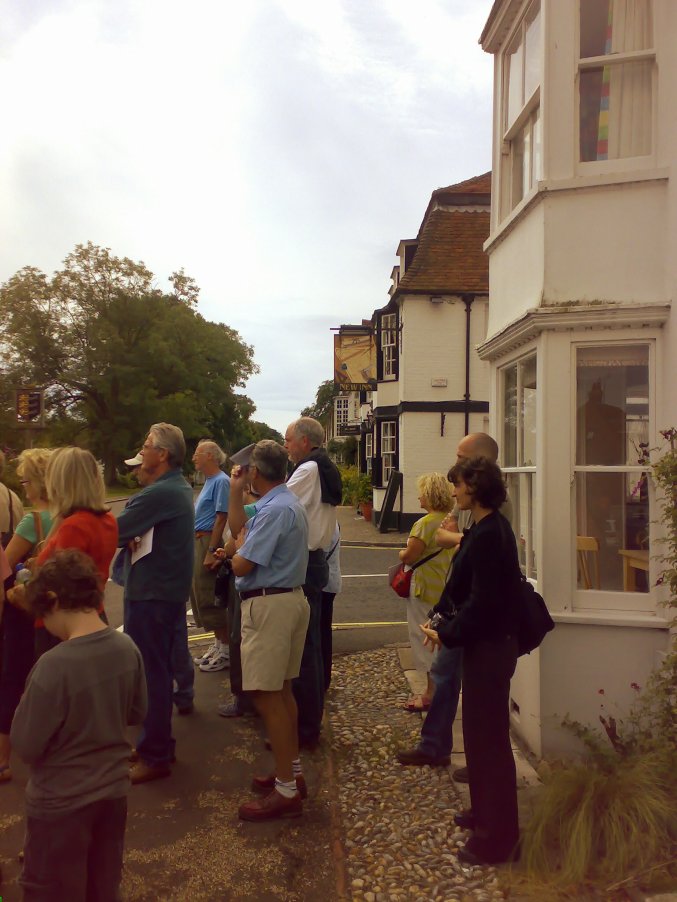
ABOVE: It's not often that Skyframe can stand near a pub on a day off, but the commentary the guide provided was fascinating. Jo and Skyframe paid full attention and could remember everything he said, whereas the dunce behind the camera forgot it all as he spent the whole time snapping away instead of paying attention... hence most of the comments here coming out of the guide book.
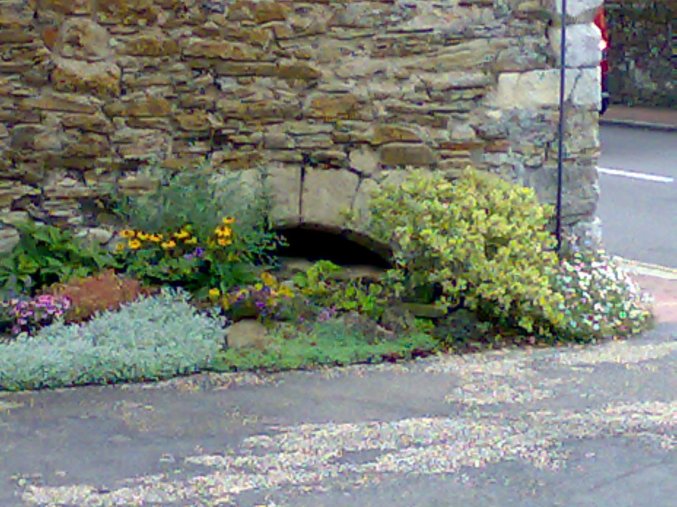
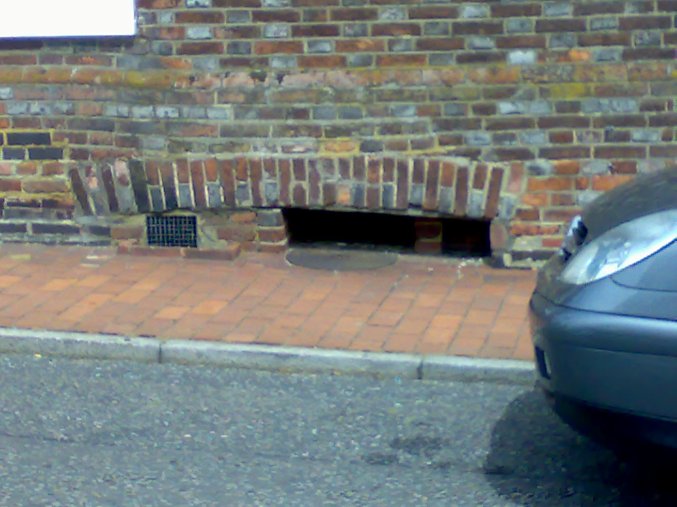
ABOVE & BELOW: Everywhere we looked there was evidence of more vaults, whether unused or intentionally blocked off. The Heads (or tops of the visible enterances) to the vaults appear above street level in the lower facade of the building above it. Suggestions that the street level was a lot lower at the time of construction than it is today can be discounted, as the visible access to the vaults has remained the same.
****************************************************************************
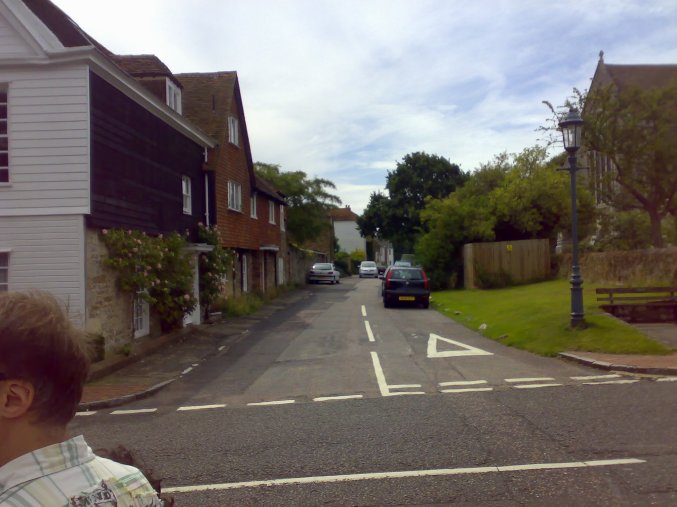
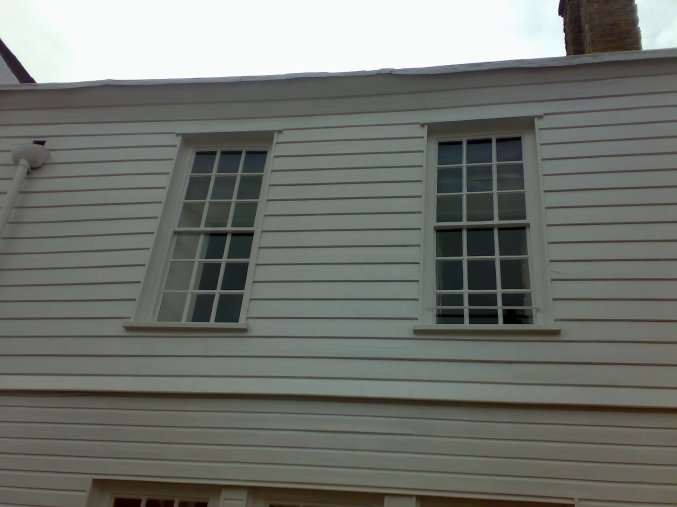
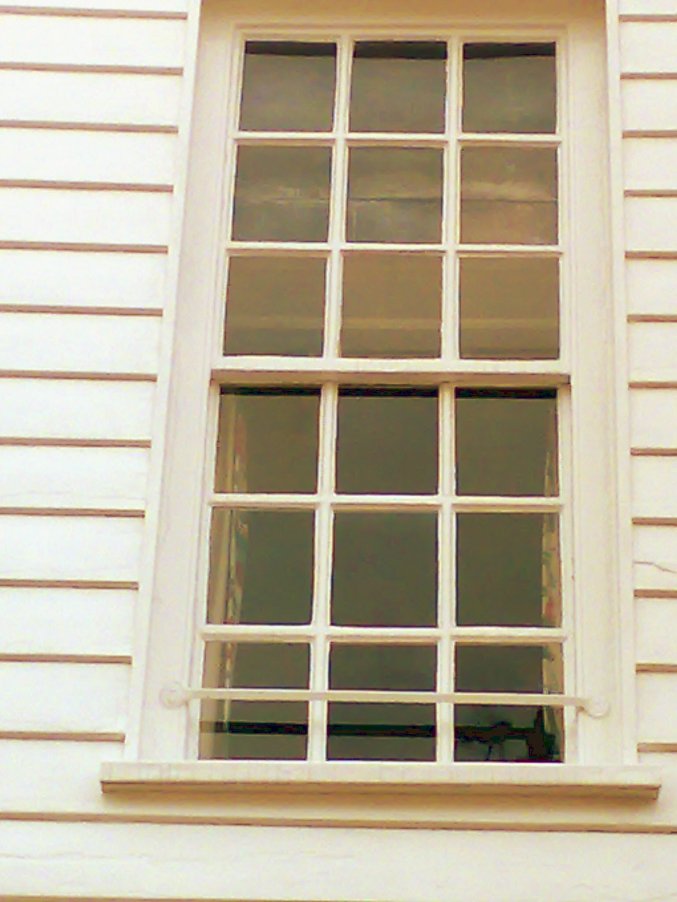
CLOCKWISE FROM TOP LEFT: What's goin' on ear, then? The white house on the corner was very interesting, but we had to look carefully to see why. Have a closer look at the windows: the frontage looks Georgian and a casual passer-by would be easily fooled by this need to keep the property compliant with current architectural fashions. However, the windows gave a fantastic glimpse of what lay beneath the fashionable exterior. The photo below shows things most clearly: there is a large wooden beam crossing the top of the window apperture roughly 2 thirds up its height. This is a clear indication of a far, far older building underneath. It would have been quite interesting to see the view from the inside, to gauge how it looked . Our second vault was just underneath here.
****************************************************************************
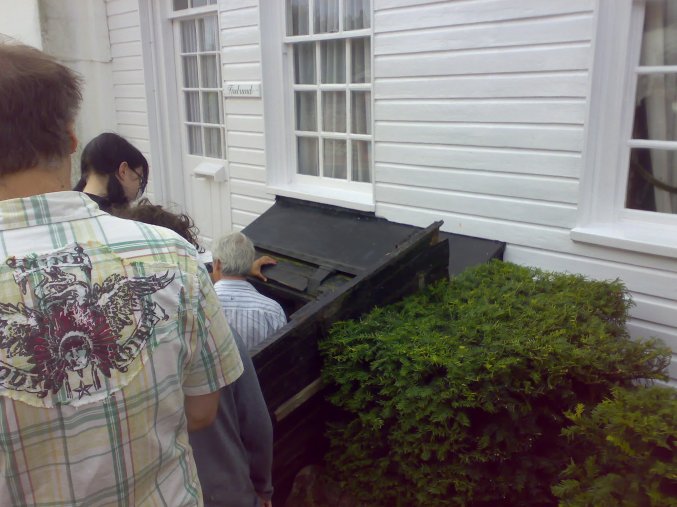
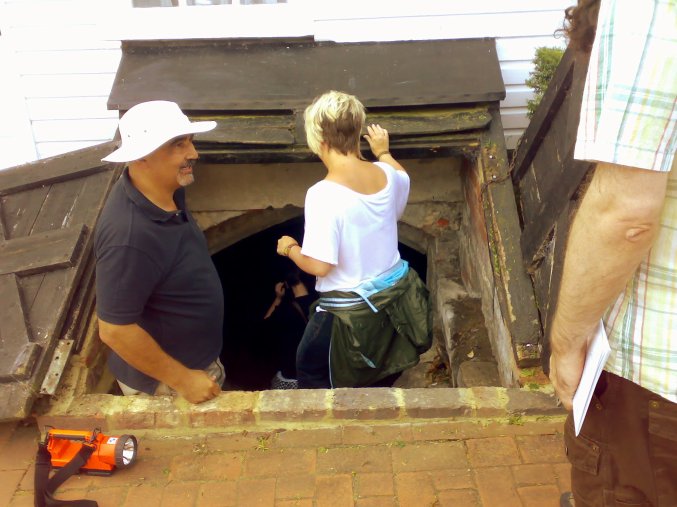
ABOVE & BELOW: This vault was a little more awkward to get into: we had to approach it crabwise from the right, step onto the top step sideways, then walk down the steps diagonally whilst bent almost double. The layout is original and it is thought that smaller barrels and wine casks were the mainstay of the items stored in here.
BELOW: The vaults are still used for wine storage, happily, although not nearly as much in the present day. It must be remembered that water was nowhere near as good as in the present day and so the consumption of wine was more of a necessity at the zenith of Winchelsea's life as a main port.
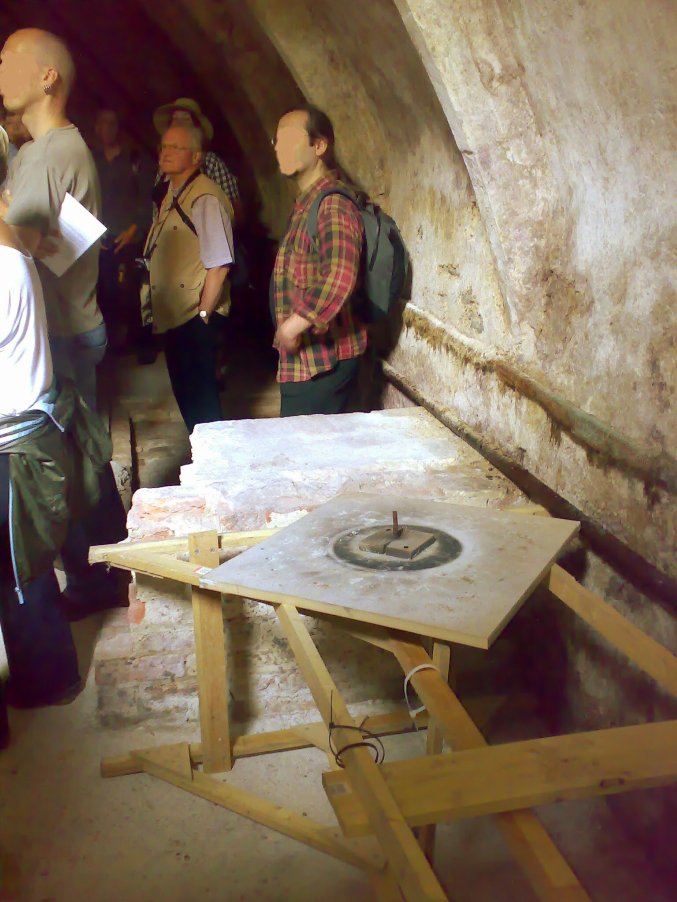
BELOW: This was a nice touch: part of an earlier floor was exposed where the counter behind Rick has been knocked back. In this instance it was brick to a herringbone design. Faces have been edited to protect the not so innocent!
BELOW: Eight of the vaults which survive into the present day have a second smaller staircase leading to the house above. In some instances, the staircase to the rear lead up to a rear courtyard. There are 3 such examples in the town.
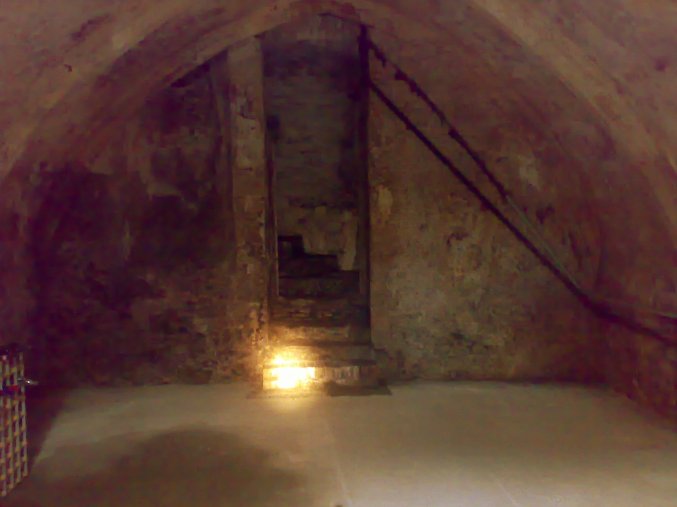
BELOW: Detail shot of the back staircase up to the room above, or possibly the courtyard. In this instant it's been boarded over and probably made into another small room above: a bit of a shame as it would have been an incredible feature to retain.
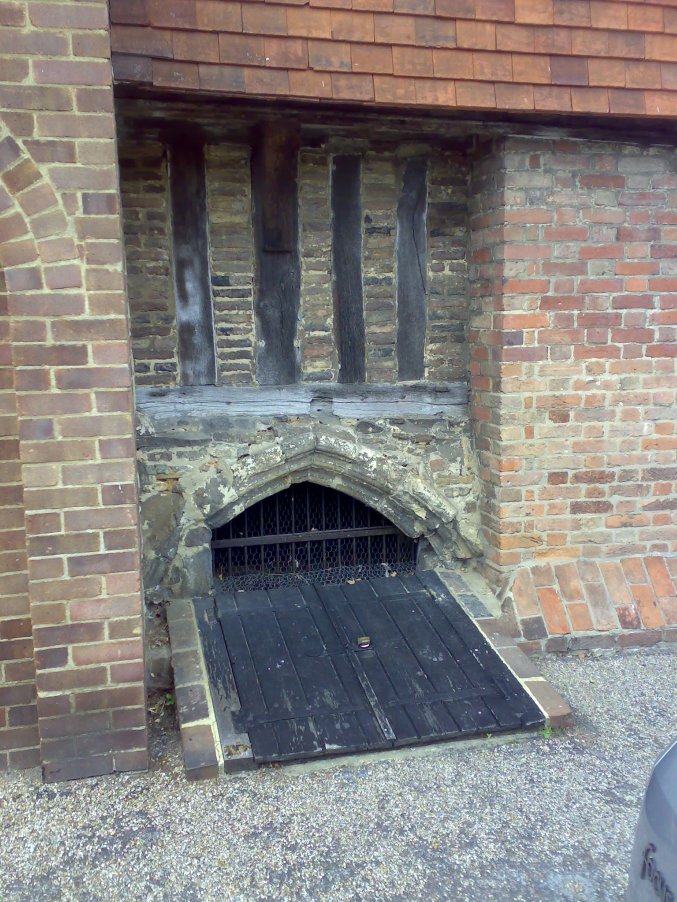
BELOW: In most cases there would have been double wooden doors set into the enterance arch. Originally these would have opened into the vault and would have required quite a lot of room to open fully. This meant that the ground floor of the building above the doorway of the vault would have been raised above the rest of the floor area, resulting in a sort of step along the outer wall of the room. In a lot of cases, the hatches seen at street level in the present day are later additions. It is thought that, originally, there would have been porch-like structures built over the vault enterances to shield them from bad weather.
****************************************************************************
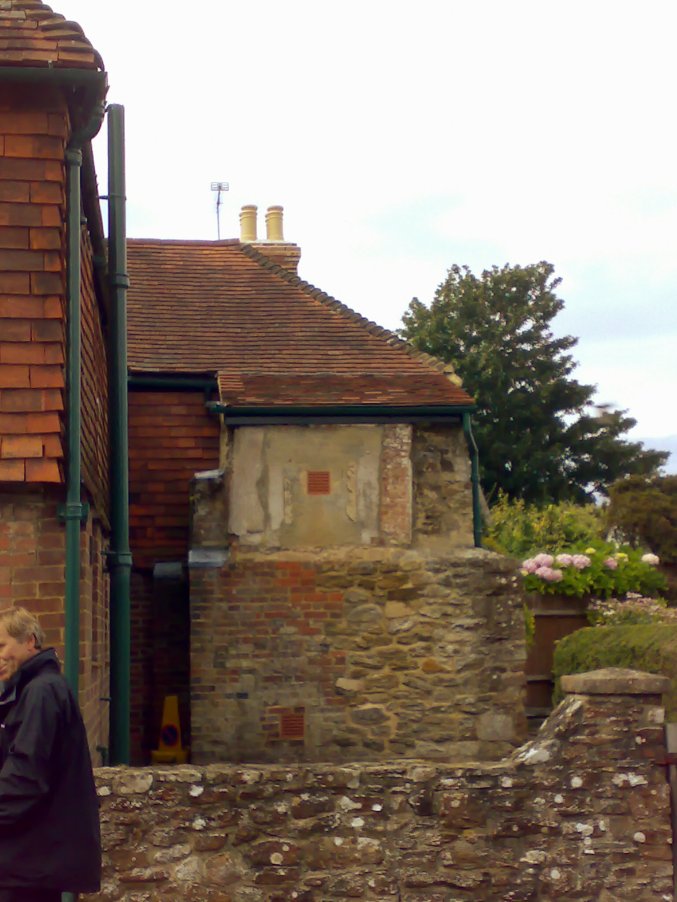
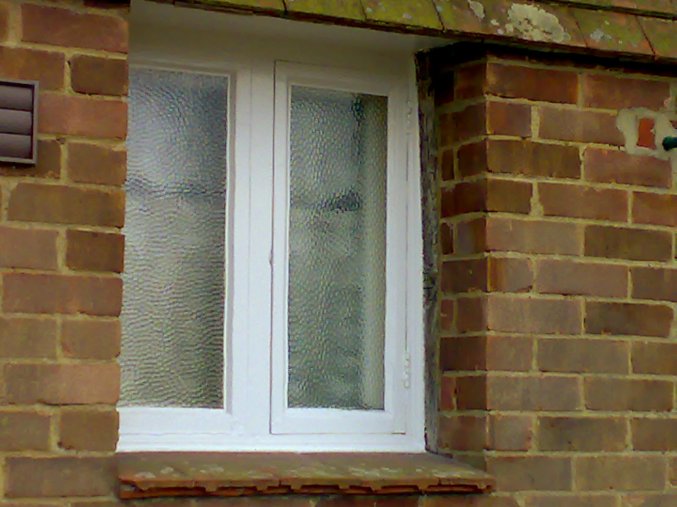
CLOCKWISE FROM LEFT: Another mish mash of architectural features greets us at the house above the third vault. Again, from a distance, this looks like a fairly bog-standard Victorian house, but there are little glimpses of far earlier stonework and timber framework. Note the wooden windowframes just inside the brick aperture above.
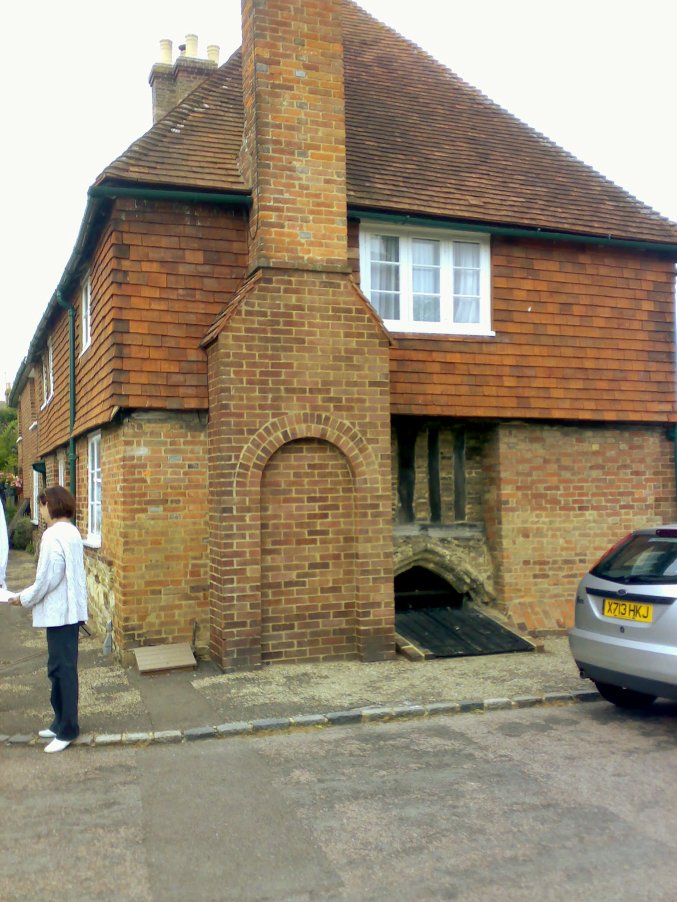
BELOW: Most of the vaults enterances had just simple barred windows at the front, with just a grille. Only one of the vaults had glazed windows and this isn't featured here... The vaults with glazed windows also appear to have been rendered inside and whitewashed, whereas those with just plain grills had no decoration inside and were far more utilitarian in feel. As can be seen from the pictures of the interiors, in most cases the walls were only roughly lined with coarse mortar.
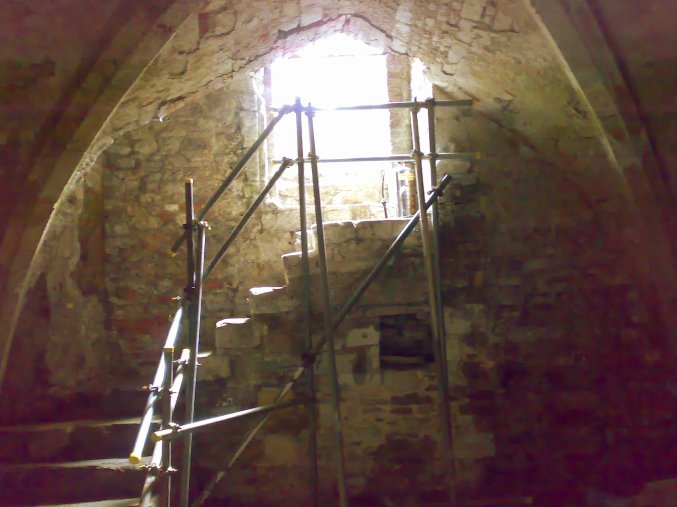
BELOW: This vault differs from the previous 2 as it has more classical (and more commonly seen) diagonal ribs, whereas the others are barrel-vaulted, ie: the ribs are purely between the sides crossing the floor area at 90 degrees.
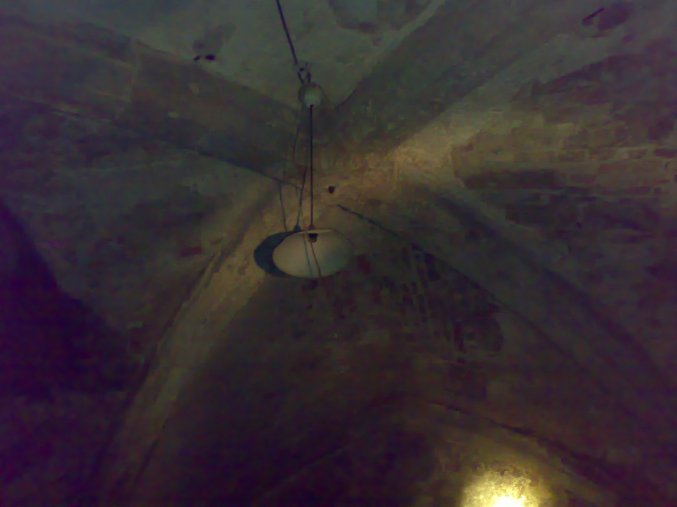
BELOW: The third vault was definitely the prettiest. It has been suggested that some of the vaults were made as pretty as possible in order to facilitate the sale of wine to prestigious establishments around the UK. There are schools of thought that think other luxury items were also stored and displayed in the vaults, such as silk and various exotic spices, but this seems unlikely as the vaults are often very damp. Such suggestions regarding silk date from around the 15th century, long after the collapse of the Winchelsea wine trade.
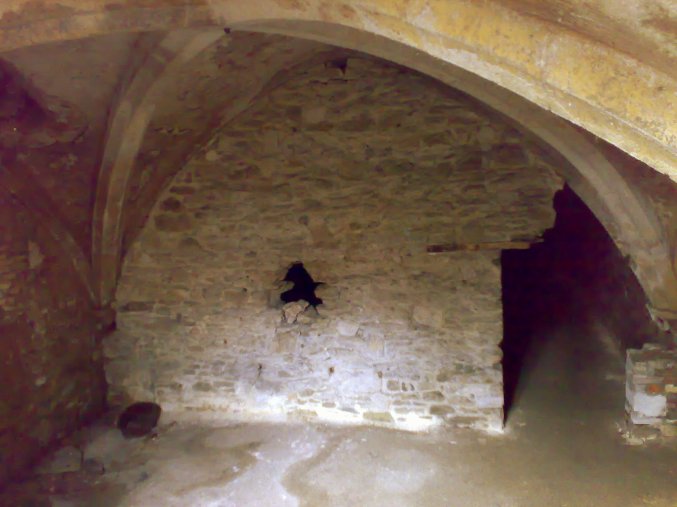
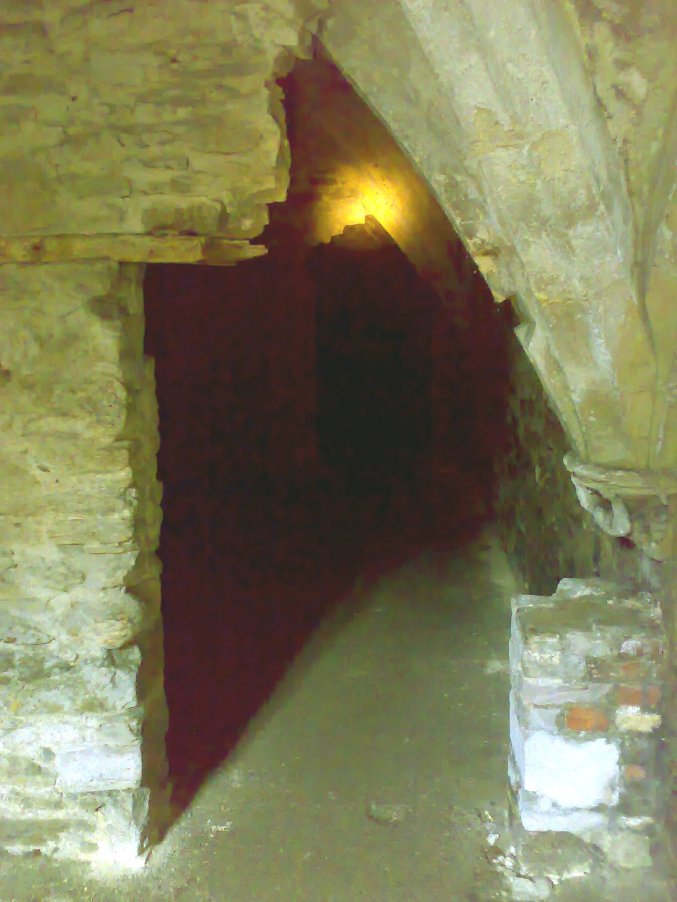
BELOW: The rough dividing wall is a later addition.
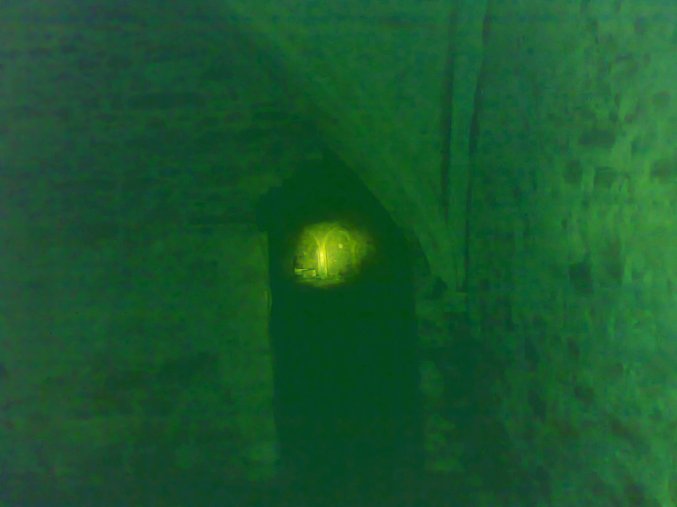
BELOW: Infrared shot of the final of the three sections of the vault. With the later addition of the two dividing walls, very little light gets to the far chamber. The 3 Aumbries are just visible in the back wall, illuminated by the spotlight's corona.
****************************************************************************
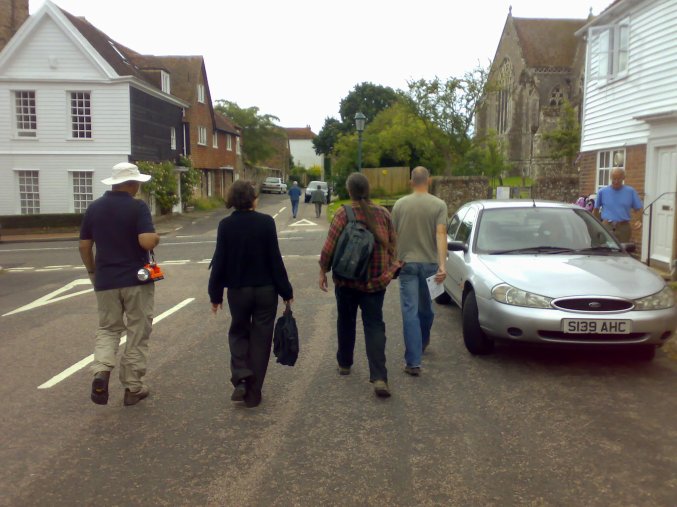
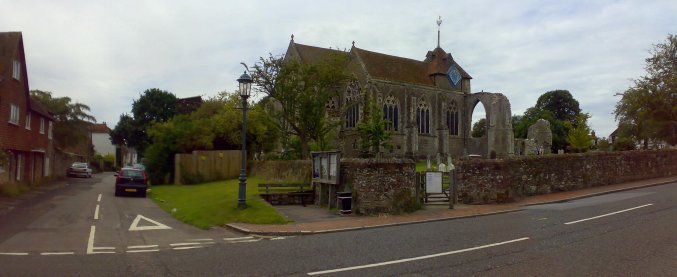
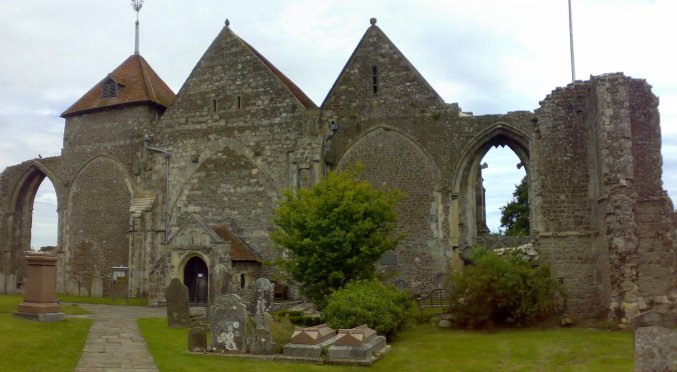
ABOVE & BELOW: After the tour, we had a brief look around the place and found a good spot for our lunch before returning home. The old churchyard proved the perfect spot.