Stonehouse Asylum
Gothic, forbidding and just a little bit austere,
how would the intrepid team get on at
"The Stone"?
HISTORY (as it appears on Wikipaedia):
Stone House Hospital, formerly the City of London Lunatic Asylum, was a hospital and former mental illness treatment facility in Stone, near Dartford, Kent, in the United Kingdom. As of November, 2007 the hospital has been closed, and bids have been taken for its redevelopment to house luxury flats.
Stone House was originally constructed between 1862 and 1866 at the behest of the London Commissioners in Lunacy to provide for pauper lunatics from the London area at a cost of £65,000. The buildings were designed in a Tudor Revival architecture style by James Bunstone Bunning, and the facility accommodated 220 patients.
The asylum grounds, at first 33 acres (130,000 m2) and later expanded to 140 acres (0.57 km2), included a working farm. Additions to the original buildings were made in 1874, 1878, and 1885, including an expanded female wing and a separate hospital building for patients with infectious diseases.
The first medical superintendent of the Asylum was Dr. Octavius
Jepson, who served from the opening of the facility through 1887; on his
death twelve years later, he was buried in the asylum's cemetery.[ He was succeeded by Dr. Ernest White, who served until his retirement
in 1904. The third superintendent was Dr. Robert Hunter Steen, who was
in turn succeeded in 1924 by Dr. William Robinson. Robinson retired in
1942, but due to wartime staff shortages his permanent replacement, Dr.
Hardwick, was not appointed until 1946.
On the takeover by NHS his new title became Physician Superintendent, which brought additional powers and responsibilities. He was succeeded upon his retirement in 1959 by Dr. Cates (1959–1963), who was the last to hold the title, as the NHS decided to delegate day-to-day operations to a chief Consulting Psychiatrist.
After 1892, the asylum was able to take "private" patients (patients whose fees were paid by their families, or from pensions). The influx of private patients resulted in a budget surplus, and enabled expansion and improvements of the asylum's facilities. In 1924 the facility was renamed the City of London Mental Hospital, and in 1948 it was taken over by the new National Health Service and became known as Stone House Hospital. A 1998 assessment by Thames Healthcare suggested that the hospital was not suited for modern healthcare; plans for the hospital's closure were initiated in 2003 by West Kent NHS.
Among its most famous patients was the poet and composer Ivor Gurney, who resided there from 1922 until his death in 1937.
********************
Agents present on first trek: Skyframe, Ghost, Shades & NissanMan.
Agents present on second trek: Ghost & Skyframe.
First, a brief overview of
the first trek to set the scene:
After meeting up in Brighton, we hit the road and via a brief stop off at "H's Cafe", we continued up the A23 to Pease Pottage services, where we met up with our (then) mysterious new team member, known only as "NissanMan". We set off in high spirits and were soon leaving the A23 for the M25 towards the Dartford crossing bridge.
After a quick rekke of the surrounding area, we established the point at which it would be easiest to get in and set about finding our access point. The place is tremendously well secured, being surrounded around it's entire perimeter by a horrible 8 foot tall spikey fence. Eventually we found a point at one extreme end of the site, where the spikey fence abutted to the brick wall and it appeared that it could be done, not easily, but could be done.
And so, teetering dangerously atop a barbed wire clad brick wall with our crown jewels inches from an 8 foot high spikey fence, we made it into the inner perimeter and our adventure began in ernest. We skirted around the back of the building, trying to avoid the plethora of cameras (one of which was trained directly on the place where we had crossed the fence, but the bushes had provided good cover).
After a couple of false starts with fire escapes and underground boiler rooms that didn't go anywhere, it looked as though we would have to continue further around the side of the building, which is where we spotted the security guard and the game was up! So, an hour's driving and 20 minutes of exploring later, we were sat outside the security portacabin chatting with the security guards over a cup of tea.
I've got to hand it to the security guys: the place was insanely well secured and things could have been a lot worse because they had an enormous alsatian in the van with them. The chap took us to the portacabin via the scenic route and pointed out some of the key points of the site, so we did get to see a bit of the place from outside at least. We felt quite sorry for the guards, actually, because they told us they worked 12 hour shifts and I think they were bored shitless and secretly quite glad for something different to do for a change.
After the mission falling flat, we were under no illusion - Stonehouse was completely out of bounds!
....and so to the second attempt.
After our first (spectacularly failed) attempt to get into Stonehouse, we had lain this trek to rest as an impenetrable failure and it took us around 18 months before we even mentioned it again. We were on site for all of 20 minutes before security found us and following an hours drive from headquarters, we just couldn't stand the thought of another failed attempt so far from home.
However, we had recently heard good reports about the old place's descent into redevelopment and redevelopment in our book usually means far easier accessibility. And so, armed to the teeth with torches, cameras and various weapons of mass sneakiness, we made for Dartford with all speed.
This report contains photos from both the first
and second treks.
It's all the same place and if we'd have been successful first time we'd have seen all this anyway.
So there.
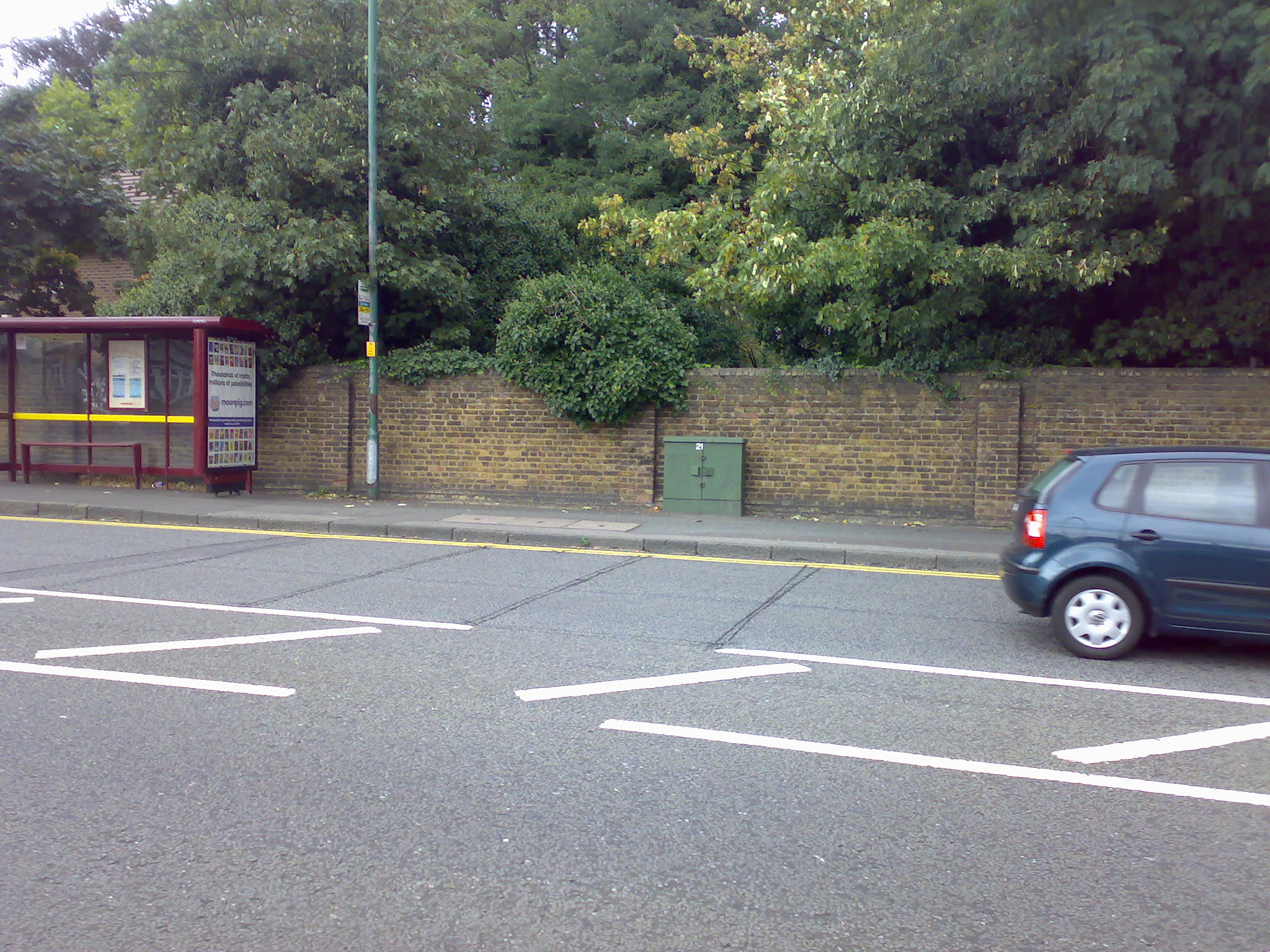
ABOVE: It's just a bus stop with a Nynex box next to it, honest! Tchah! People are so suspicious nowerdays. Next they'll be suggesting we could jump on the Nynex box and hop over the wall. Rediculous. The thought never crossed our minds, not once...
****************************************************************************
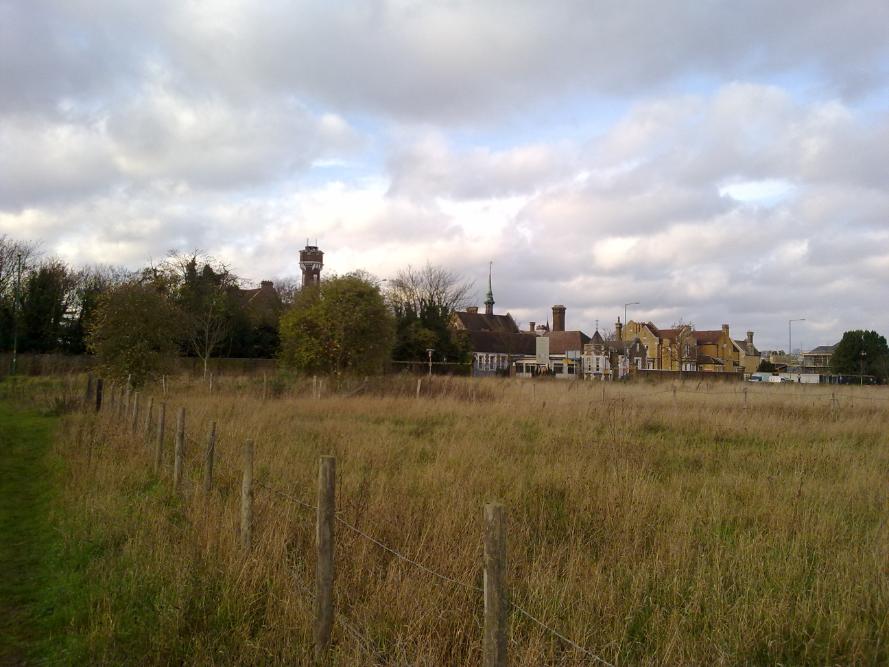
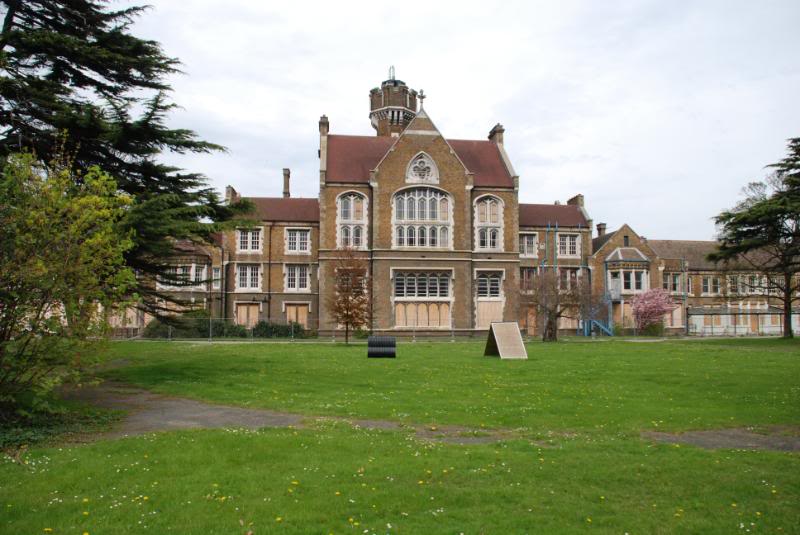
BELOW: With the outer perimeter wall out of the way, the whole glorious panorama of the Stonehouse Asylum spread out before us. It is an incredible looking place. We did wonder if the security fence went all the way round the site. It does, but it also abutts the perimeter wall at one point, and we were luckily able to find it without too much difficulty. as I've mentioned previously, hats off to the security bods: this place was nigh on impenetrable, which explains why it's in such great condition. Look at the security at Hellingly over the last decade and the state of the place. There's just no comparison, really - Hellingly got trashed as just about anyone could just walk into it until it was far too late.
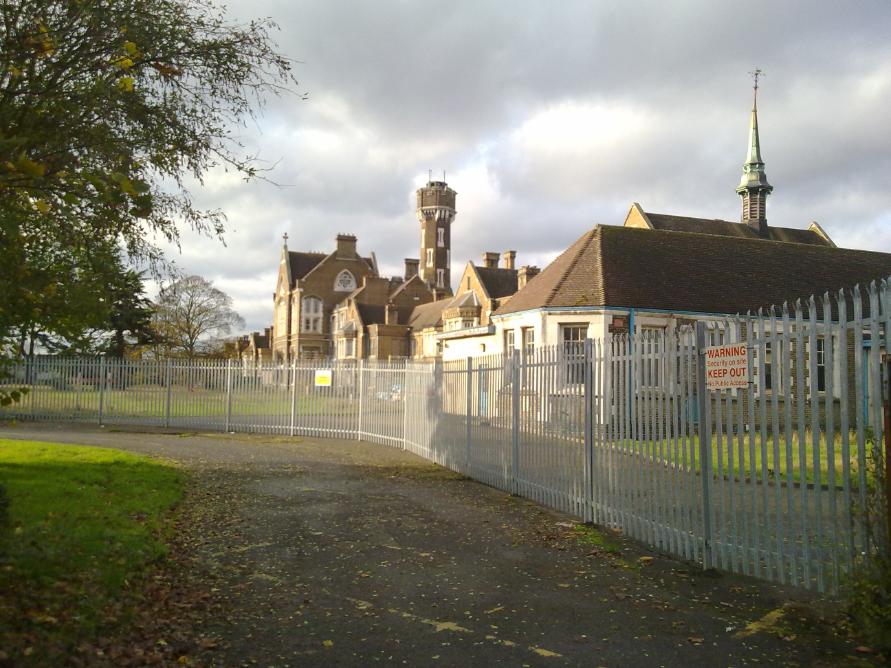
BELOW: It's no good trying to hide behind the trees, we can still see you. We hoped that any operatives on site wouldn't be able to see us, though - having come this far, we wanted at least a few hours looking around the old place.
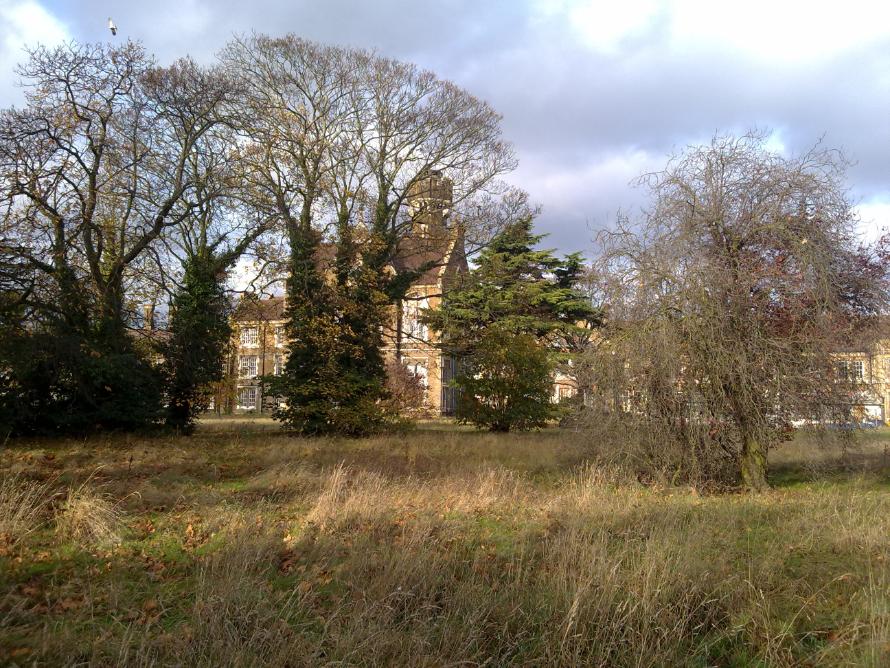
BELOW: The same view from slightly further to the left shows the centre of the main frontage in all its splendour. This part of the complex houses (as we were to find later) a pair of large halls placed above each other - quite an achievement for such a large space. Sadly, despite our best efforts, we didn't manage to find a way into the tower at the rear of the site. It is possible and has been done before, but contains quite an impressive array of mobile phone antennae and we didn't fancy frying our collective bollocks on a whim, so stayed out of it.
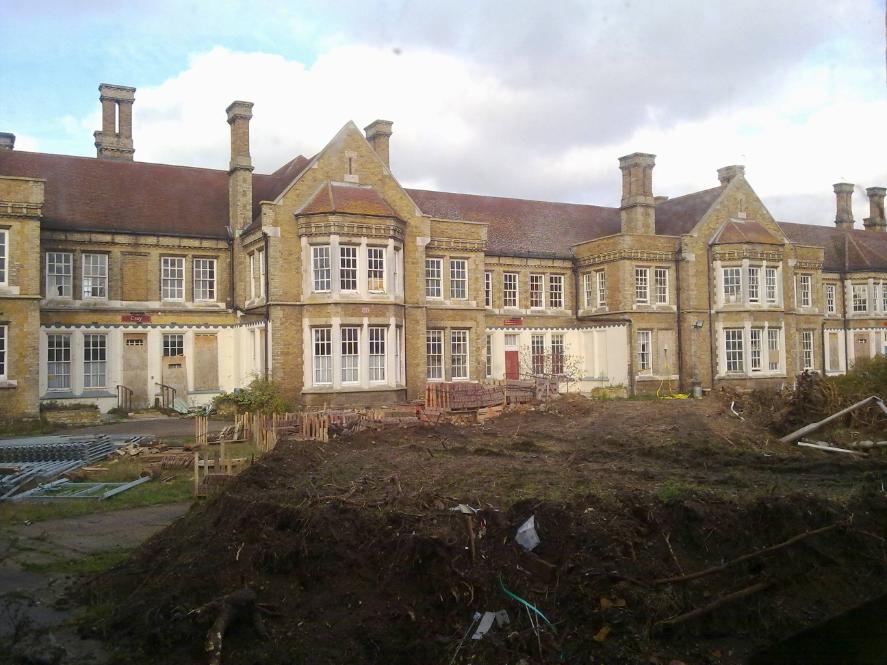
BELOW: Slightly further around the site, a lot of earthworks had started up and a lot of the boards had been removed from the windows on the ground floor, along with quite a lot of the savage 8 foot tall spiky fencing that had thwarted our first outing to Stonehouse.
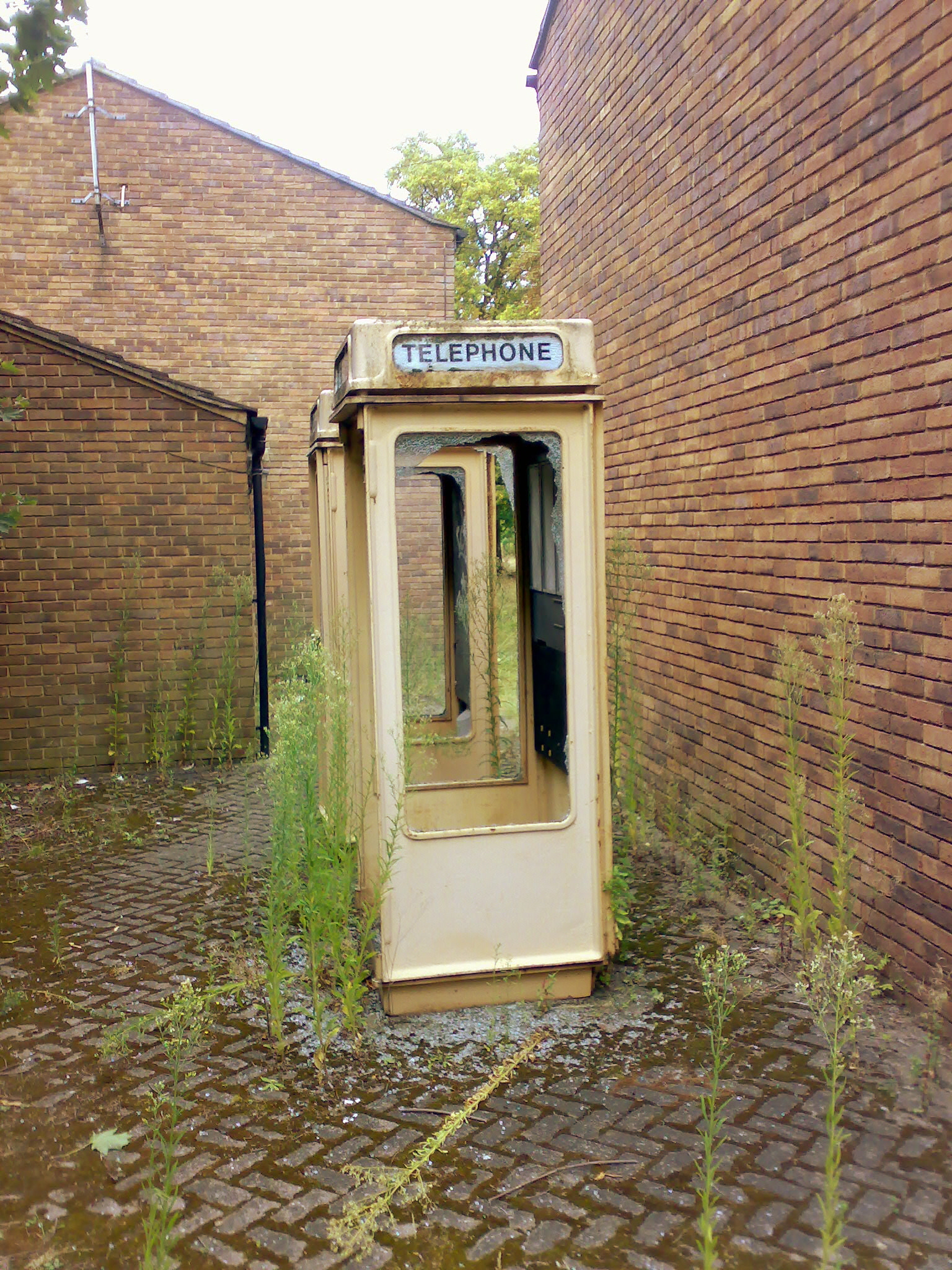
ABOVE: This was quite a nice little find at the south-west end of the site near the modern nurses accomodation blocks. I hadn't seen this type of phone box for many years now. Most people collected the more common classic red ones, but these looked quite nice as well. They preceded the current stainless and glass efforts of the present day and probably date from the 70's or 80's.
BELOW: This part of the site is given over to a small community of 2 storey houses occupied, we think, by the staff when the site was fully operational. They have been boarded up since closure, but there are some very obvious signs of squatting, despite such a veracious security presence observed on our first (failed) visit.
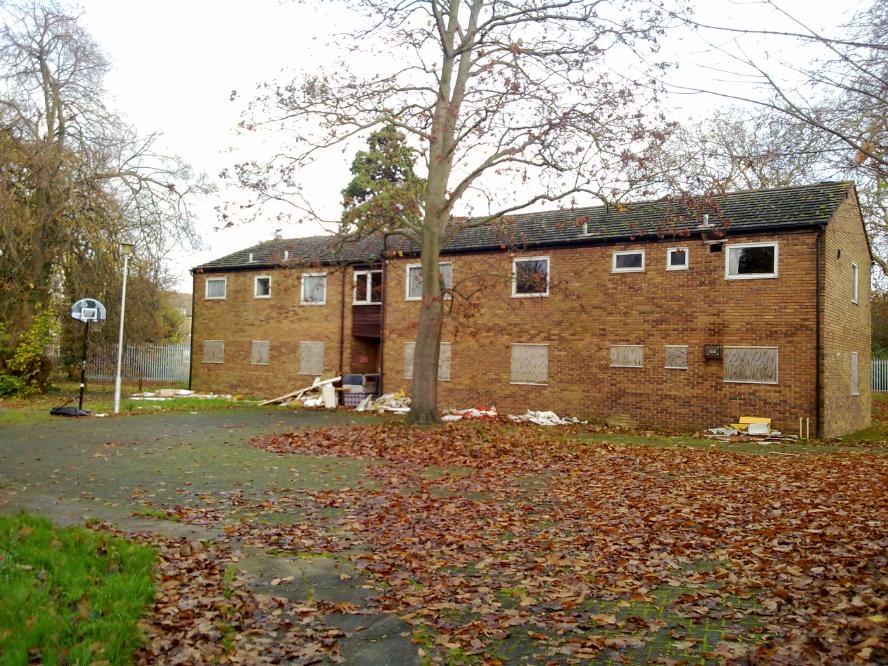
BELOW: A few more, slightly further South-West. The bay window on the right is part of the building seen in the following photo.
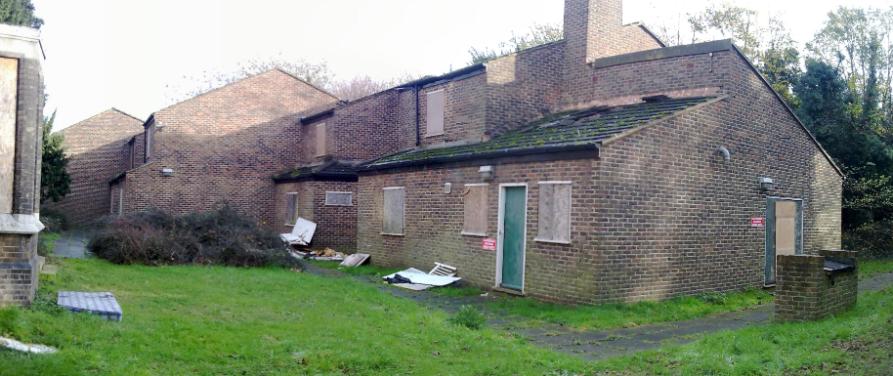
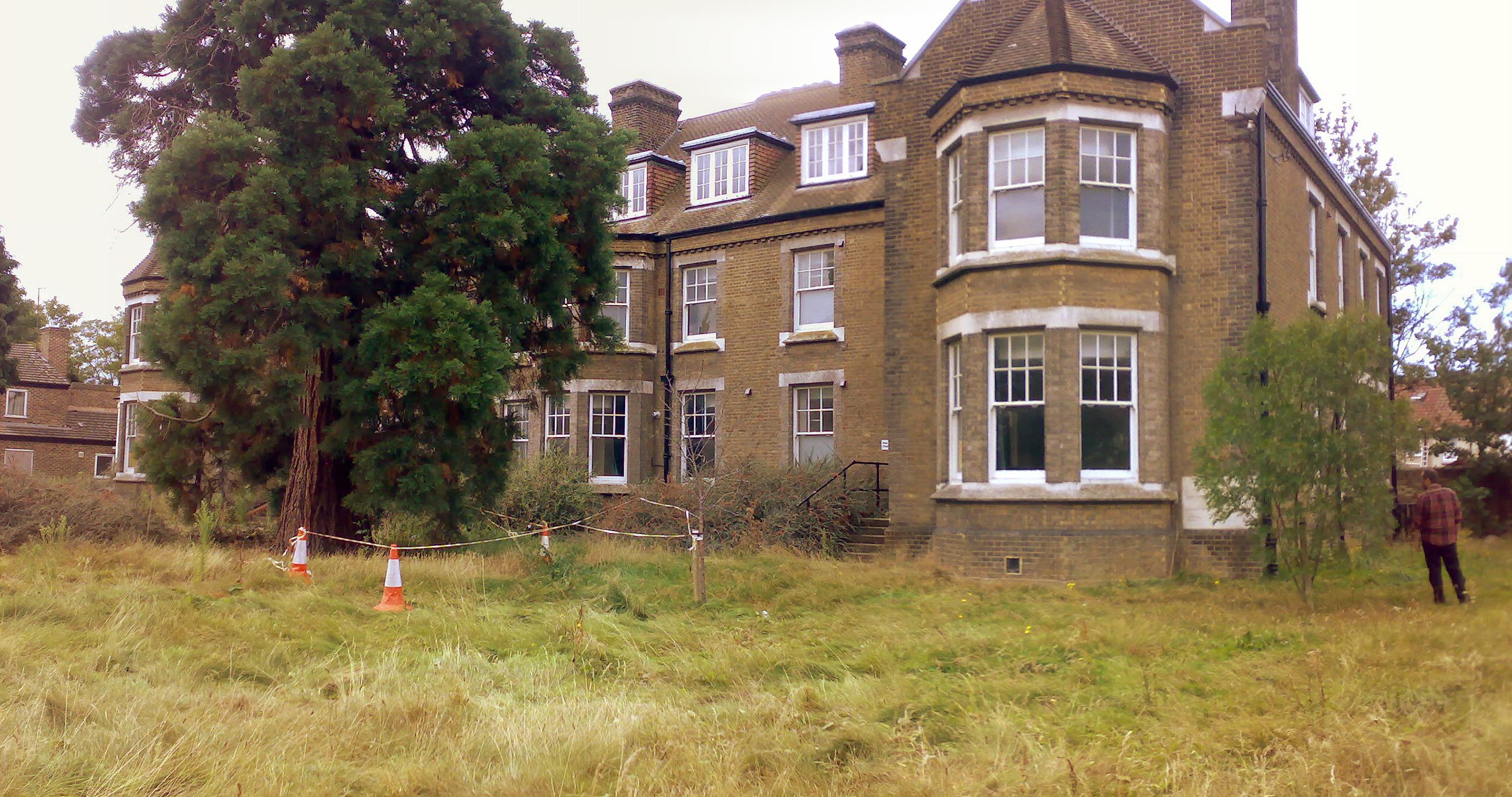
BELOW: This building was in exceptional condition, no doubt down to high security. The windows weren't boarded up as much as the main building, but we didn't have a look as we clocked the PIR detectors in the room on the bottom right and gave it a wide berth.
****************************************************************************
BELOW: Once beyond the spikey fence, we set about trying to find a way into the building. The problem with some other UrbEx Websites is that they make it look like you can just waltz into these places and take photos of everything. It's not always that easy! We started at the southwest corner, furthest from the security hut and using our experience of navigating via the service tunnels at Hellingly, tried to go in the same way here as everything that looked like it could be a door or window was boarded up.
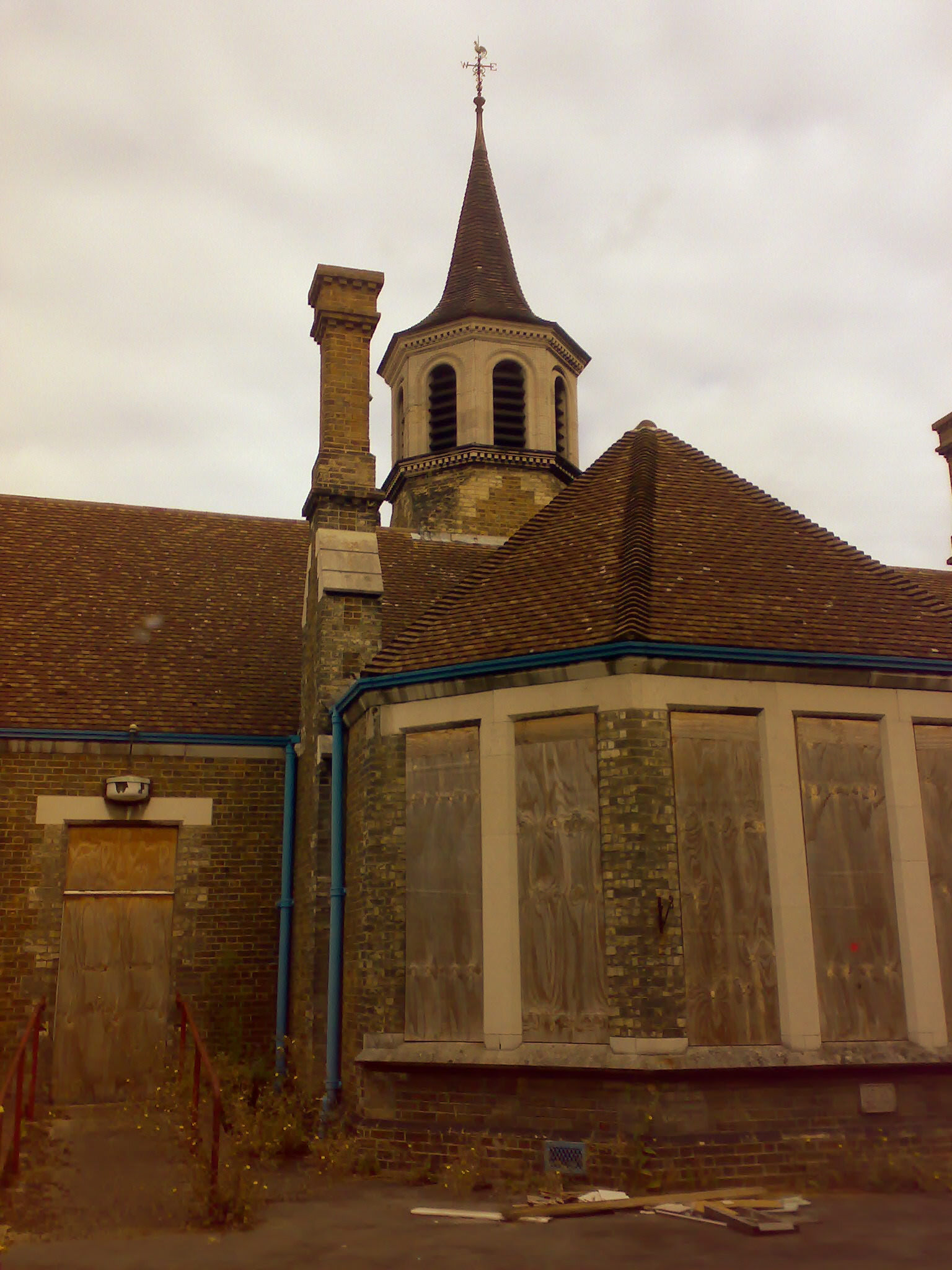
BELOW: No, it's not the Tower we had seen at the front of the site, but it is quite ornate and we hope the eventual redevelopment of the site will see it kept intact.
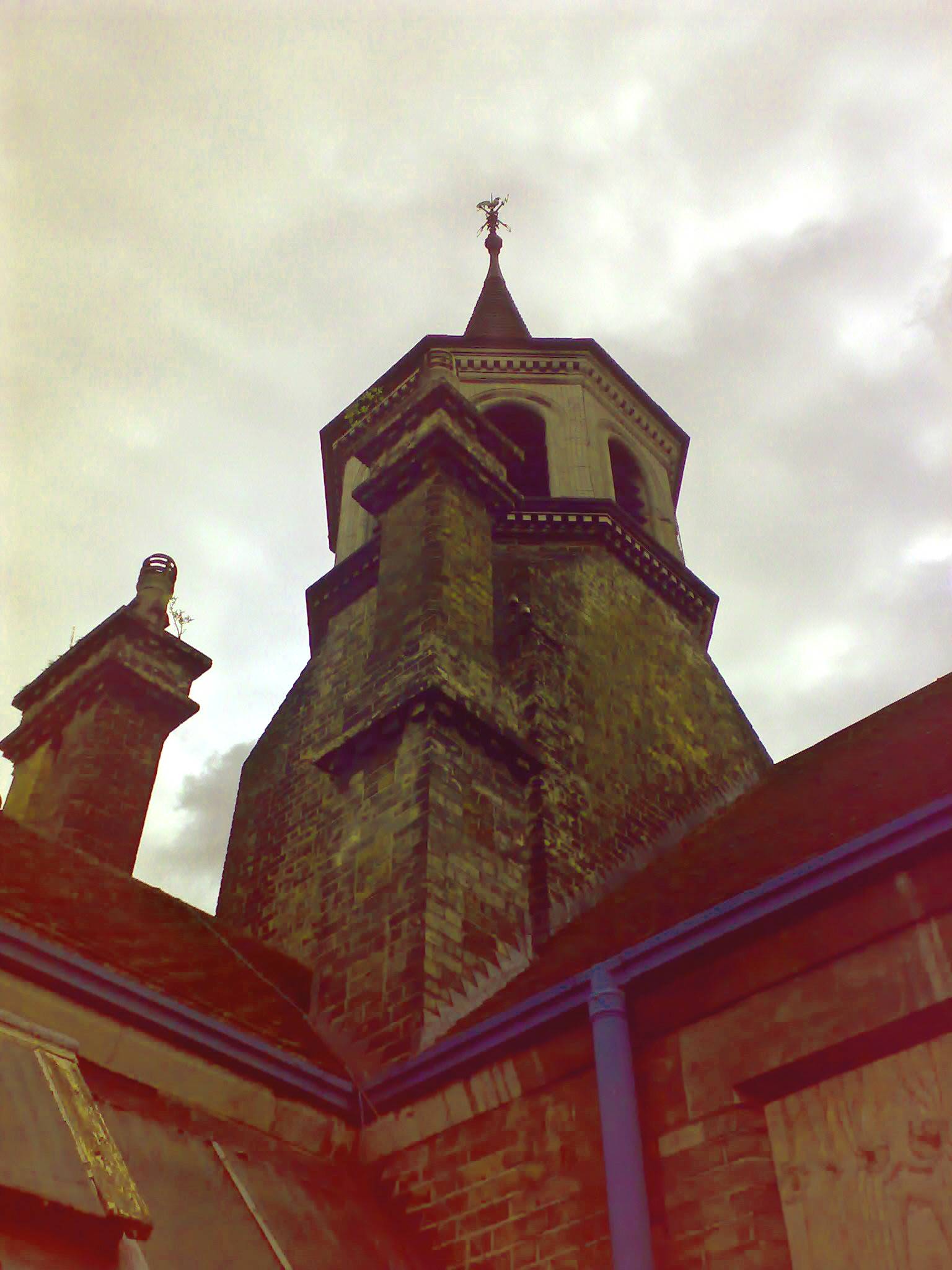
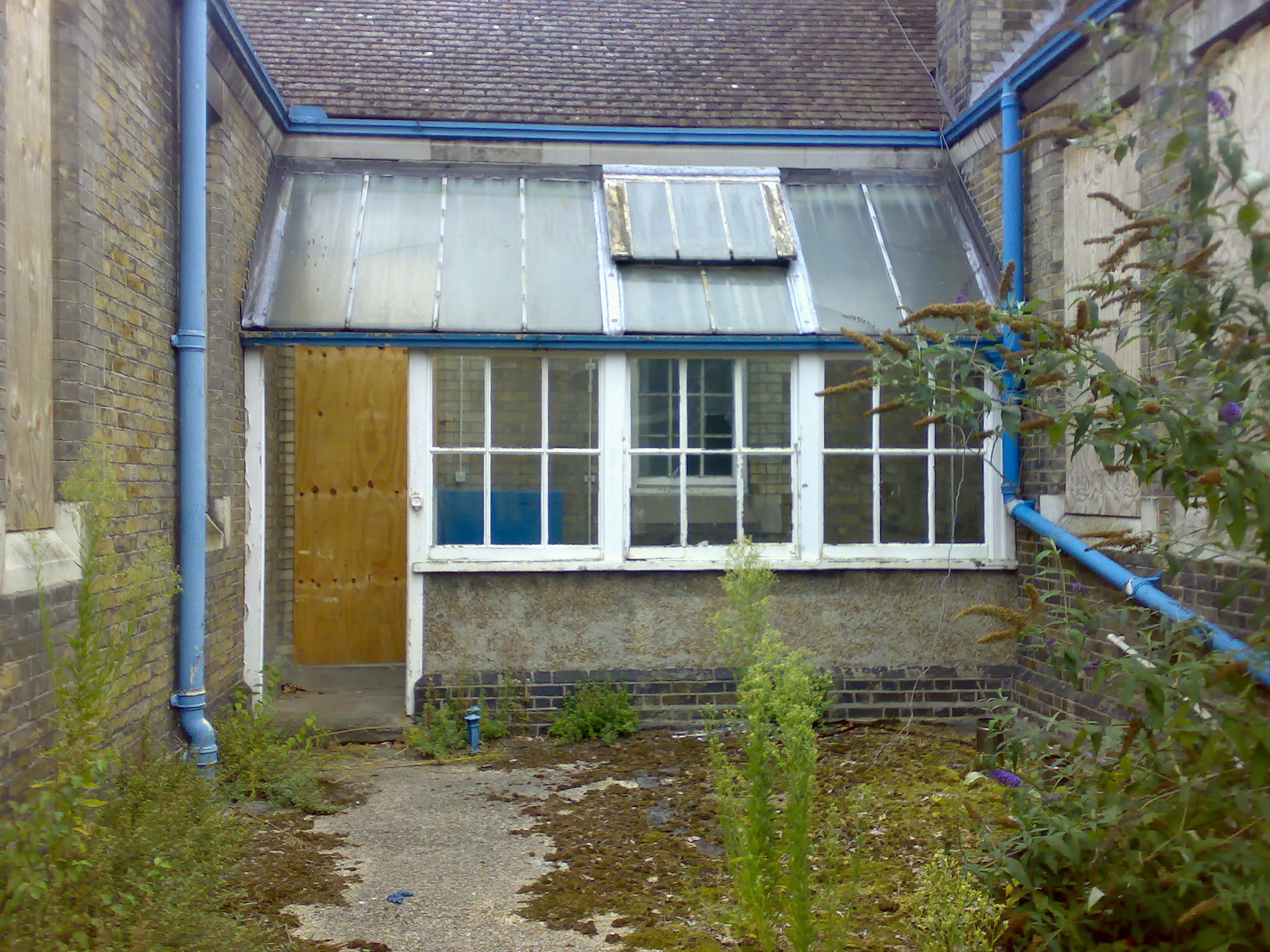
ABOVE & BELOW: The door was open and it looked quite promising. However, the window behind wouldn't open and a stairway lead down to a boiler room. Was this the sweet spot?
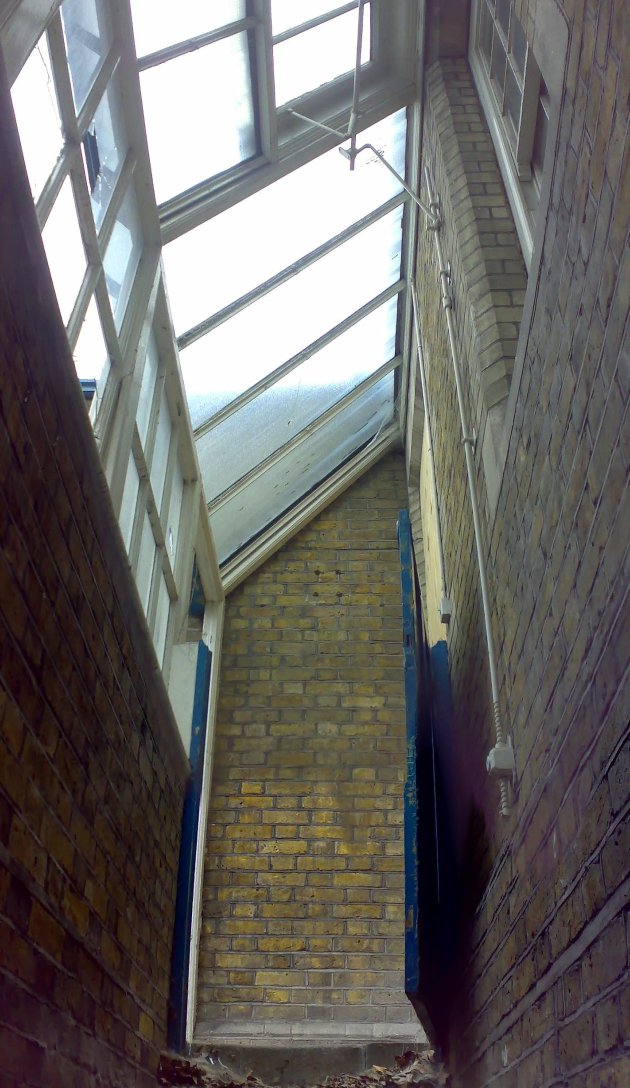
ABOVE: It is well worth noting the amazing condition of the place - no broken glass and not one single instance of graffitti. This is a very good indicator of how good security was on our first visit - the better the security, the less trashed the place will be.
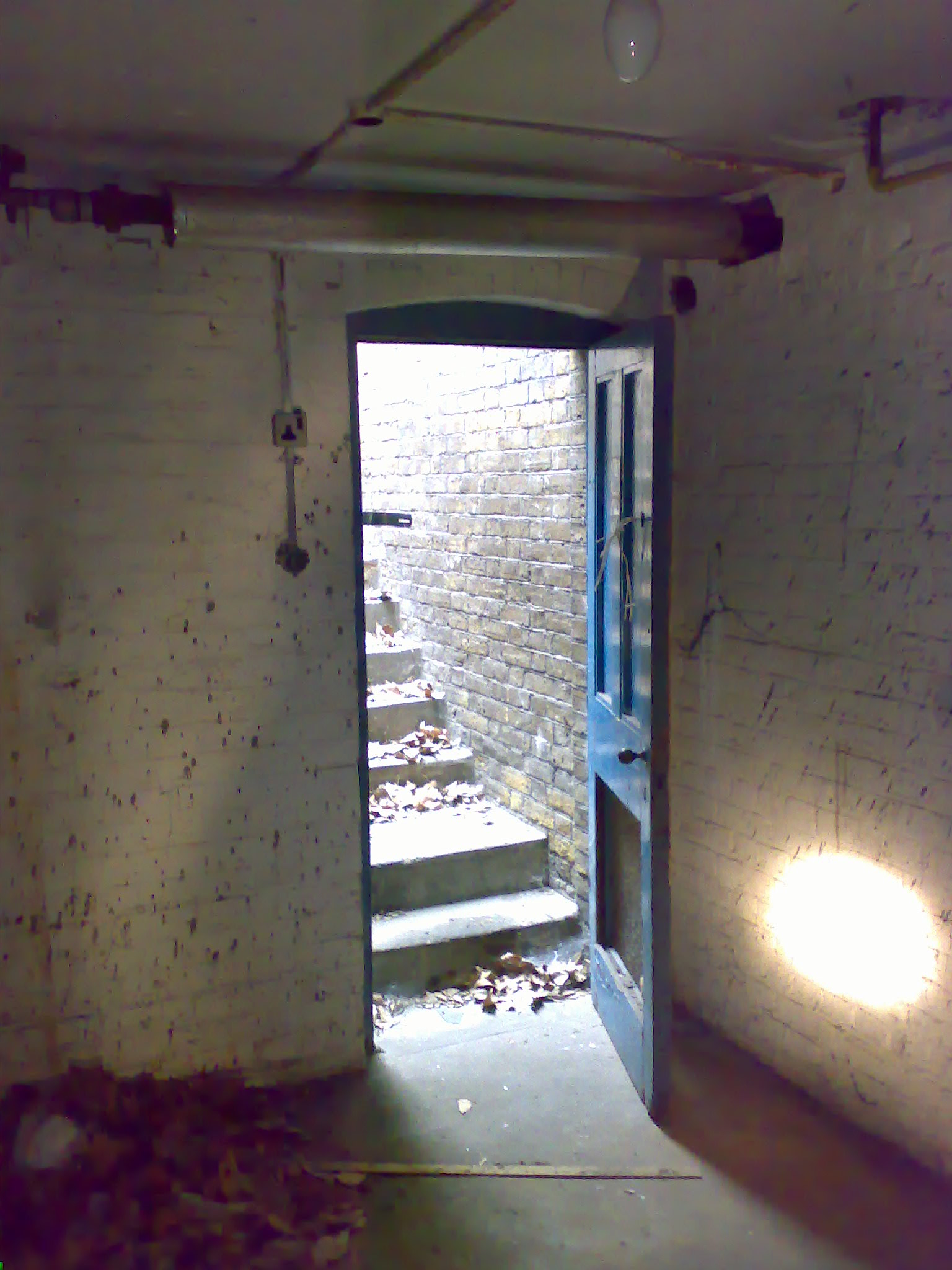
ABOVE & BELOW: It looked promising, but as we got to the far wall and round the corner... dead end. I suppose we had been horribly spoiit with Hellingly because we could get almost anywhere on the site using the service tunnels. Not good!
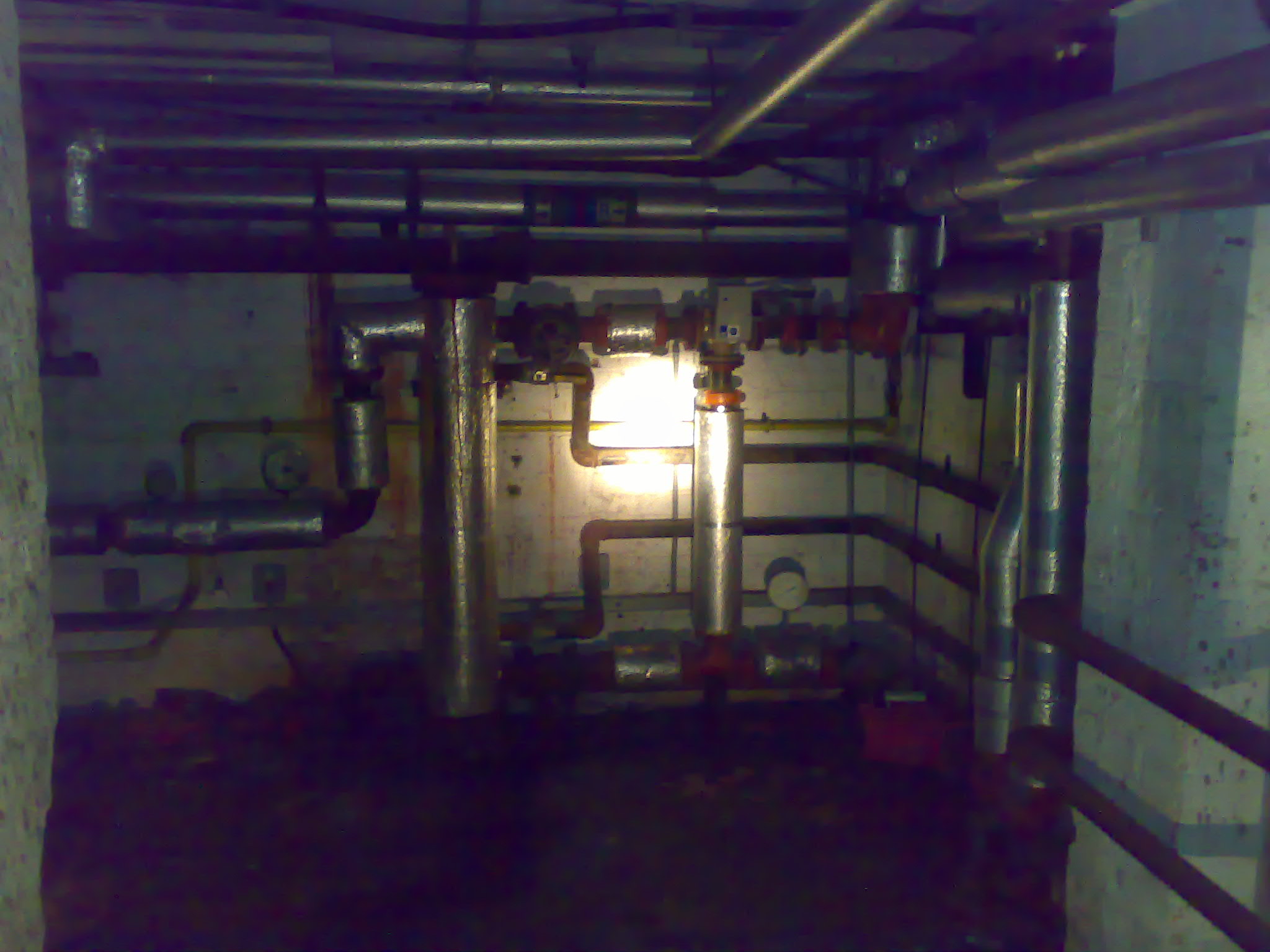
BELOW: This looked for a second as though it would lead to service tunnels beyond, but was blocked off, sadly.
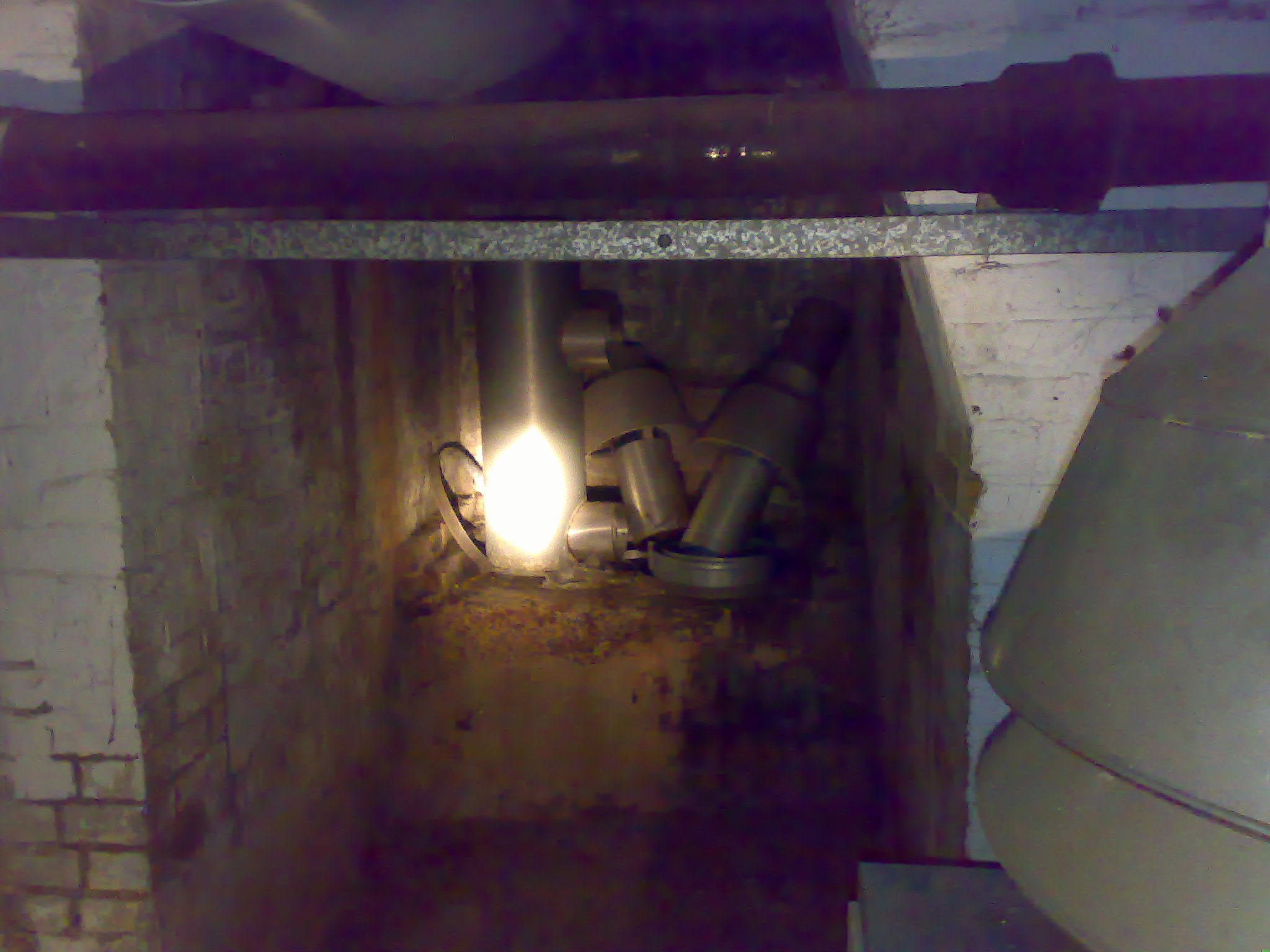
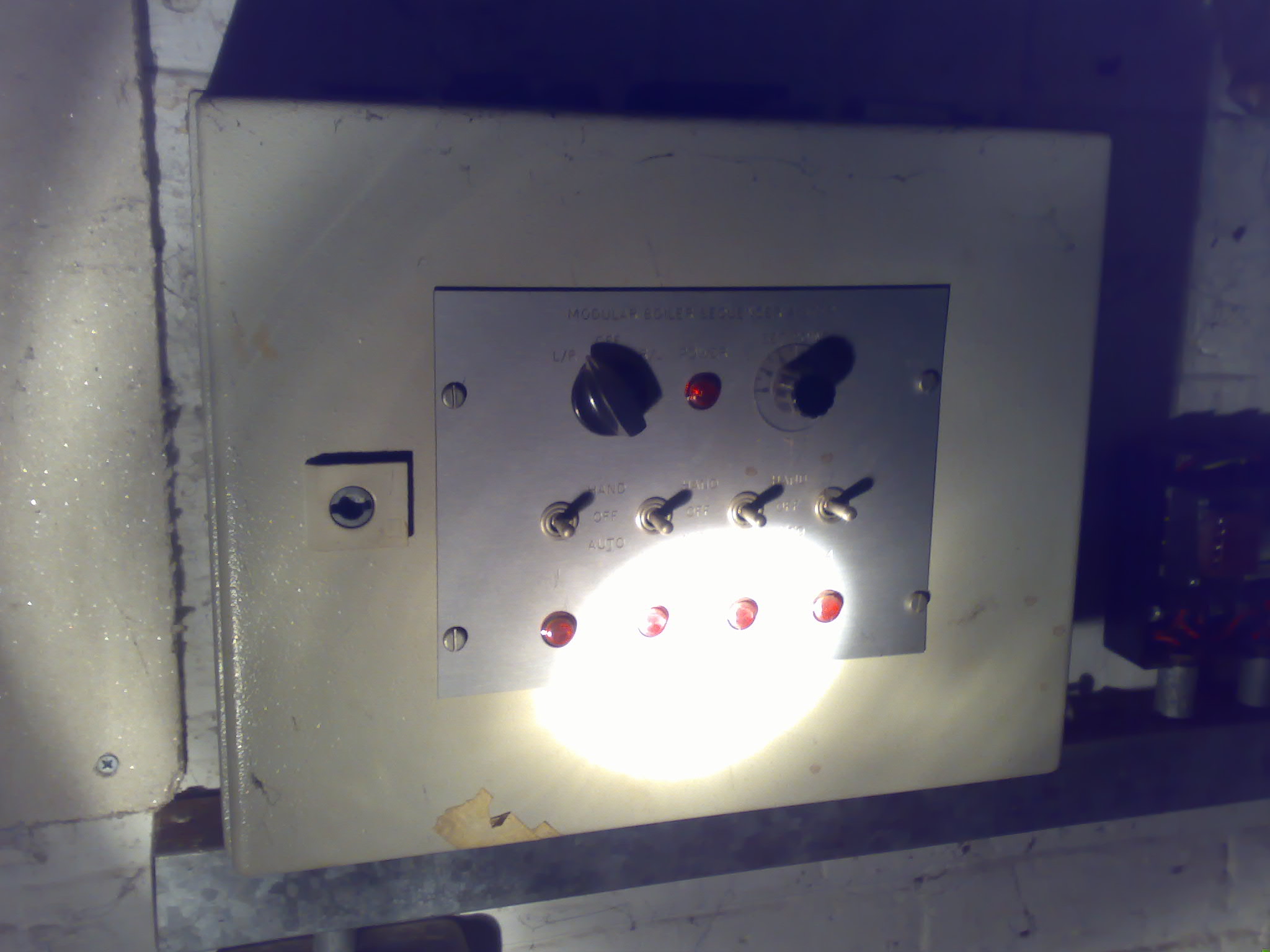
ABOVE: Live and kicking! The electrical switchgear down here was giving off a worryingly "used" sounding buzzing....
****************************************************************************
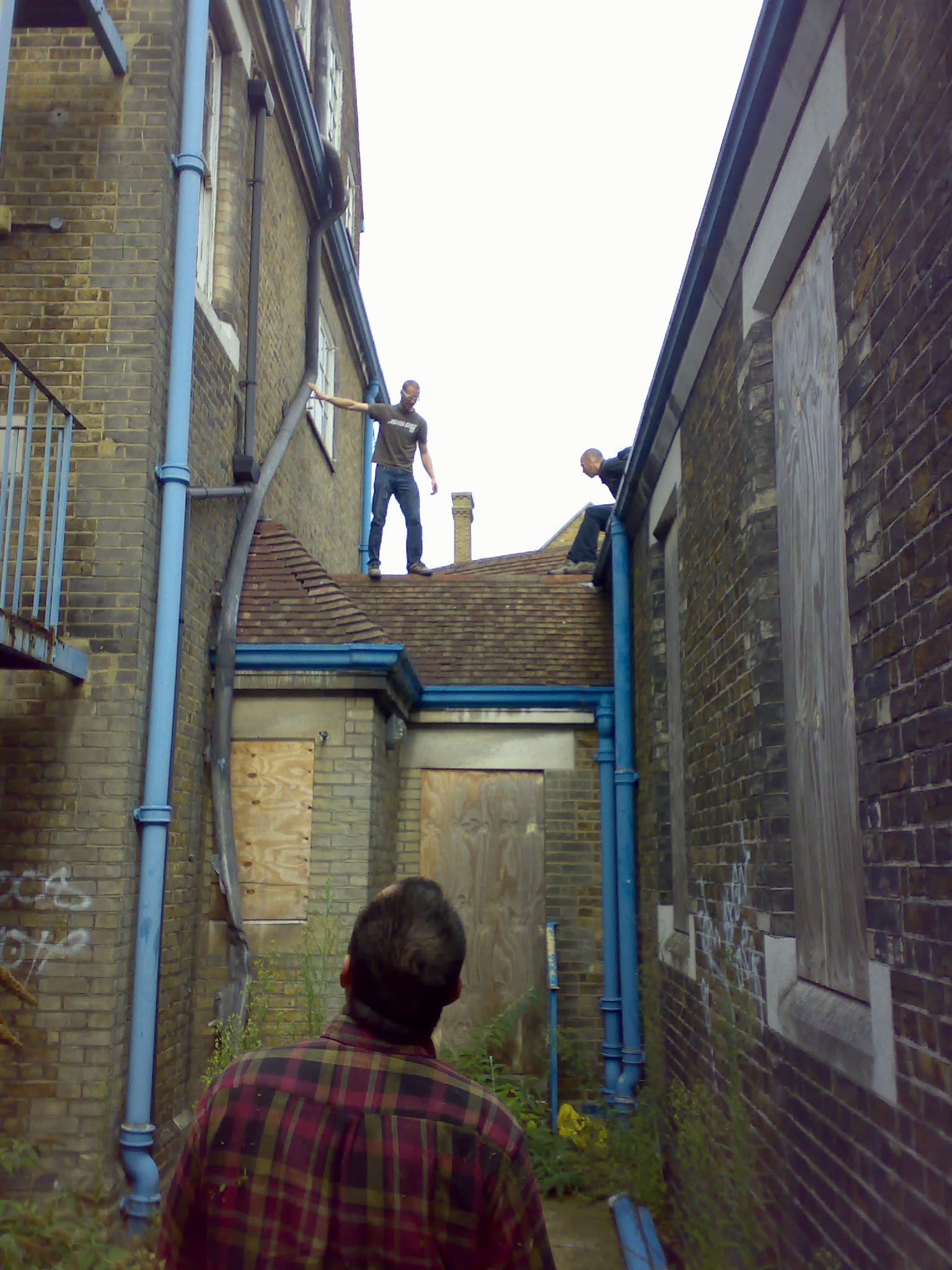
BELOW: So... the boiler room was a non-starter. Next we thought about high up things that most people wouldn't see and the security guards would hopefully not want to risk their necks checking out, like all these mad UrbEx freaks. Hmmm... fire escapes usually have doors leading onto them!
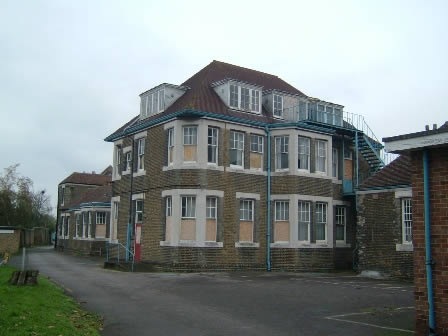
BELOW: This lead pipe was quite awesome and worth a considerable amount of money, which goes some way towards explaining the total overkill security-wise.
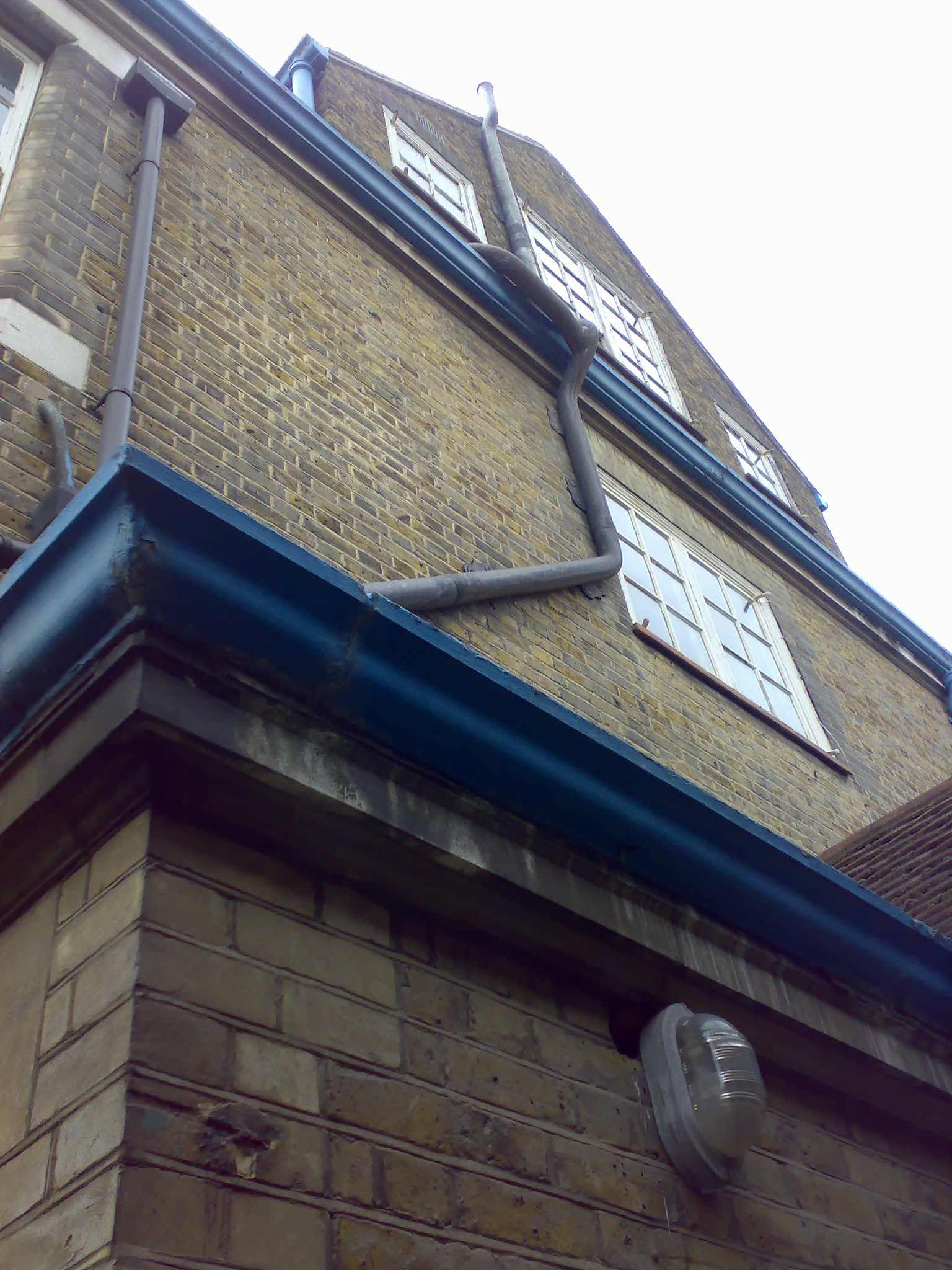
BELOW: Skyframe and NissanMan have a quick gander whilst Ghost and Shades keep a lookout.
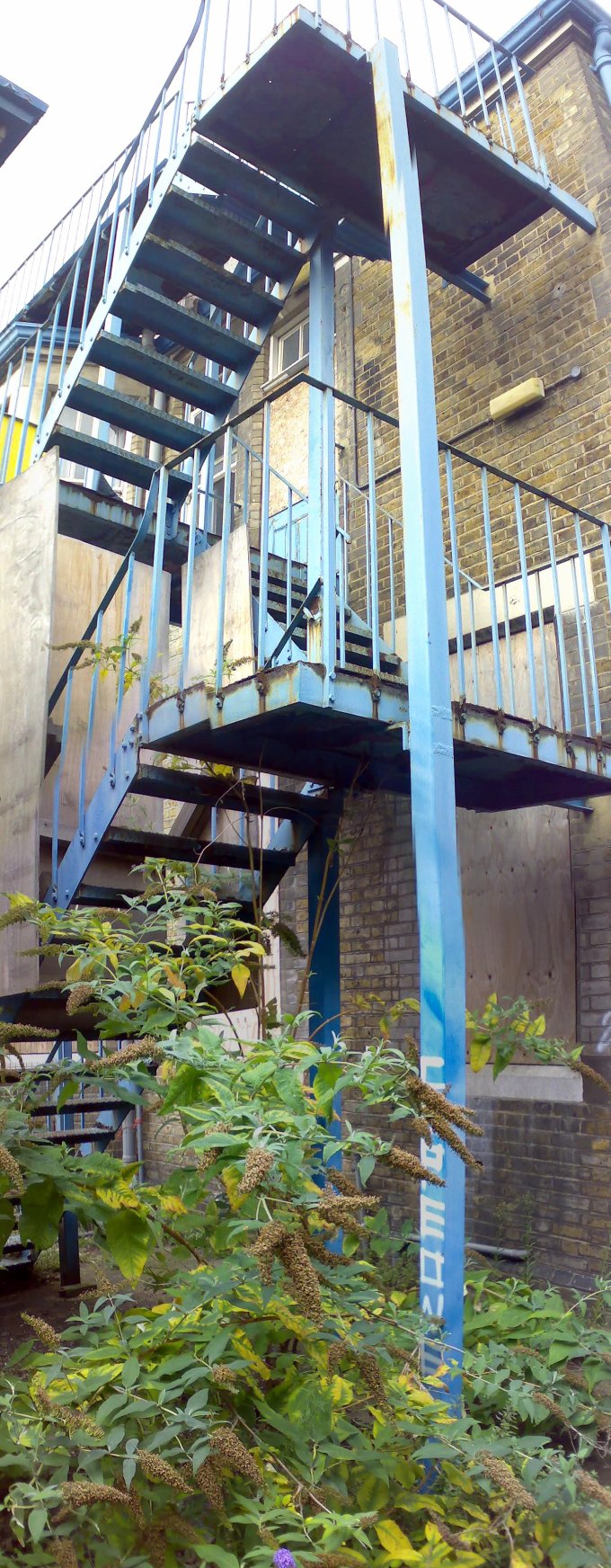
BELOW: This looked quite promising: A huge fire escape with lots and lots of windows and doors overlooking the stairs. One of them was bound to be unlocked, but sadly none of them opened much more than a few inches and even then, most of them required dangling off the fire escape 20 to 40 feet above ground. Ghost is not a heights person!
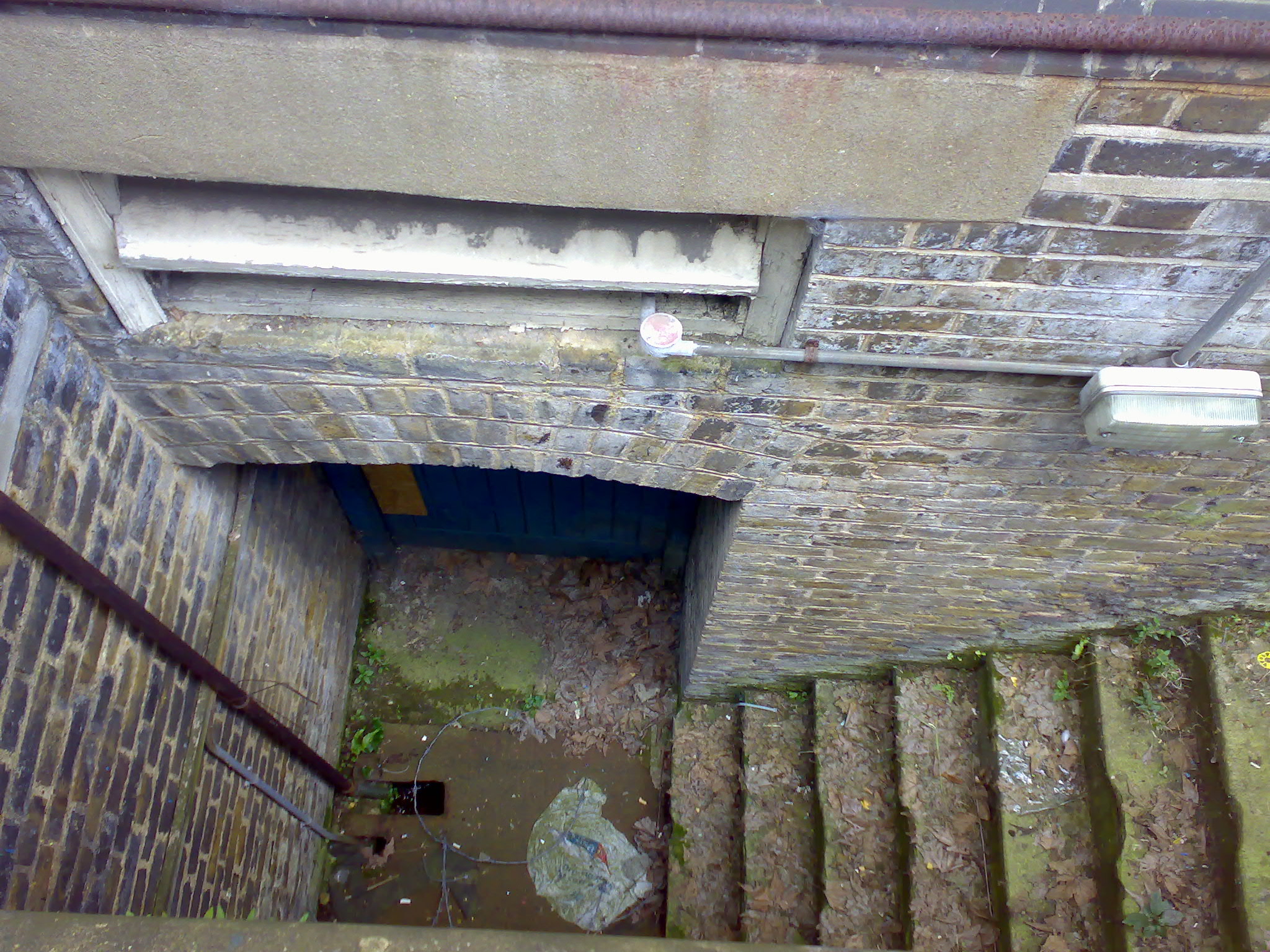
BELOW: This stairwell opposite the fire escape looked curious, but was locked and screwed shut! Damn damn damn!!
****************************************************************************
BELOW: Here's where it all went wrong in the first attempt. After all the false starts, we decided to make our way further around the back of the site, and as we approached the corner, there was Mr. Security Guard. The mission was aborted. They were quite cool about it though and gave us a scenic tour of the place on the way back to the security hut. It was quite a laugh sat talking and drinking tea with them and I think they were secretly quite glad to have something different to relieve the monotony for a change!
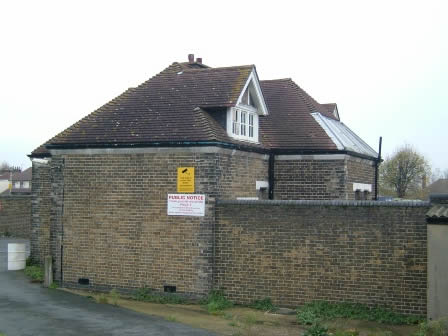
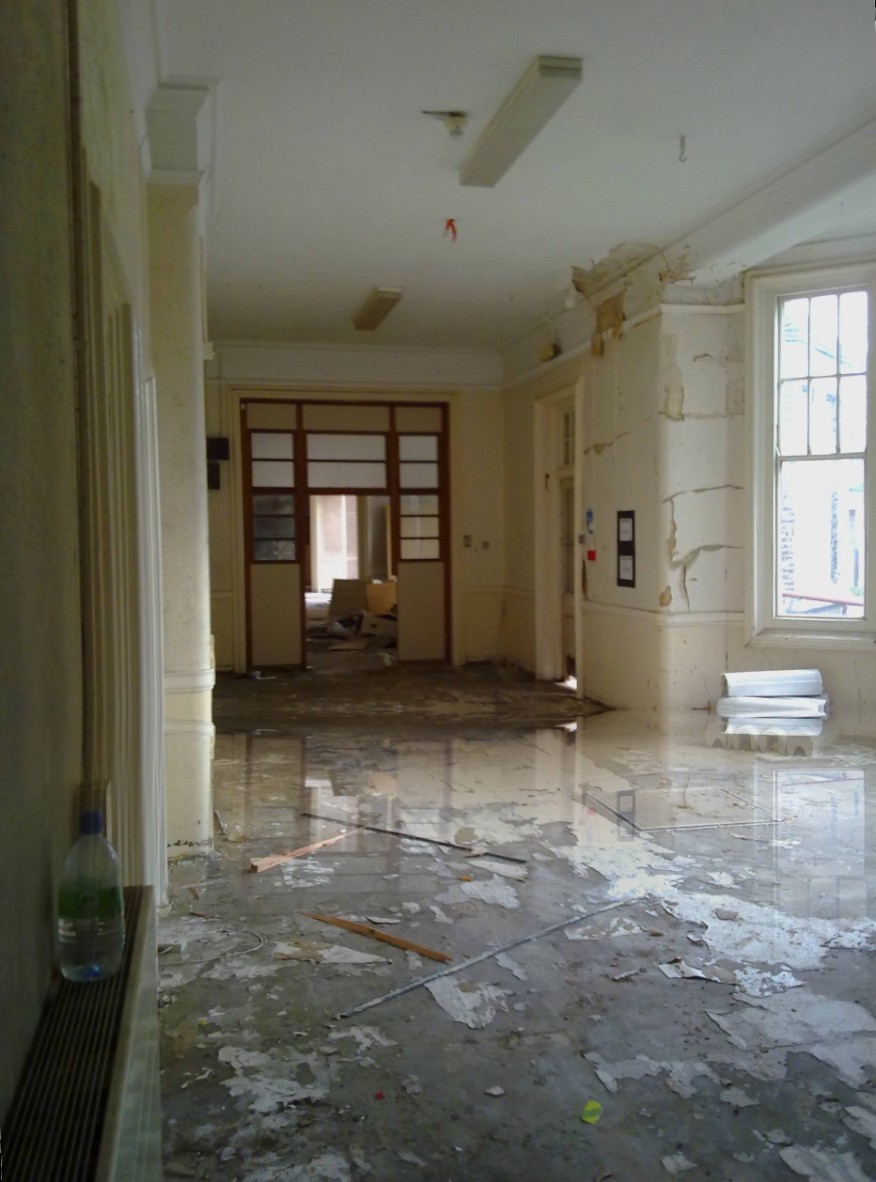
BELOW: Back at the very farthest South-Western corner of the site, we found an obvious way in and made good use of it. There was a bit of standing water here, but as there were no signs of damp, this was probably due to rain from the preceeding few days coming in through an open window....!
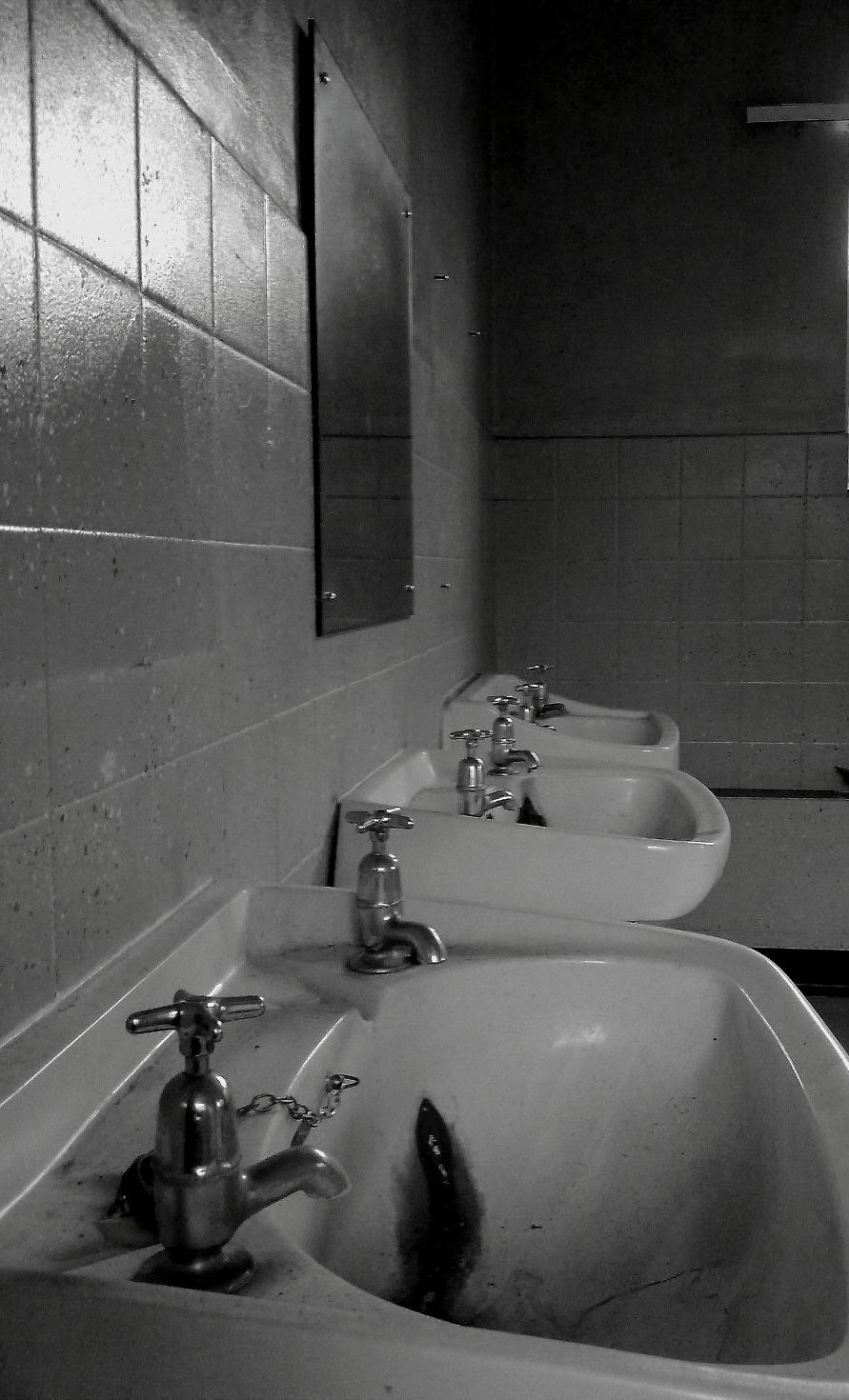
BELOW: Whilst empty and abandoned, Stonehouse didn't have a huge amount of "spookiness" beyond the austere facade outside, so we had to use a little bit of Artistic Licence with some of the photos. Don't ask me what's in the sink, but there are toilets opposite the sinks.
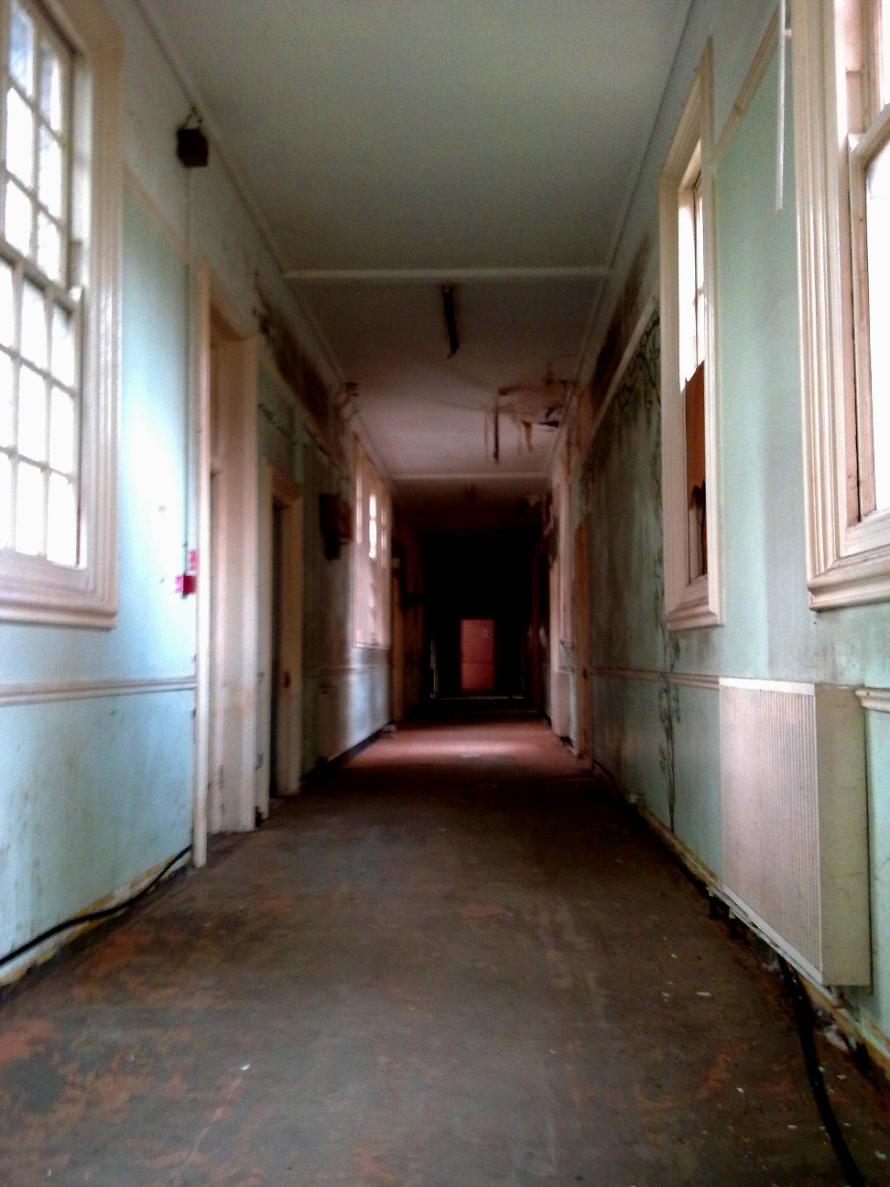
BELOW: Ahhhhh Corridors. Not quite as impressive as the likes of West Park or Hellingly, but still it was good to be back in them again.
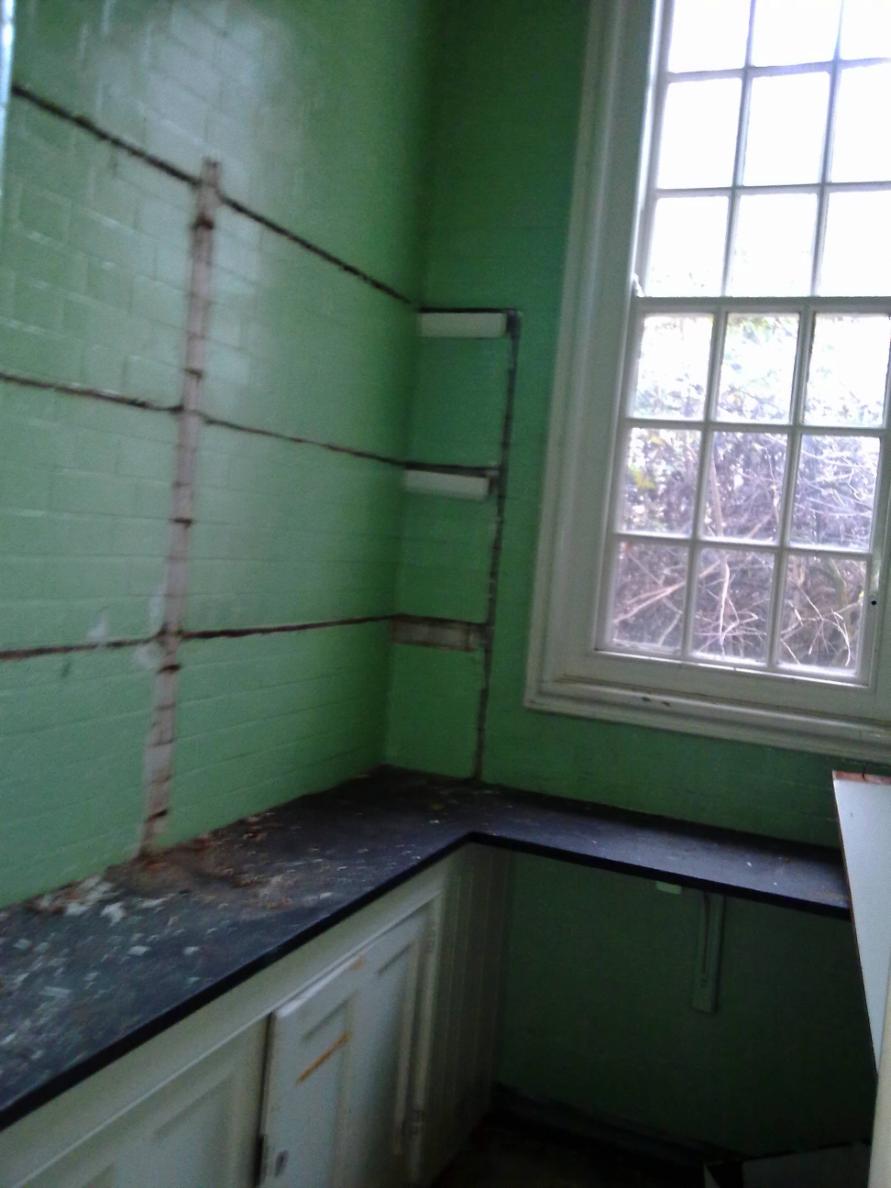
BELOW: As has doubtless been mentioned in other reports where demolition or conversion of a location is on the cards, the developers or demolition crews are duty bound to attempt to recycle as much of the original building materials as possible and stripping out of anything obvious and easily done had already started, hence the absence of the shelves in here. Sadly, nothing juicy left in the cupboards for us.
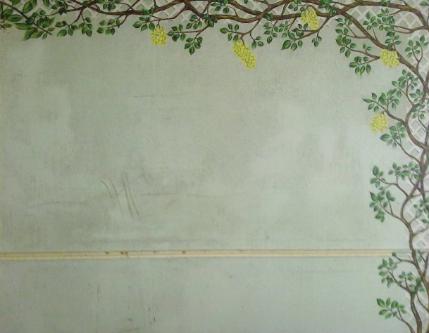
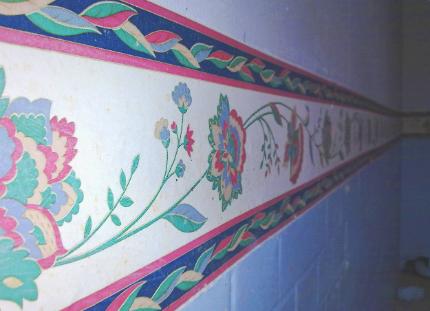
ABOVE & LEFT: There were some nice little details in the place, such as this floral mural (LEFT) around the wall and ceiling of a room, also the pretty wallpaper boarder ABOVE. Something interesting for the residents to see is always nice - throughout the psychological and sociological development of these institutions, we have noted a slant towards the introduction of therapeutic measures at varying levels between possibly the 1960s and final closure in a lot of the places we have found.
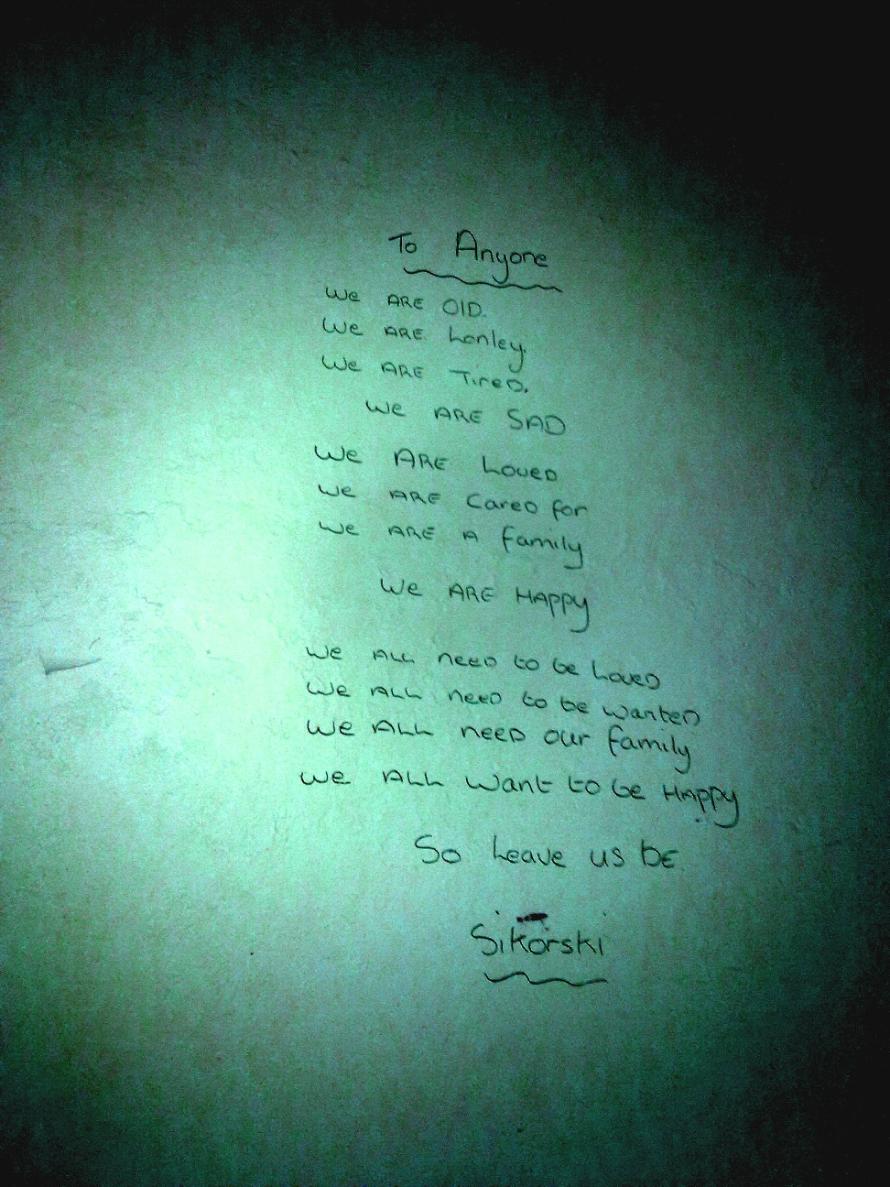
BELOW: We cannot comment as to the levels of feeling as regards regret or sadness at the closing of this location, nor can we tell whether this was written by staff at the time of closure or was added by squatters or UrbExers, but it has a somewhat poignant message.
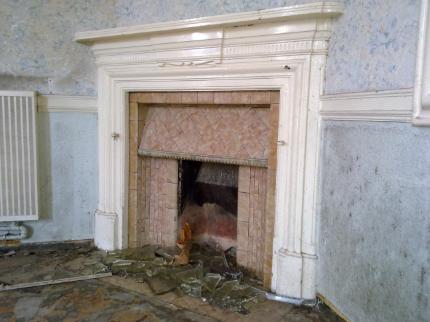
ABOVE: There were a great many interesting period features to this building and a great many of them still pretty much discernible, albeit occasionally with silly modifications as in the case of this fireplace: a beautiful original surround with some classic shitty 1970's tiling. Yaaaay.
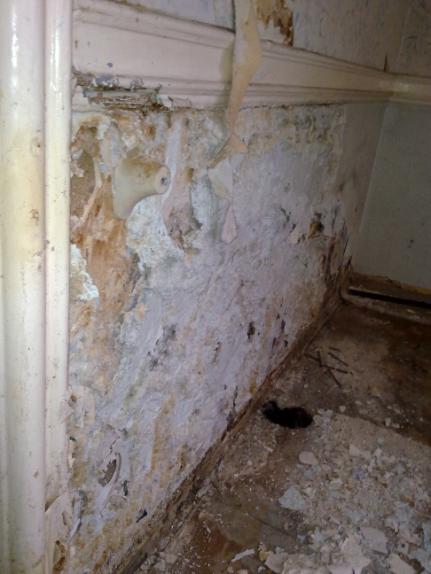
LEFT: Damp - any building's worst enemy.
BELOW: I love these little reminders that these places were peoples' homes. It is so easy to forget that and become swept away by either the spookiness or the romantic horror that these places portray. For many of the patients that lived in these places, they could have been times when they felt happy to be part of some kind of society: wanted and accepted. Sadly, 'Care in the Community' meant that a huge number of people that lived in these institutions ended up roaming the streets, usually without support or friendship.
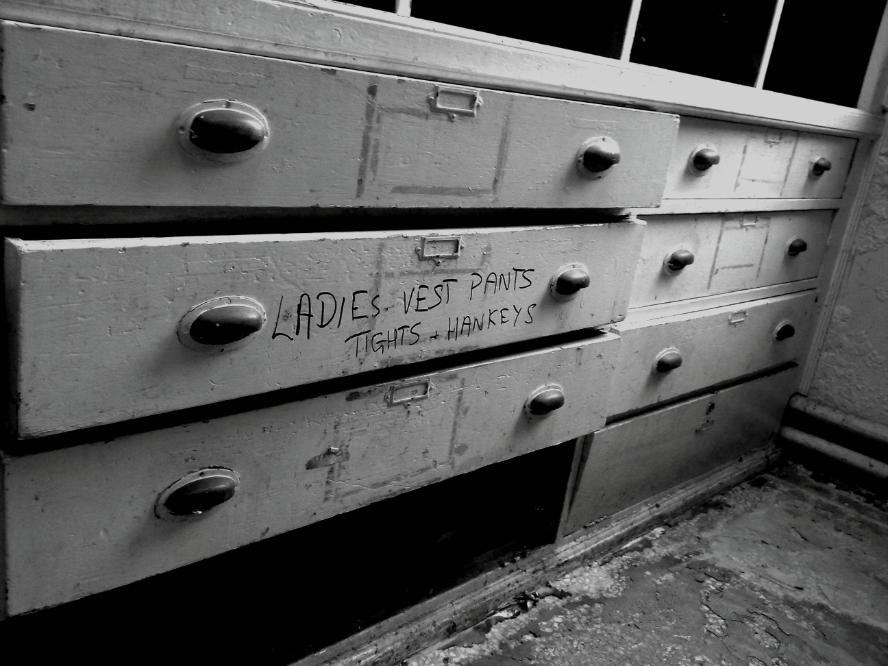
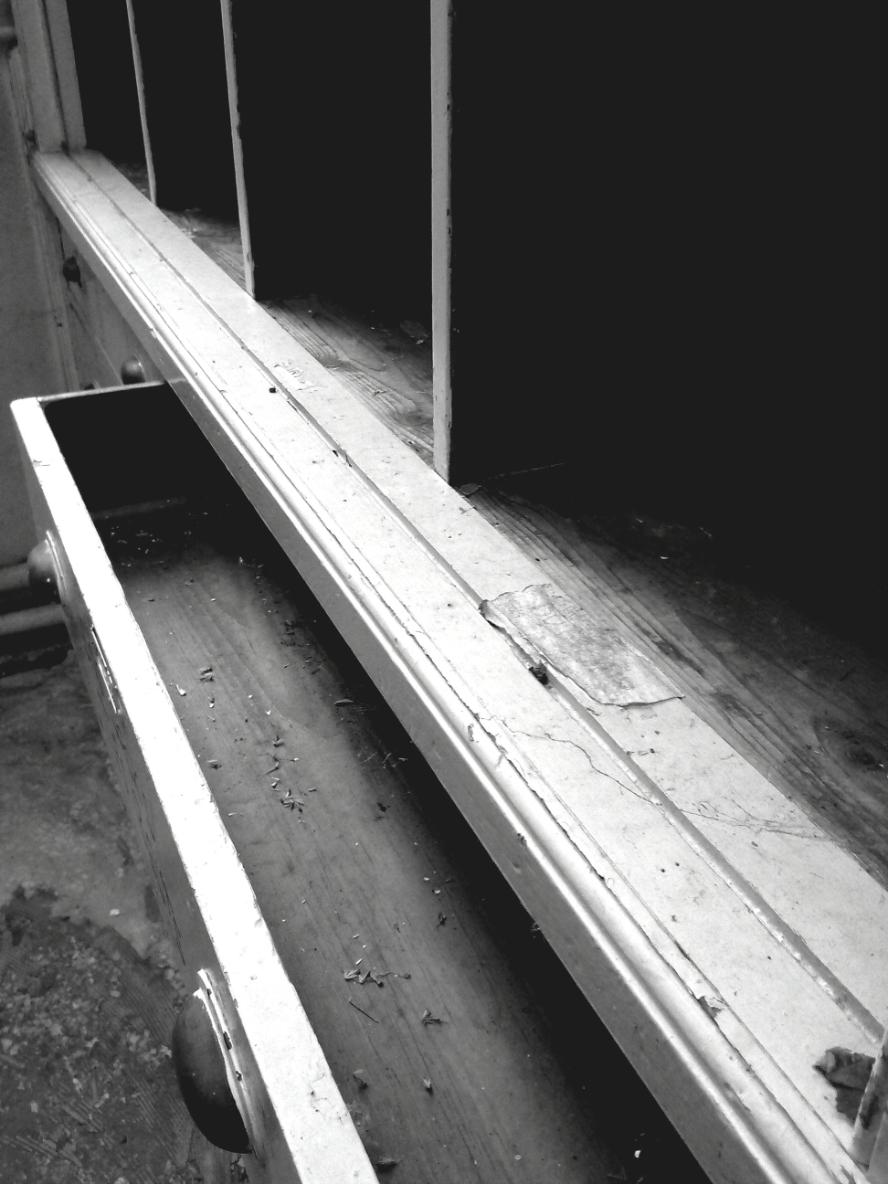
BELOW: Bit of an arty shot, this. but also useful for imagining what this drawer played in part of someone's daily routine. As the label shows in the previous photo - "ladies pants, socks and vests" , neatly arranged still warm from the tumble drier in the laundry, picked out on the way for a morning bath before breakfast. Such things we would take for granted, but for some, a useful therapeutic device was to set up a routine - one to one time where a patient could feel calm and accepted, perhaps?
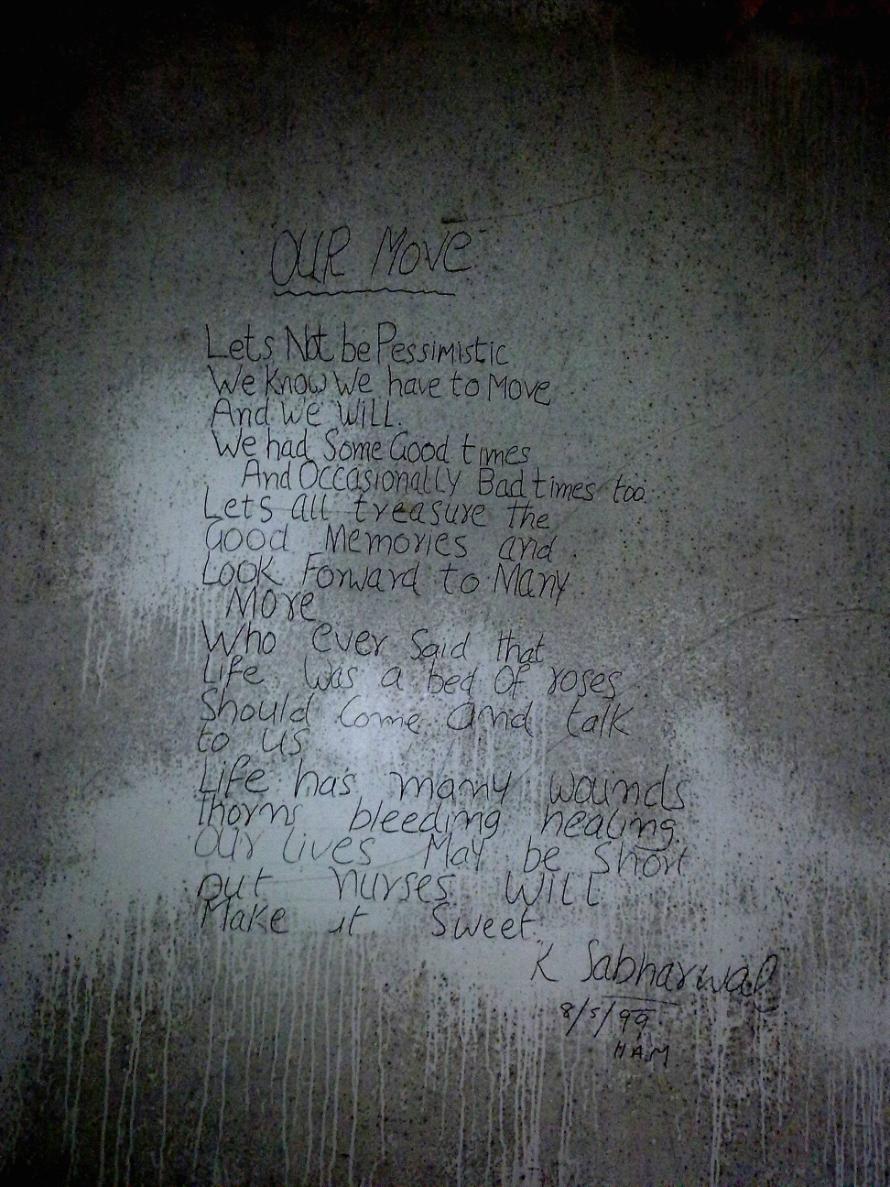
BELOW: ....and just as we were wondering about the strength of feeling surrounding the closure of Stonehouse, we find this on a wall - undoubtedly left by one of the staff nurses on or around the final days of this particular part of the building. Closure of the site was gradual and wards started to close down from around 1997. The building finally shut its doors in 2007.
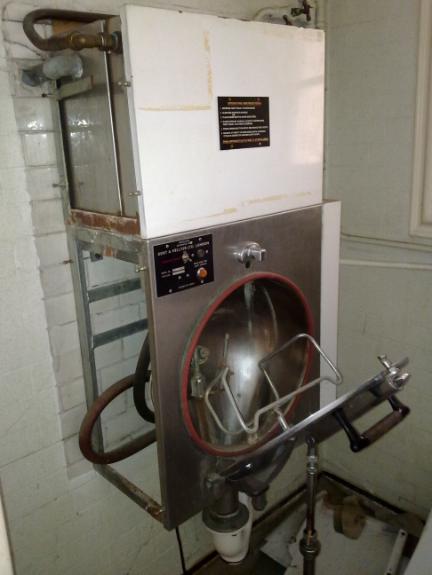
ABOVE: Unnecessarily complicated bedpan washer.
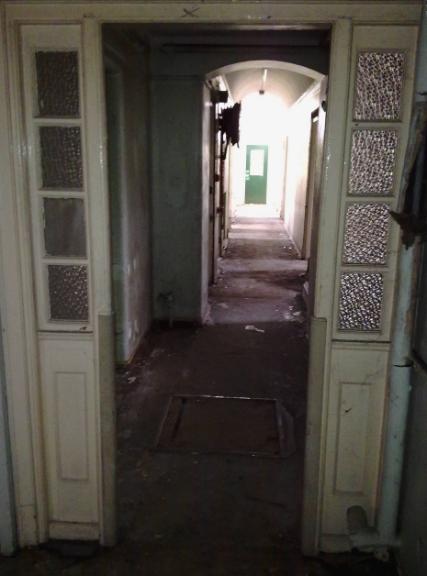
ABOVE: Here and there, little bits of period detail shine through...
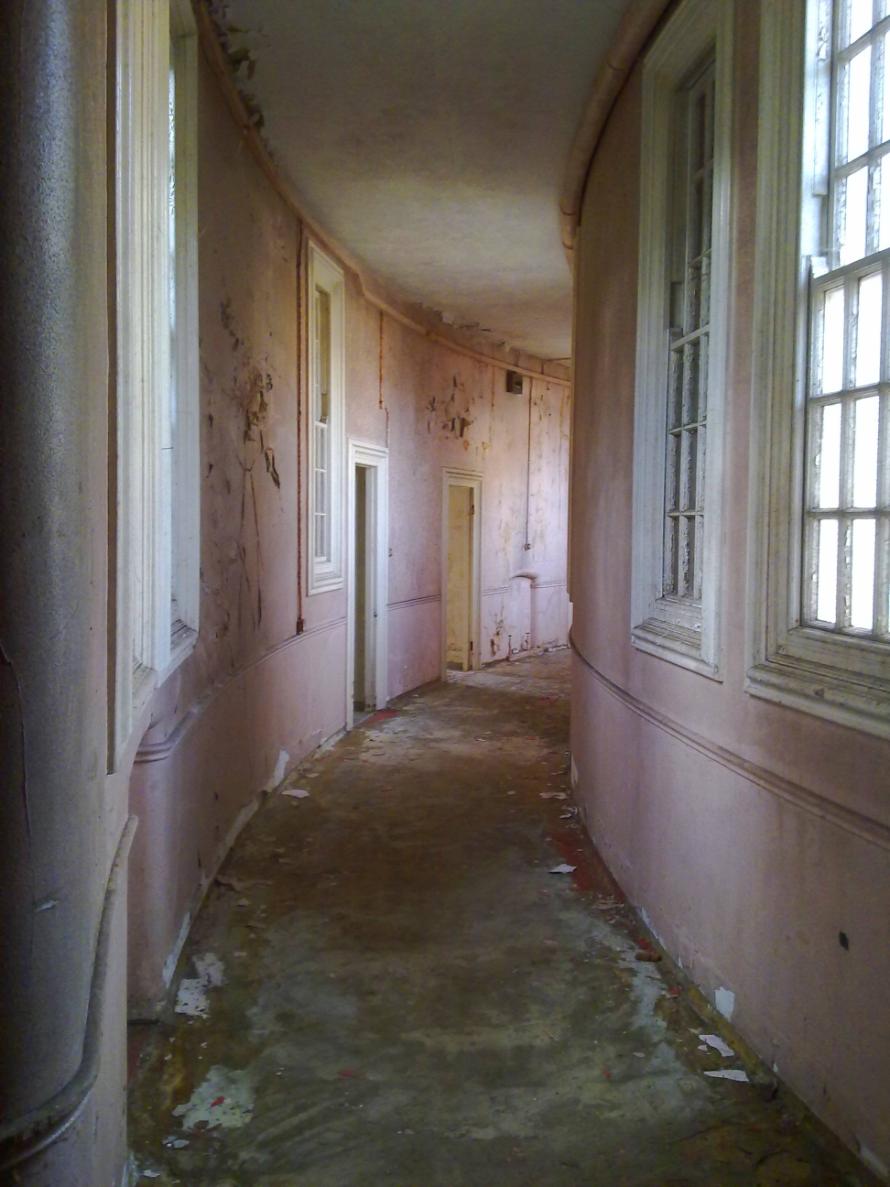
ABOVE: It's not very often buildings of this type have curved corridors, as they seem an unnecessary complication. However, they do look very pretty.
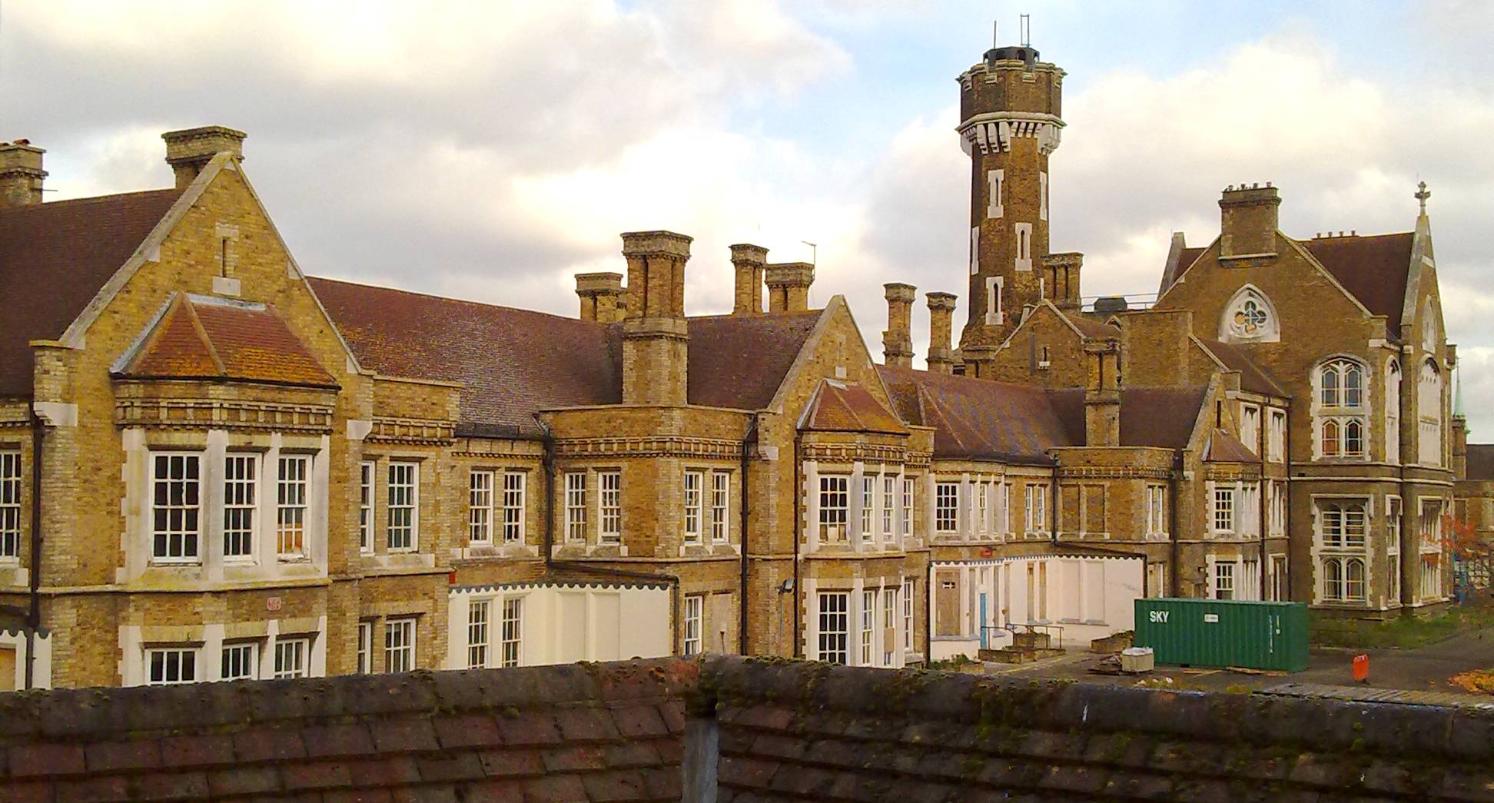
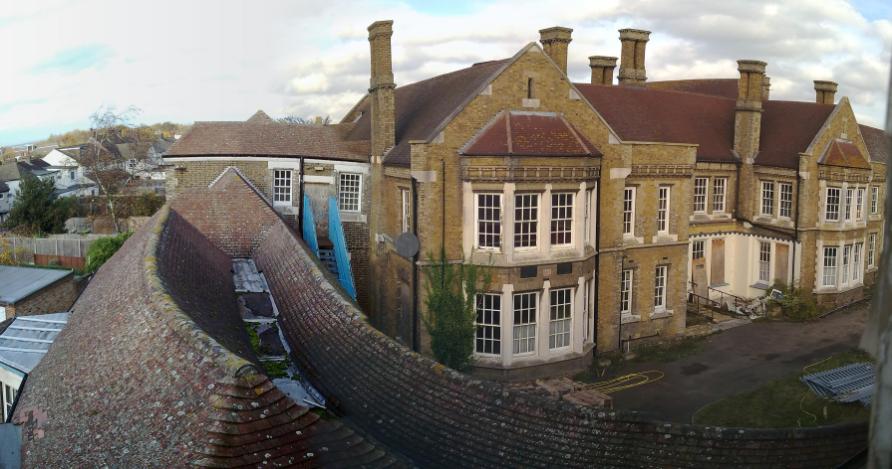
BELOW: This nice rooftop shot is looking back due North-East. Note the aerials on top of the Tower.

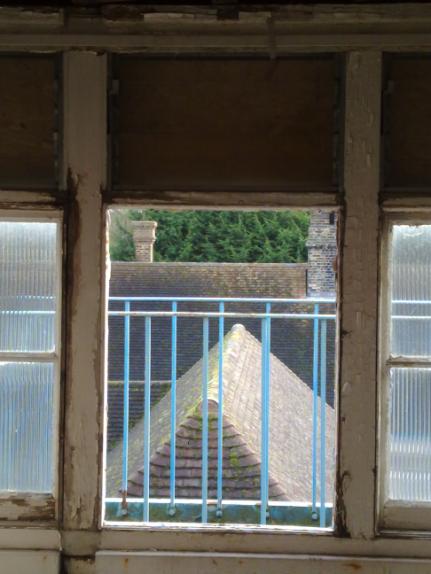
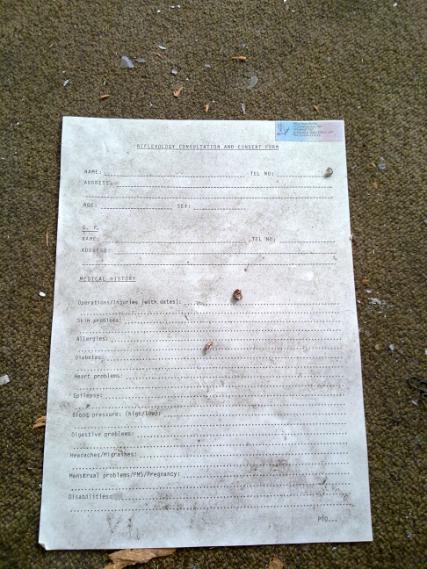
ABOVE: Reflexology request and consent form. The lower part of the form is for medical history. Sadly, we only found blank forms and none filled out.
TOP LEFT: Poster found in one of the rooms off the previously seen Curved Corridor.
BOTTOM LEFT: A somewhat pointless photo, but I like the weird symmetry going on here, so Ner.
BELOW: An overhead shot of the South-Western Curved Corridor. The photo is a little bit disjointed due to being made up of 10 or 11 separate phots, but I think the overall message is discernible. The smaller roof line is over the rooms to the right of the corridor and the larger of the 2 is the rooms to the left of the Corridor photo seen previously. The corridor itself, strangely, has a flat roof - wouldn't it have been cheaper and easier structurally to just have everything under one roof? For the record, the entire site is symmetrical and mirrored around the central part where the halls are.
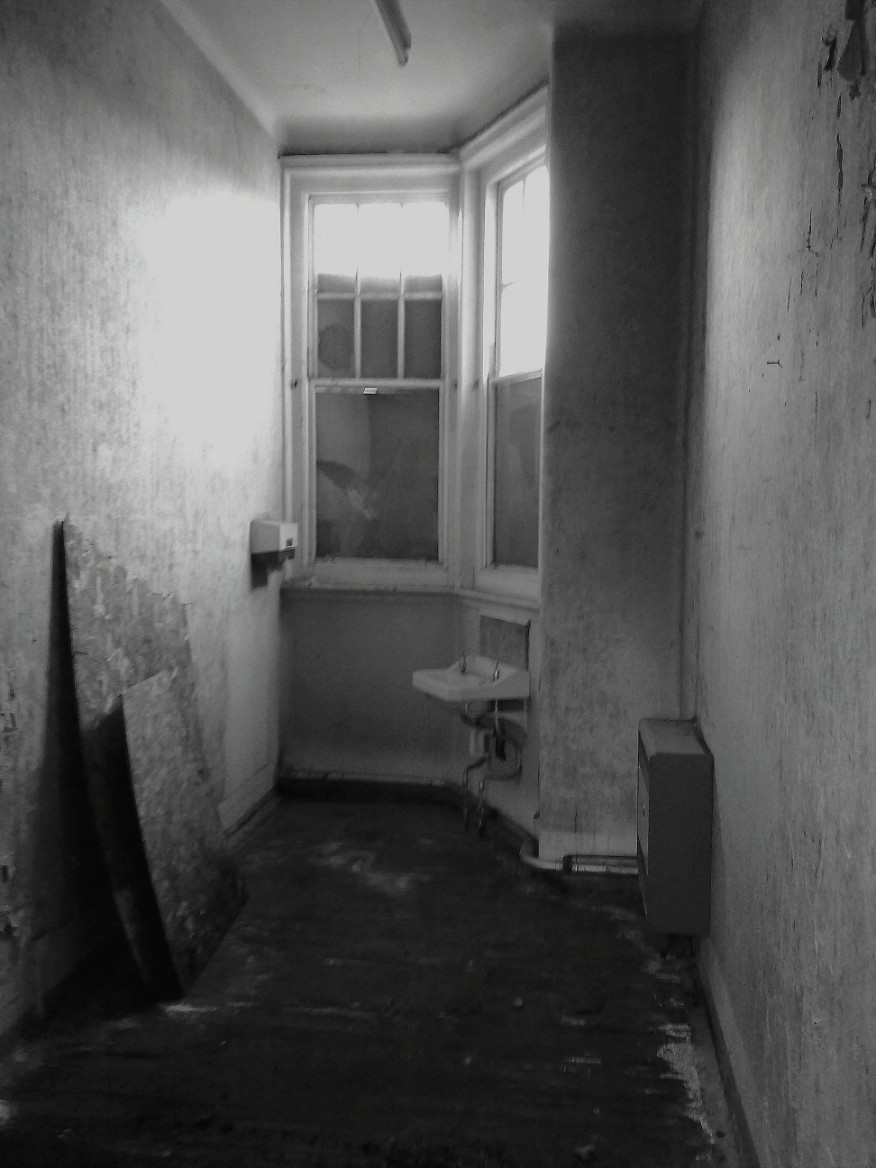
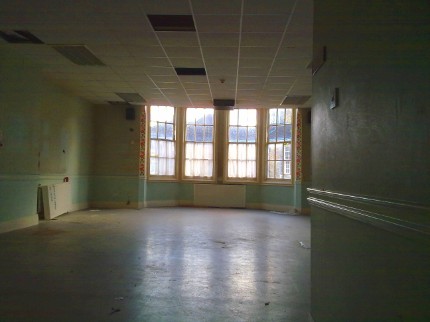
ABOVE: Abandoned Day Room. It's usually at this point we start to wonder how developers would go about dividing such a space into smaller homes in instances of redevelopment. The room only has a single aspect (just one window), so would have to be largely open plan, we think!
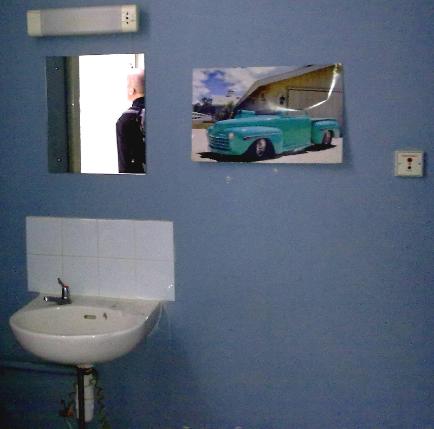
LEFT: A lot of the rooms around this part of the building had pictures of American Hotrods on the walls. We're not quite sure why.
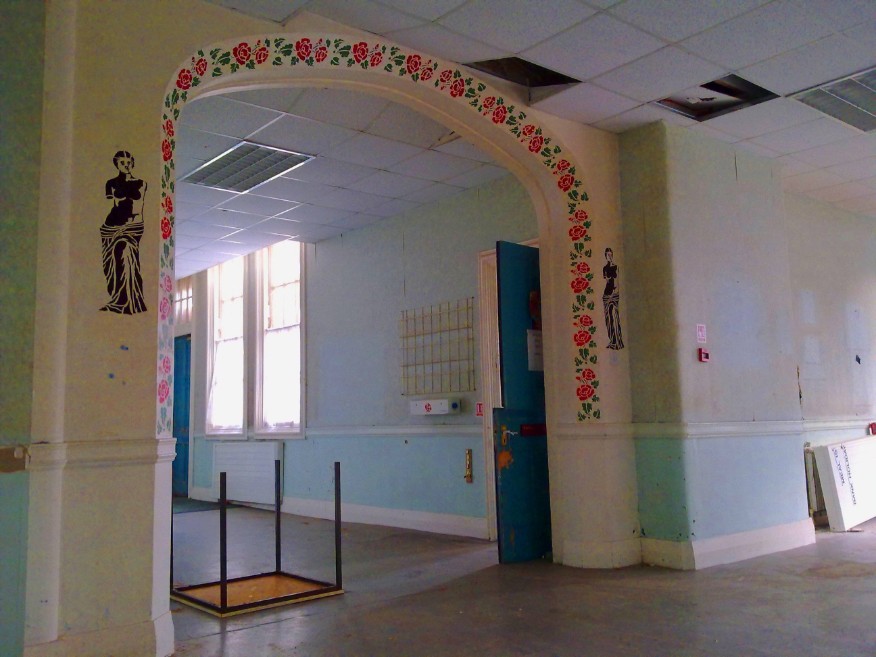
ABOVE: A slightly incongruous mix of Gothic Grandeur and 70's Office. Some very pretty stencil work, doubtless for the therapeutic benefit of the patients.
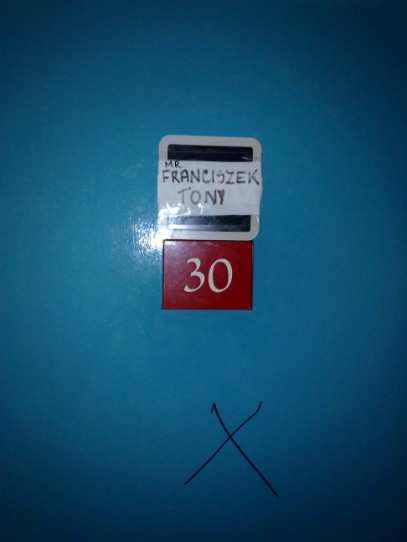
BELOW LEFT & RIGHT: Tony's room, whoever he was. A fine old English name....
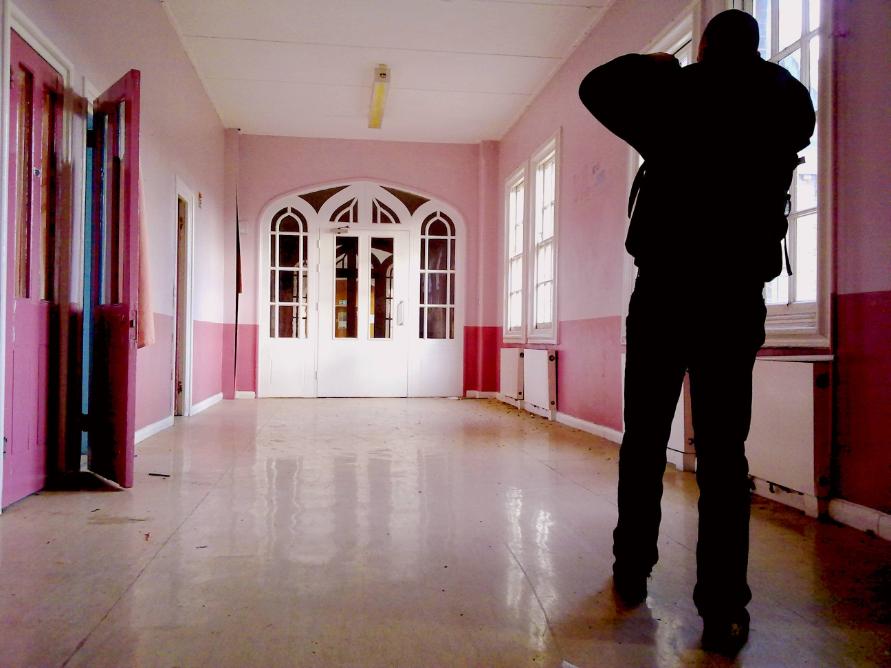
BELOW: Skyframe lines up for a classic shot of this well known location. Apart from a new floor, ceiling and light fittings, this location has changed very little over the years, apart from maybe the appalling colour scheme.
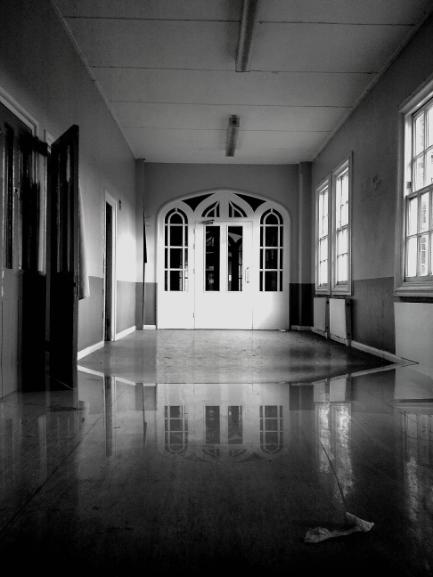
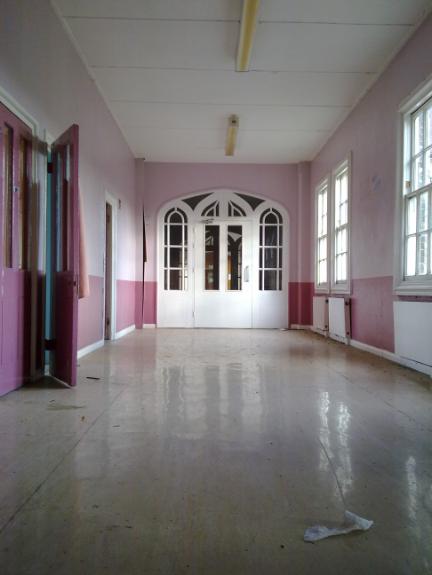
BELOW: Arty shots of the same location: On the RIGHT is with Skyframe out of shot, on the LEFT is in Black and White with a slight "Mirage" effect horizontally.
BELOW: NHS Ward Pharmacy Prescription Sheet. The prescription is for "Risperdal Consta, 50mg". Risperidone is a psychotropic agent belonging to the chemical class of benzisoxazole
derivatives. On looking up the drug, ghost found this passage, which is a little worrying:
WARNING
INCREASED MORTALITY IN ELDERLY PATIENTS WITH DEMENTIA RELATED PSYCHOSIS
Elderly patients with dementia-related psychosis treated with antipsychotic drugs are at an increased risk of death. Analyses of 17 placebo-controlled trials (modal duration of 10 weeks), largely in patients taking atypical antipsychotic drugs, revealed a risk of death in drug-treated patients of between 1.6 to 1.7 times the risk of death in placebo-treated patients. Over the course of a typical 10-week controlled trial, the rate of death in drug-treated patients was about 4.5%, compared to a rate of about 2.6% in the placebo group. Although the causes of death were varied, most of the deaths appeared to be either cardiovascular (e.g., heart failure, sudden death) or infectious (e.g., pneumonia) in nature. Observational studies suggest that, similar to atypical antipsychotic drugs, treatment with conventional antipsychotic drugs may increase mortality. The extent to which the findings of increased mortality in observational studies may be attributed to the antipsychotic drug as opposed to some characteristic(s) of the patients is not clear. RISPERDAL® CONSTA® (risperidone) is not approved for the treatment of patients with dementia-related psychosis.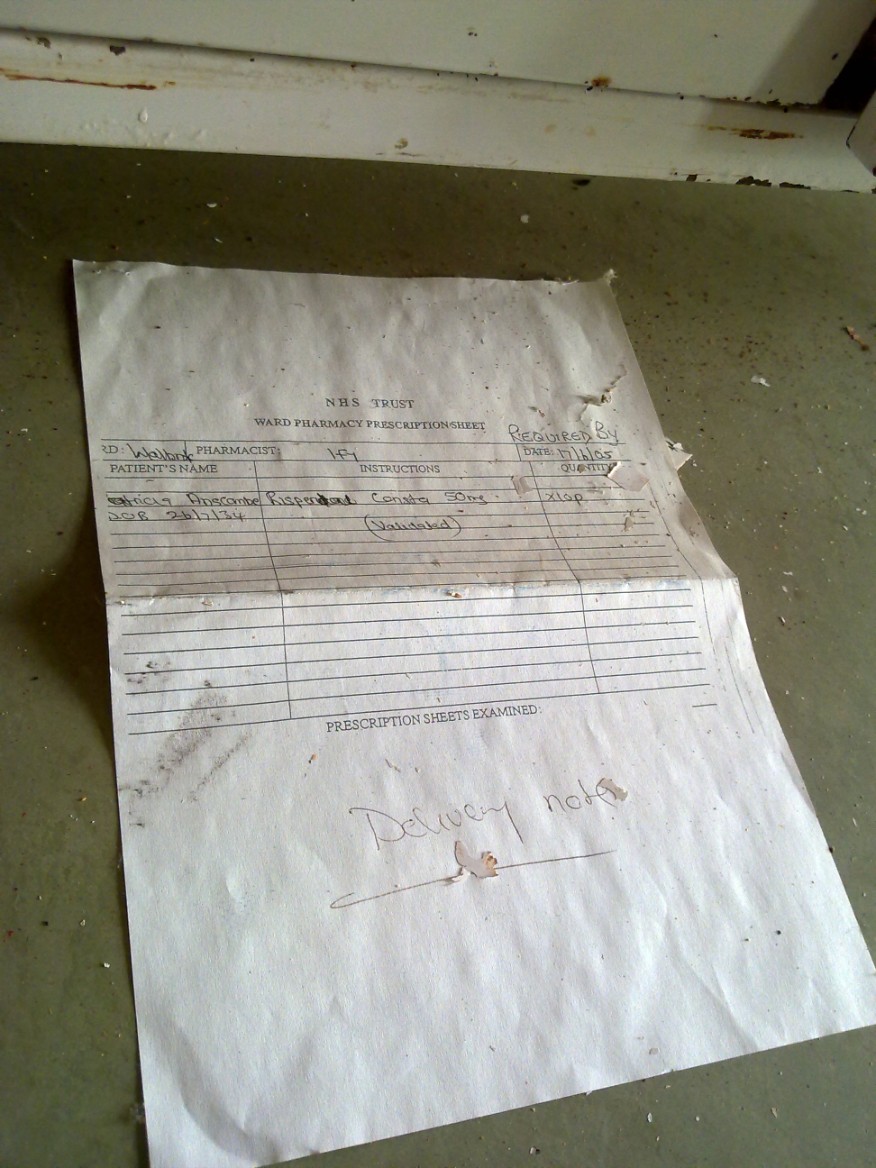
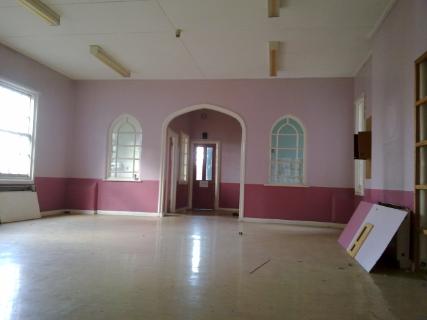
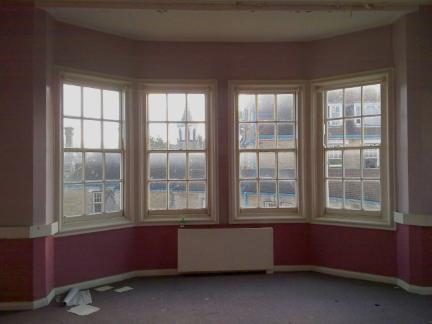
BELOW LEFT & RIGHT: The opposite end of the ward and the bay window off to one side. The bay looks back across the rear of the site, but there are also flat windows to the frontage we saw on the way into the site.
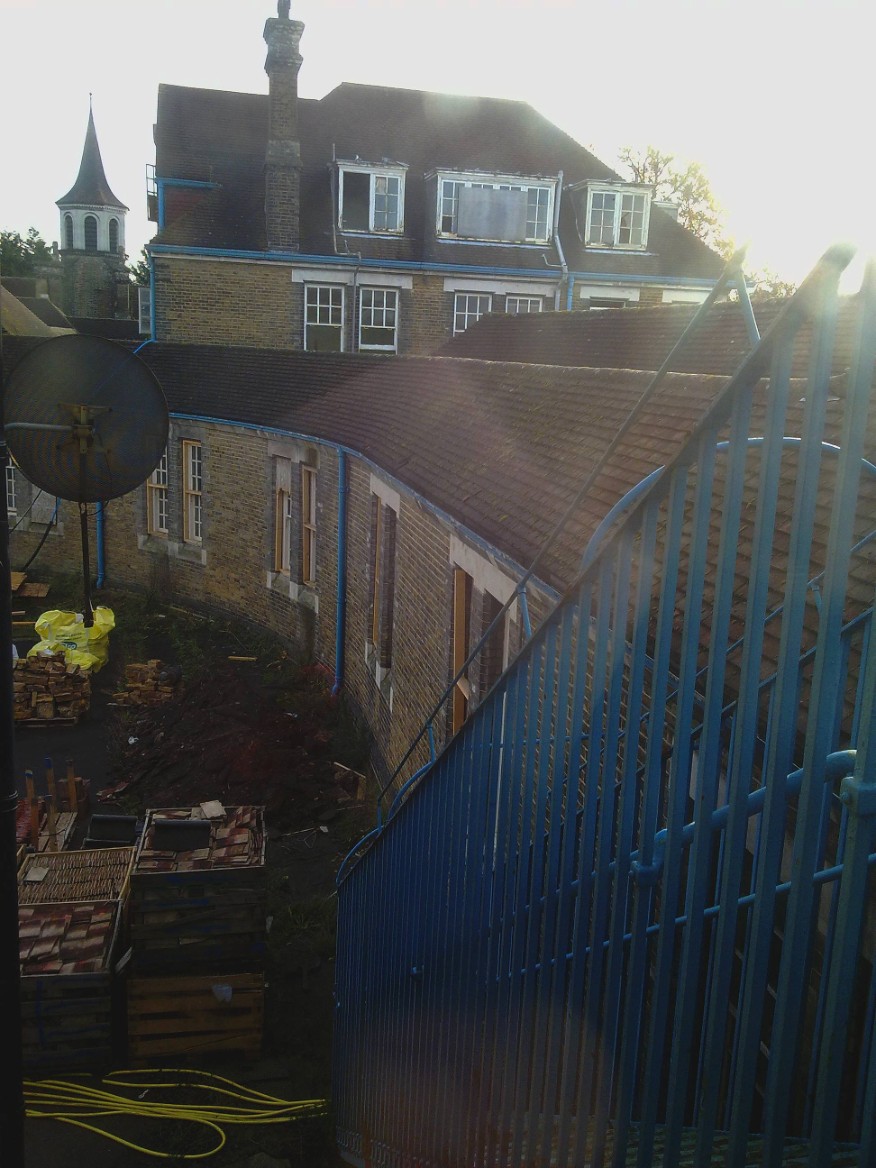
BELOW: North-Eastern Curved Corridor. Note the abundence of builder related clobber in this shot: this end of the site is bordering on the area where new-build houses are going up next to the road, so was quite busy with construction operatives. We switched to "Ninja Stealth Mode" from here.
BELOW: Interesting (if a little creepy) patient artwork. Another attempt by ghost at a swanky arty shot.
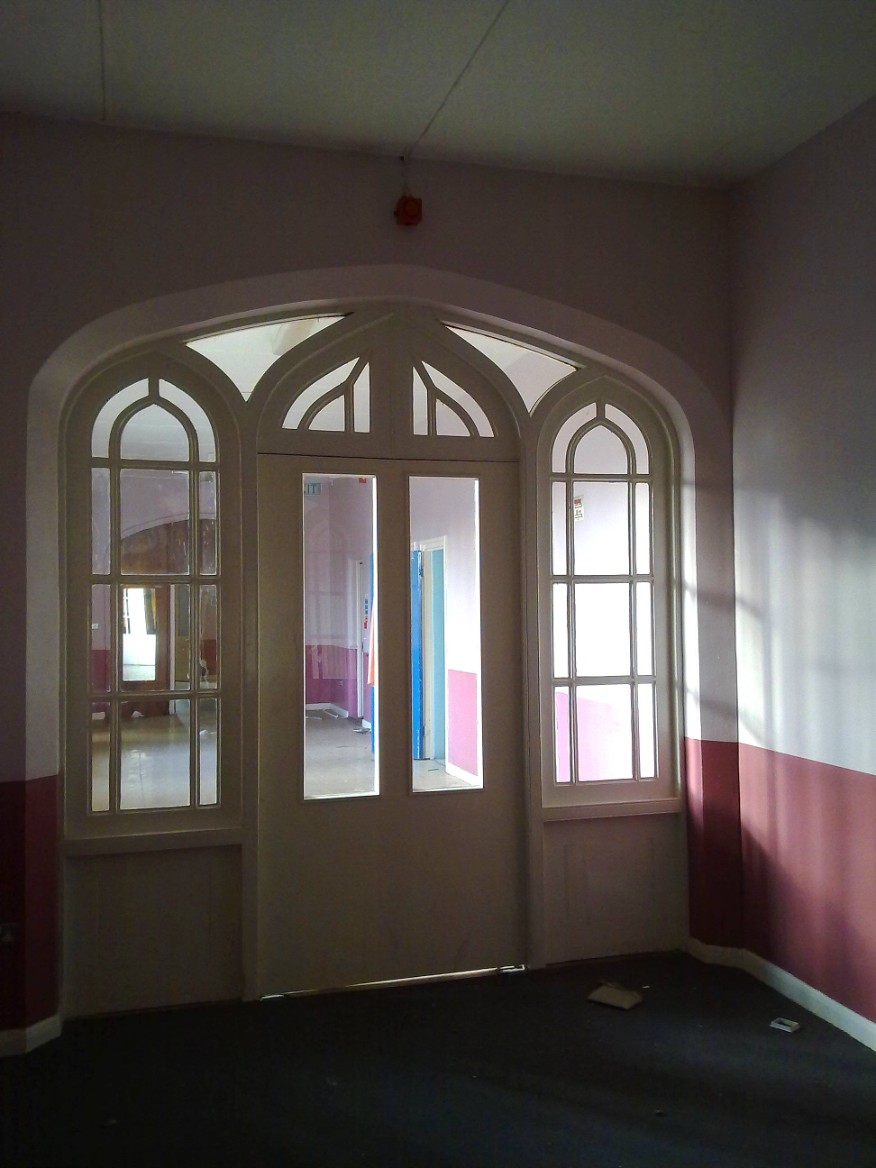
BELOW: More of the pretty doors which divide the wards. It is nice to see that they still have plain glass in - all too often the original is replaced with hideous wire mesh safety glass.
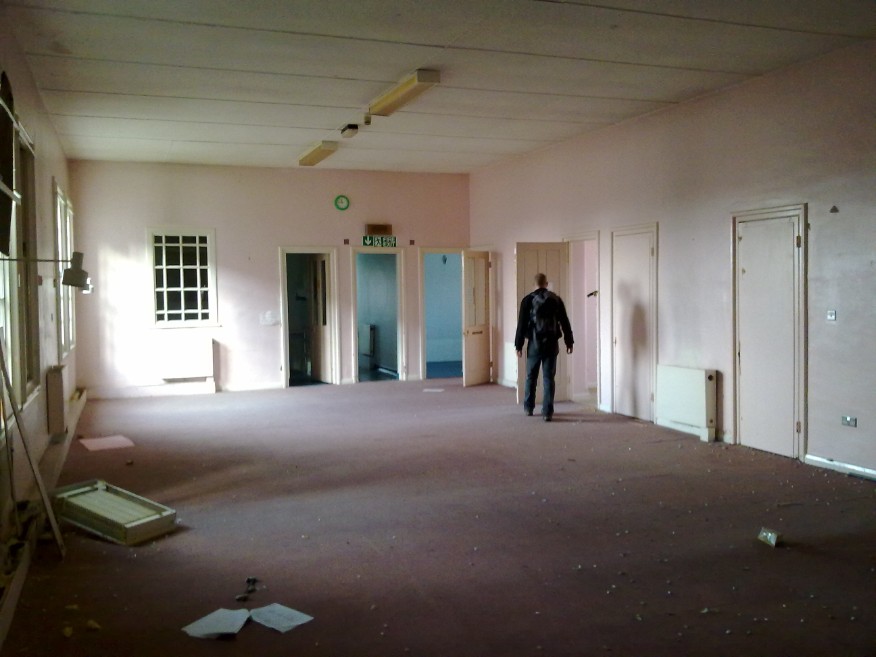
BELOW: Skyframe checks the rooms for any remaining residents.
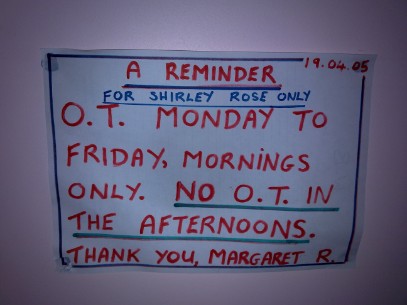

ABOVE LEFT: Shirley Rose only has Occupational Therapy week day mornings, Okay?!!
ABOVE RIGHT: Mums can be lunatics as well.
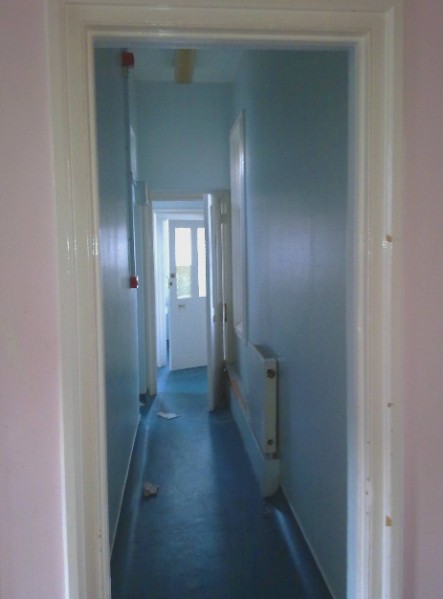
LEFT: This passageway was oddly tranquil.... Again, the slightly spooky and austere exterior of Stonehouse is much belied by the almost spotless and very modern looking interior. As has been mentioned previously, the place only closed in 2007 and has been very well secured ever since. It has none of the air of sadness of some of the other famous hospitals as a result. It was great fun to look round, never-the-less.
BELOW: Maybe the stripy wallpaper in this room was meant to be therapeutic, but we found it a little disconcerting and it gave us a headache if we stayed in there too long.
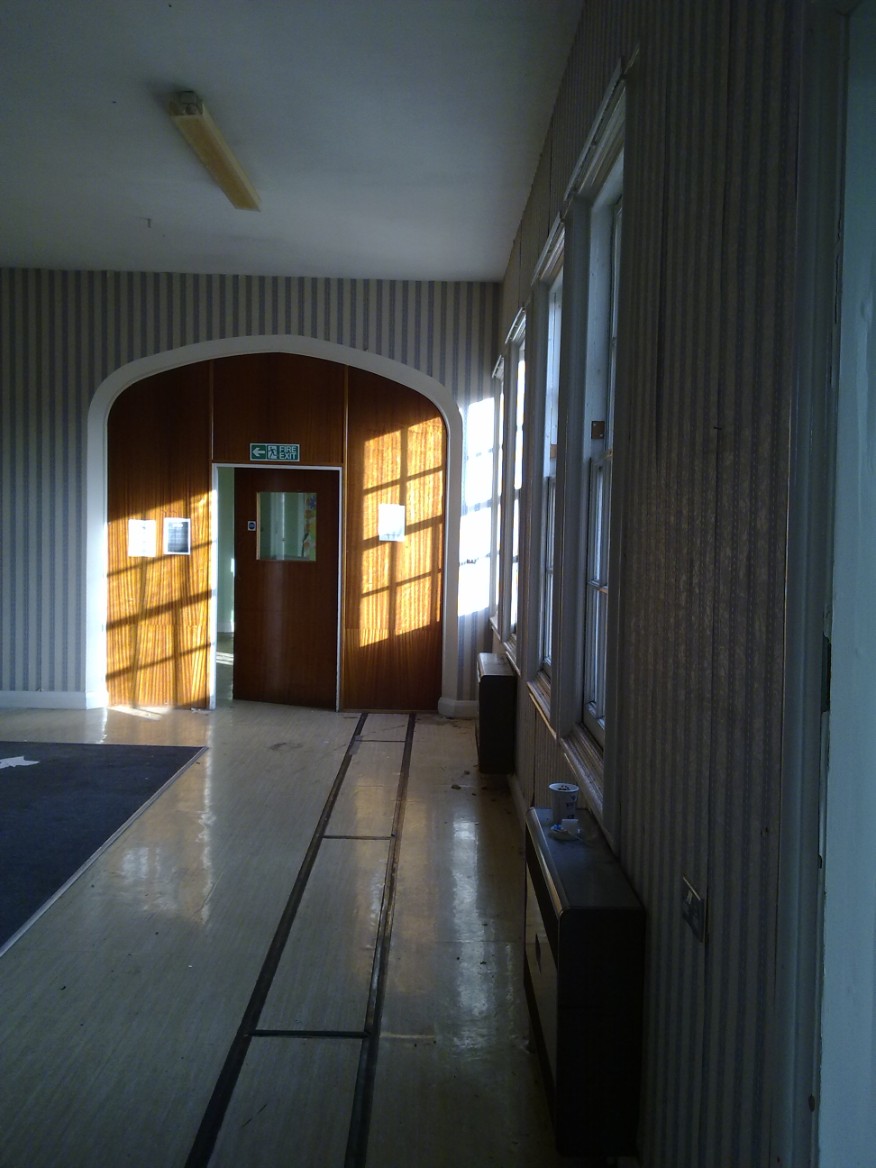
BELOW: No comments necessary...
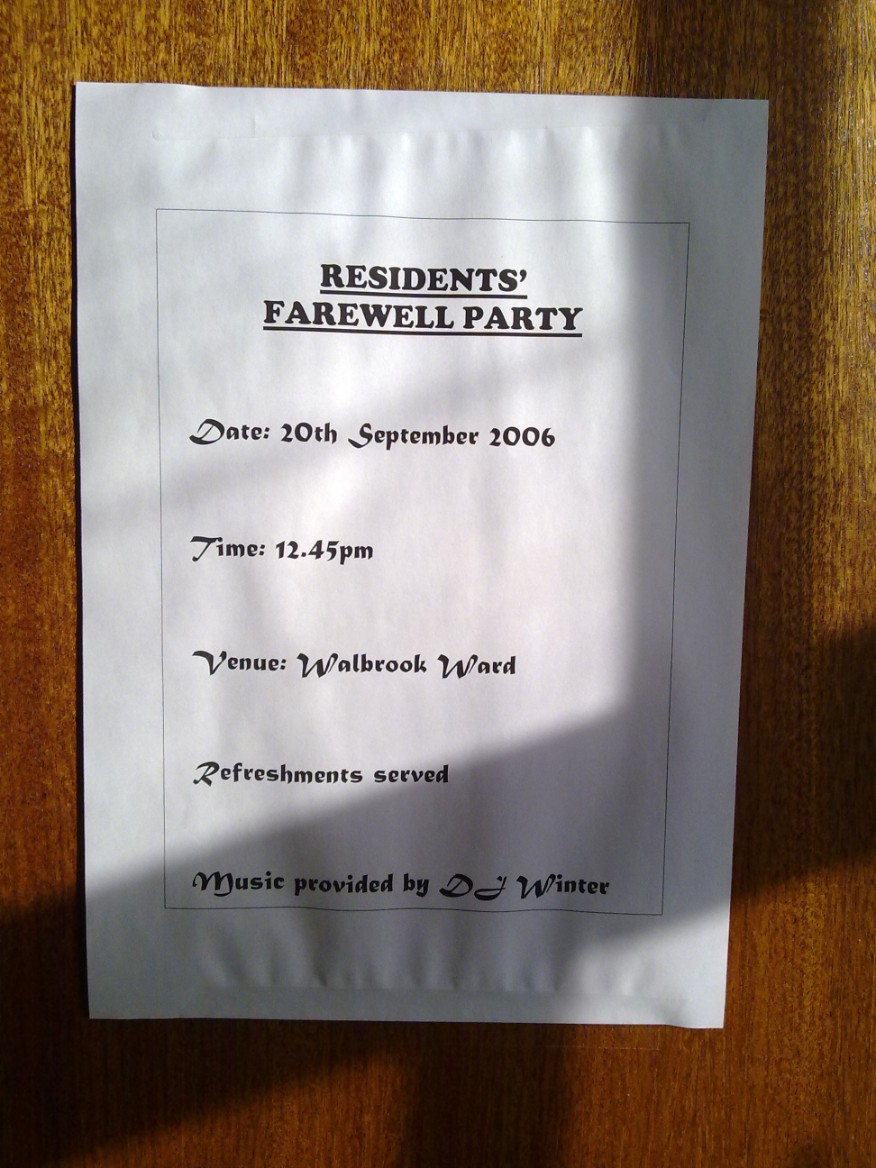
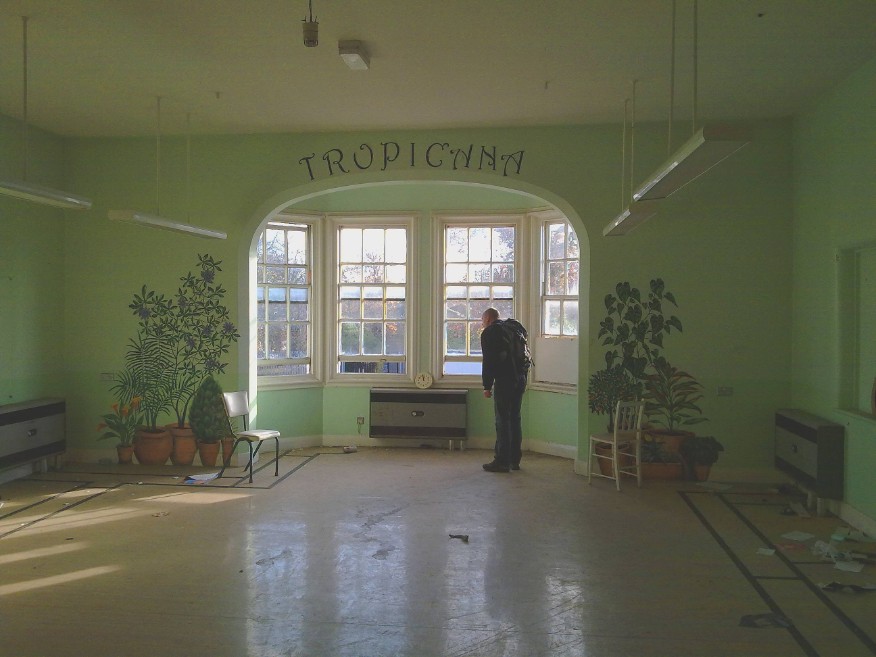
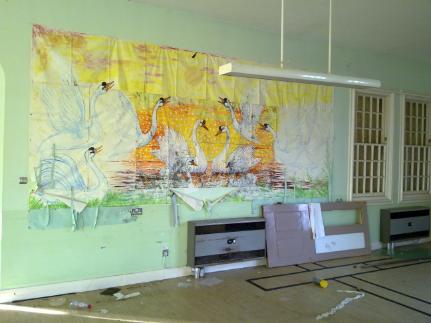
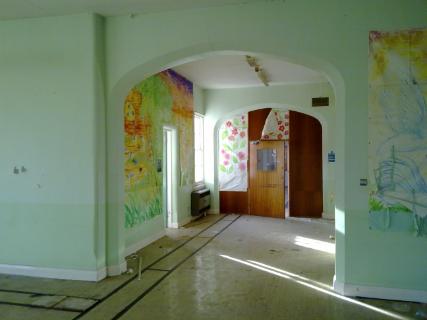
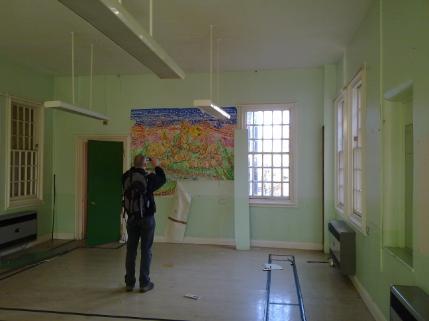
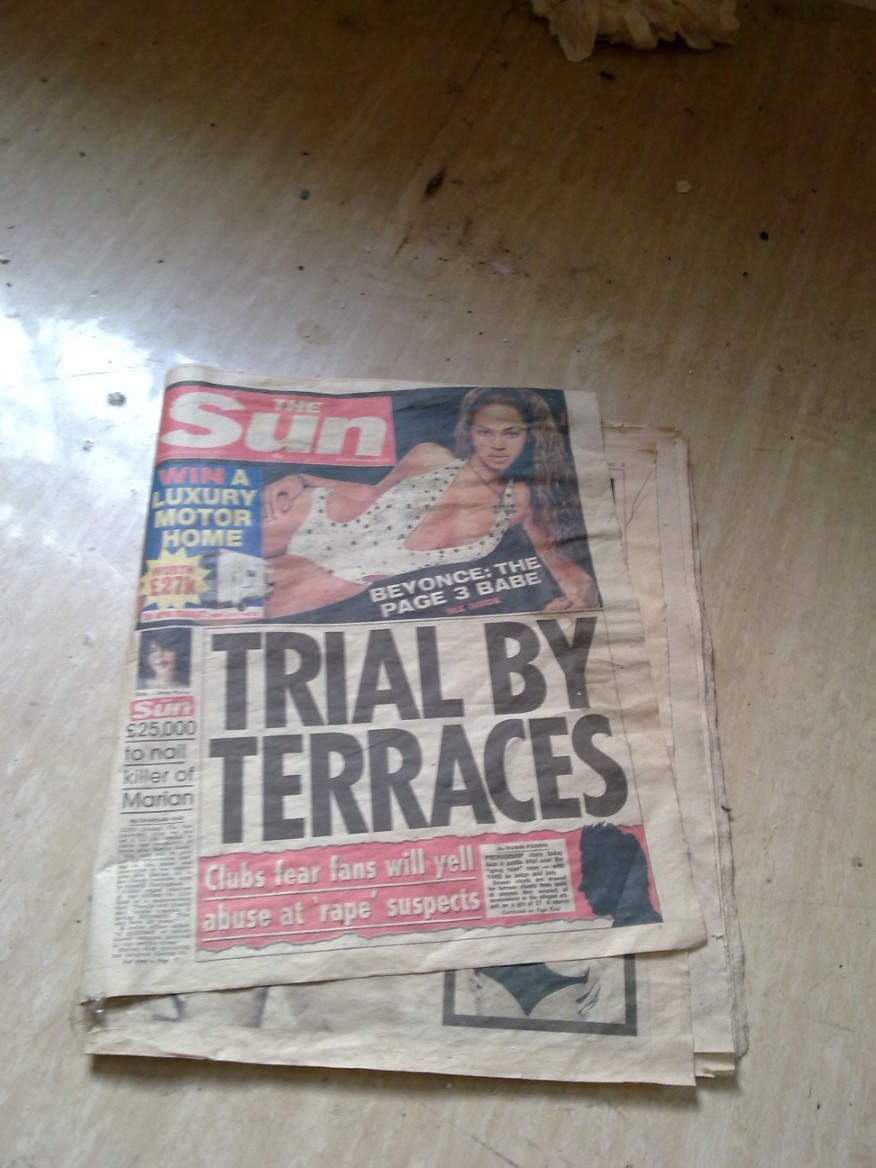
BELOW: It's always interesting to find newspapers in places such as this - it's something of a time capsule to read them later on. The date of this one is 4th October 2003.
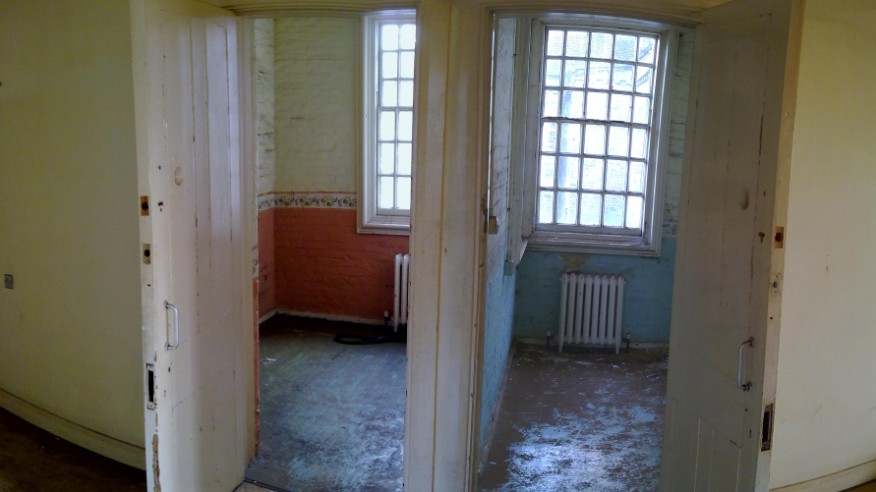
ABOVE & BELOW: We were a little baffled by these two rooms: firstly - were the residents given the choice of deciding the colour of their rooms? The other thing that we couldn't figure out was the presence of huge amounts of Copper Oxide in this room. It is clearly quite a recent thing as it's clearly happened after the placement of the chairs. We did wonder whether the proximity to the room with all the murals had some kind of significance - possibly art materials? Copper Oxide is used extensively in pottery, but there is nothing in the way of pottery related paraphenalia to support this hypothesis...
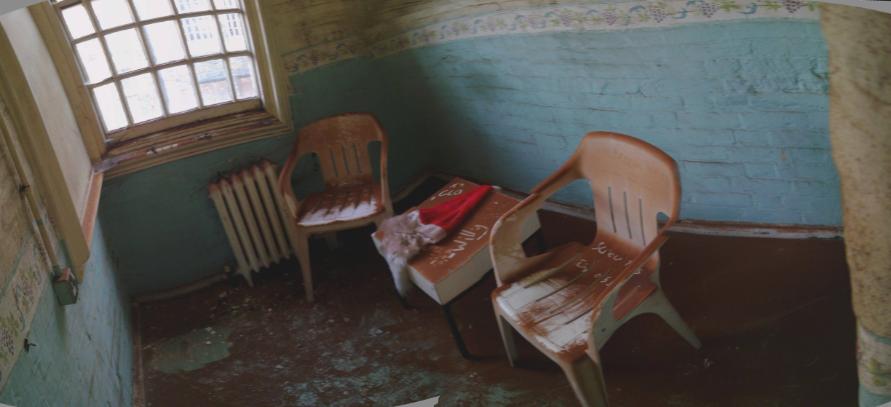
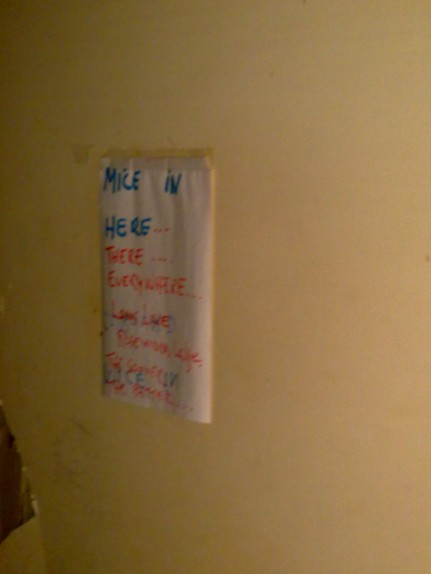
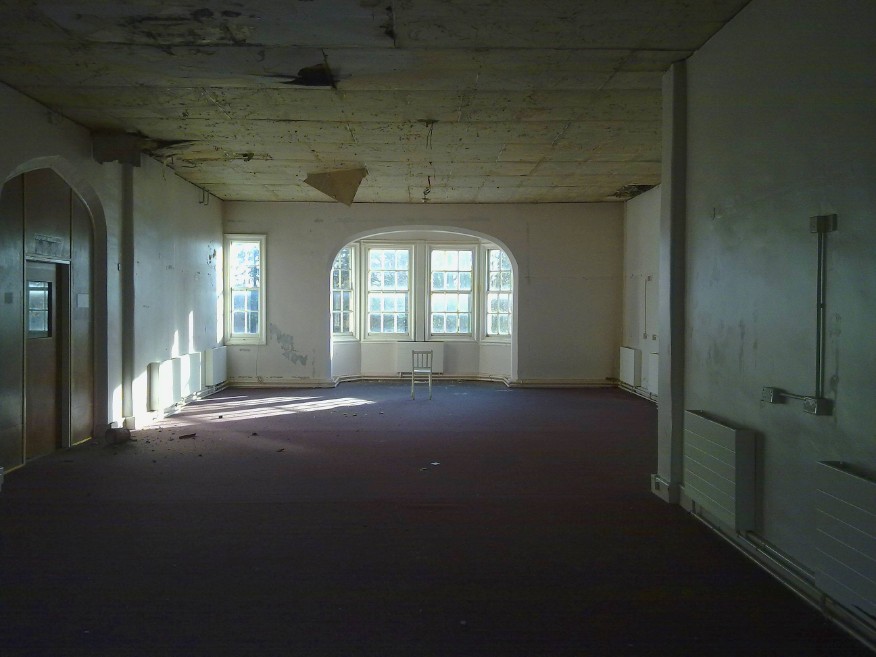
BELOW: Another arty shot! We found the chair set up in this location with almost millimetric precision, which was a little un-nerving. I love the symetry of this photo.
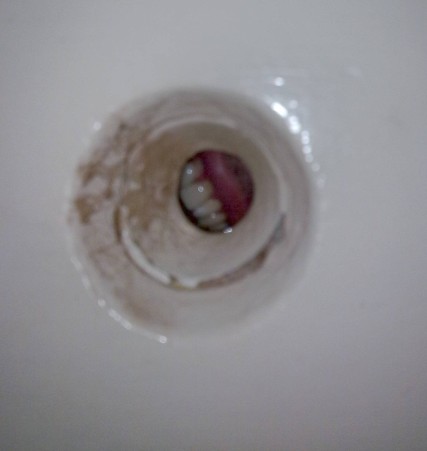
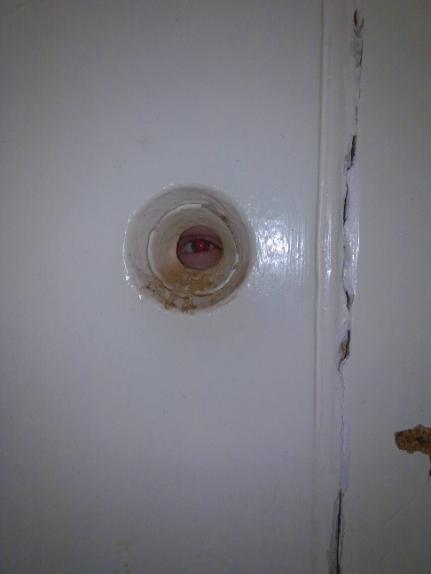
ABOVE LEFT & RIGHT: Next up we found some more solitary confinement cells - these were a lot more heavy duty, as seen above and left. These doors are at least 2 inches thick. This provoked the usual messing around.
BELOW LEFT: We may have established another reason for the eventual closure of this place.
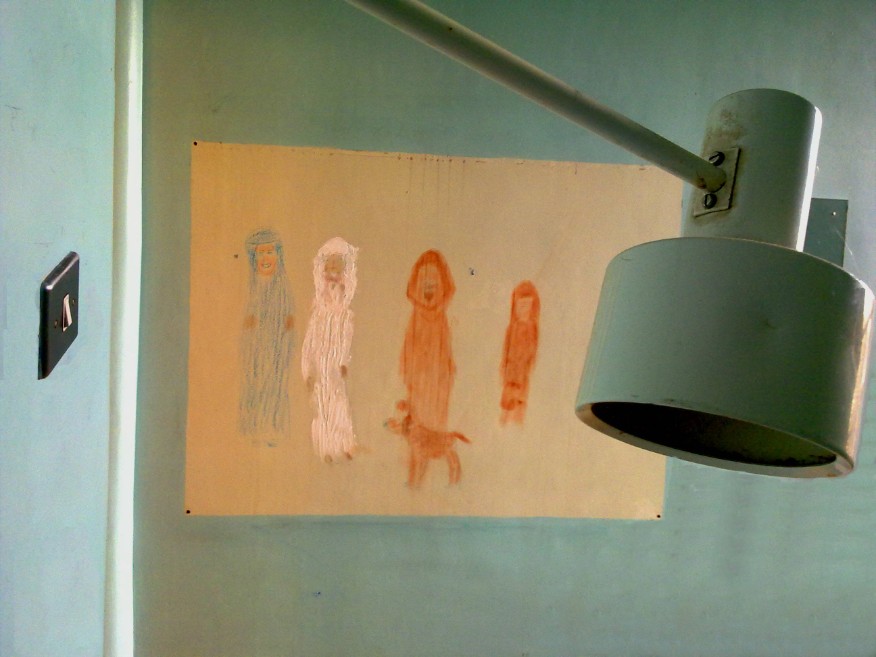
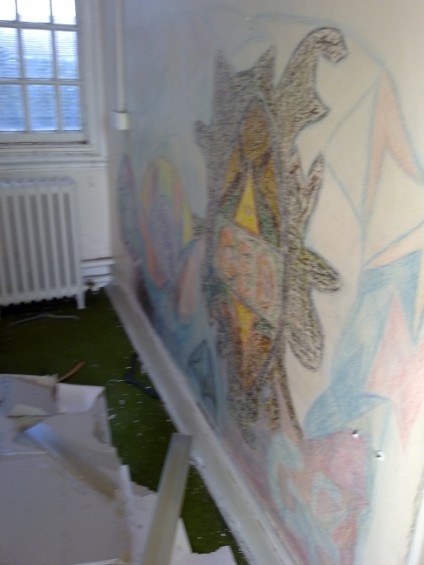
BELOW RIGHT: This was drawn on the wall with wax crayons - quite unusual. We're not sure if this was drawn by a patient, staff nurse or squatters? If you know, please sign the guestbook at the end of the page and let us know :o)
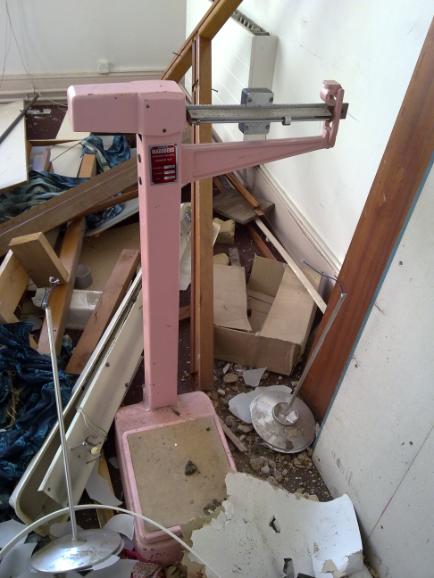
BELOW LEFT: Found discarded in a cupboard in a nondescript part of the building, we find what may be the world's prettiest weighing scales. I've never seen them in pink before and it makes me wonder if this had come from (in some very simple but oddly stereotypical way) a female ward?
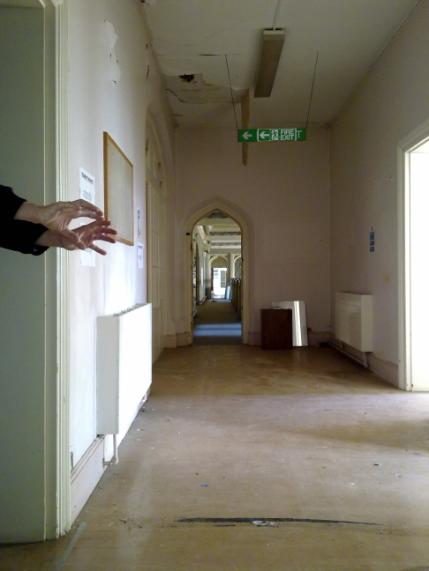
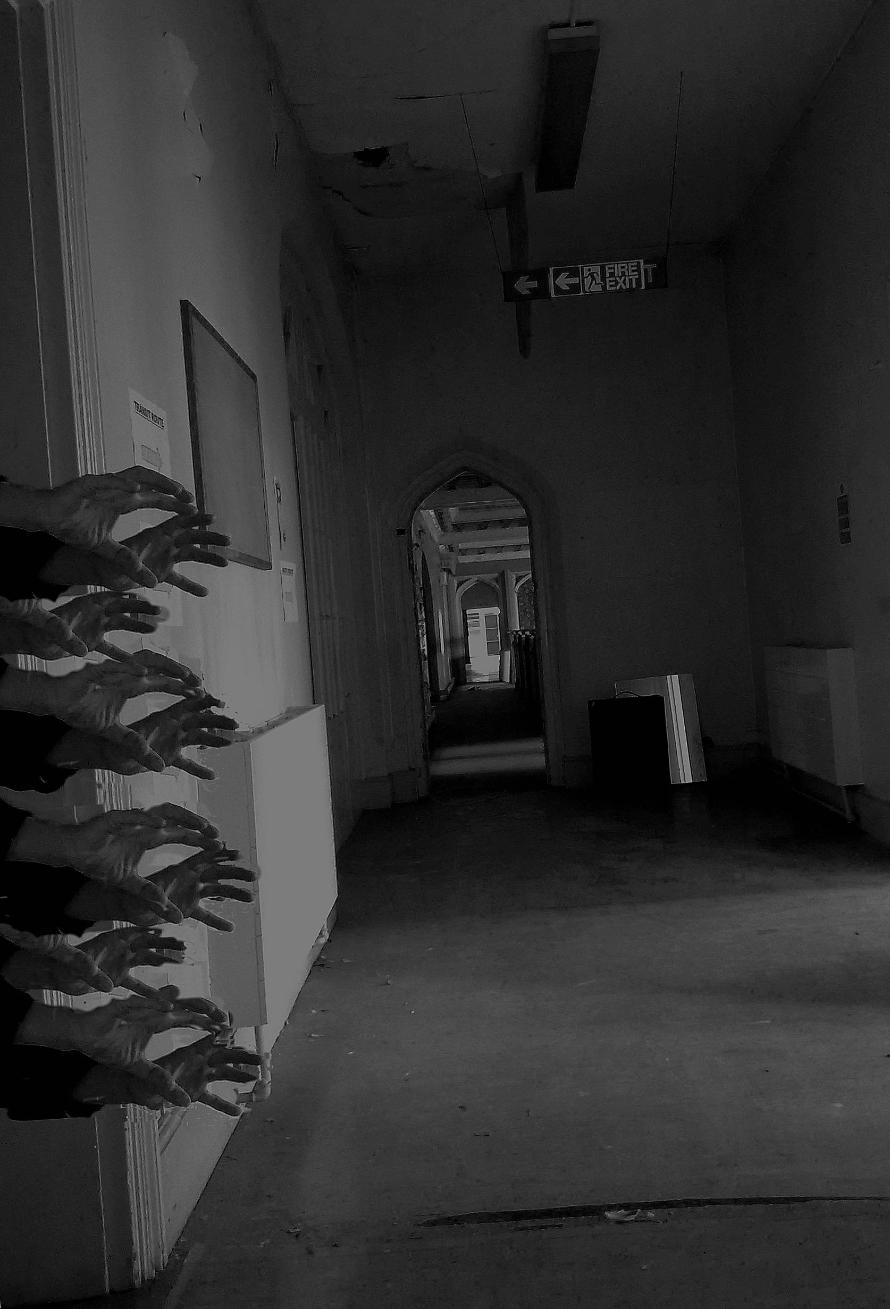
ABOVE RIGHT & BELOW: This place was looking far too sparkly, clean and not at all as spooky as the Gothic exterior suggested! Time for a little fun, ghost-of stylee! The photo BELOW is black and white, with contrast adjustments and a little bit of cloning in Photosuite4 Platinum. The result is a Zombie infestation! Top right is the original photo, as a sort of "before and after" thing.
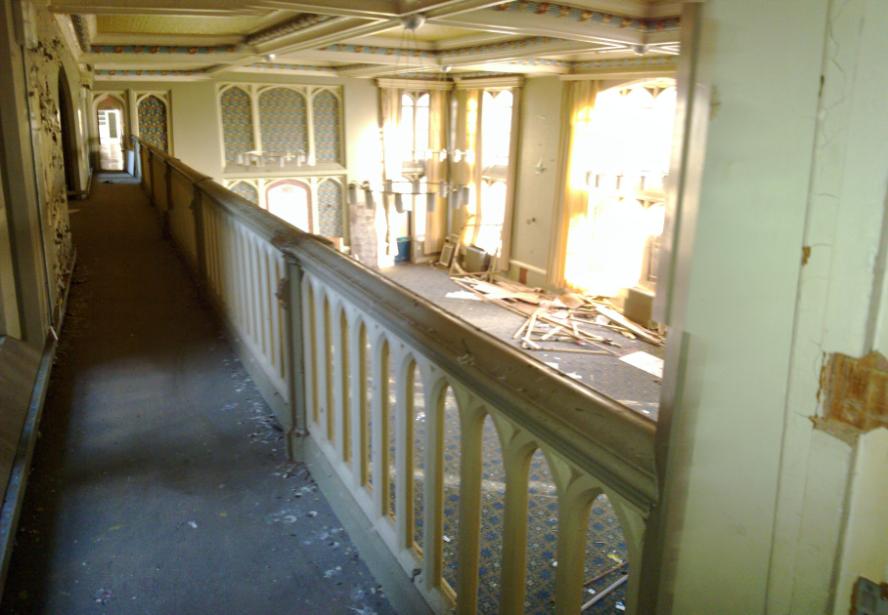
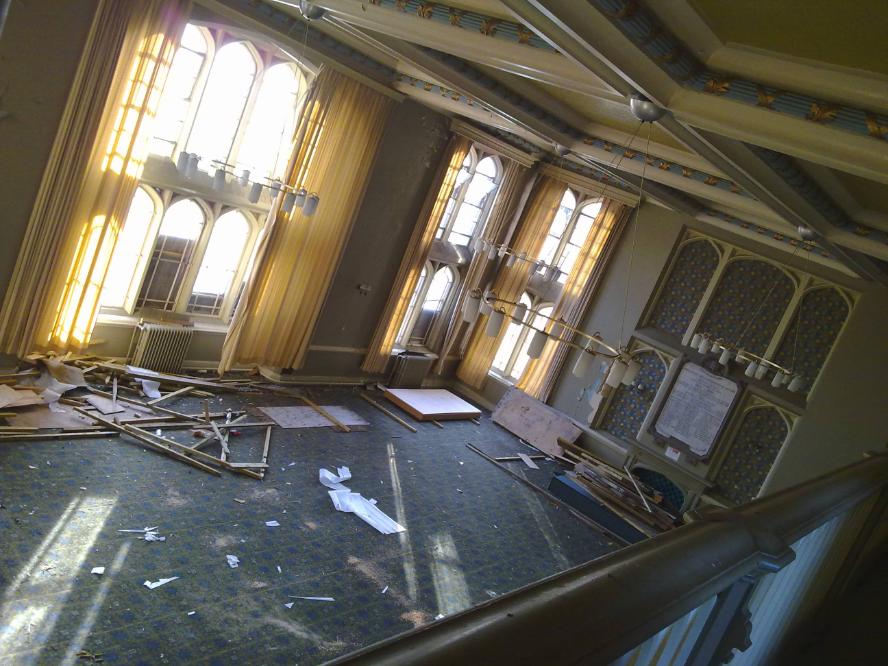
ABOVE & BELOW: A little way along the corridor, we found our way into one of the amazing halls in the centre of the site, as we had seen from outside. It is an exceptionally pretty room and very ornate, especially the ceiling and panelwork. What makes this place all the more amazing is the fact that there is another equally impressive hall upstairs. The top view is looking North-East, the bottom view is looking South-West. Note the fantastic roof bosses and the lovely fireplace. I really hope that the developers can find a way to keep this location with a few of the original features in place.
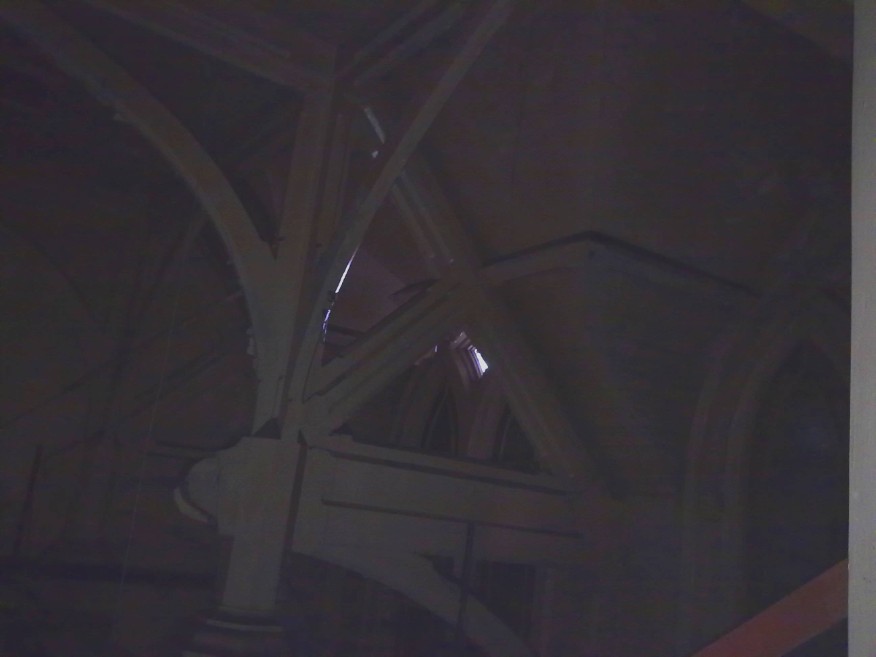
BELOW: At the rear of the upper hall, there was a panel missing in the back wall and through it, we could see into the void above the suspended roof in the canteen. Although not readily apparent, it is just possible to make out the huge arches, bosses and corbels that hold the roof up. We are guessing at some point, the canteen and hall areas were all one space and have subsequently been divided up. It is a great shame as this would have been quite something to look up at whilst eating dinner.
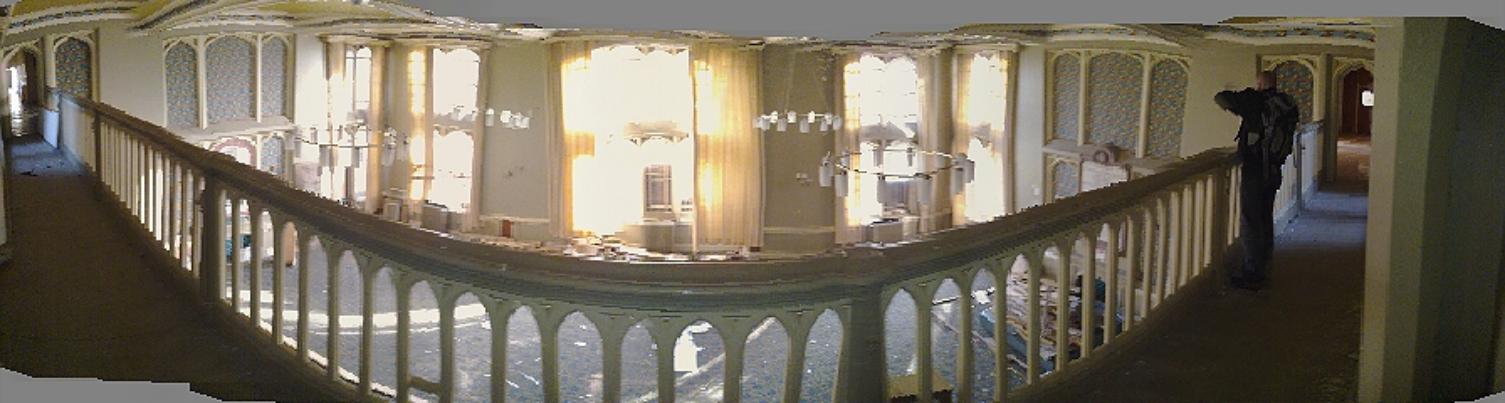
ABOVE: Panoramic view of the Lower Hall. The photo belies the sheer size of this hall and we still can't believe there's another one upstairs!
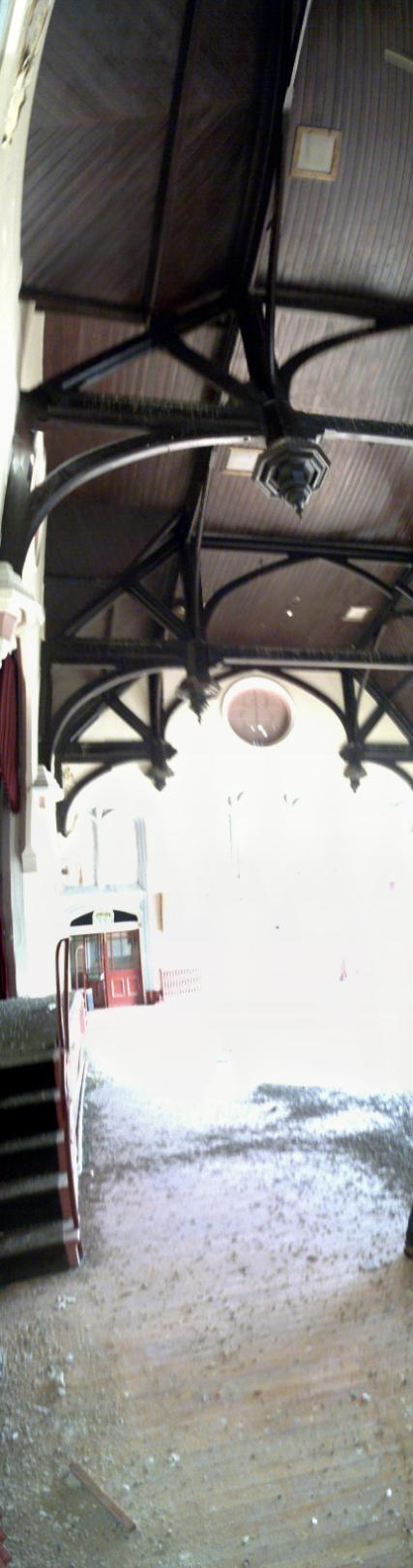
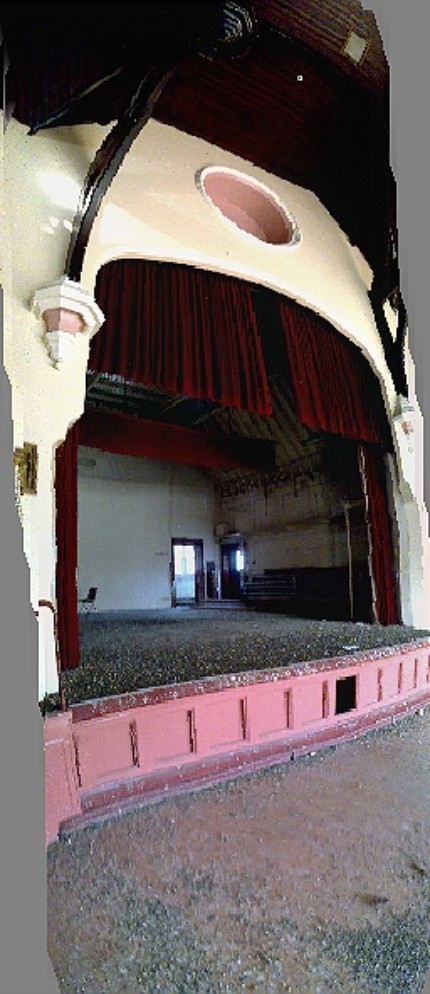
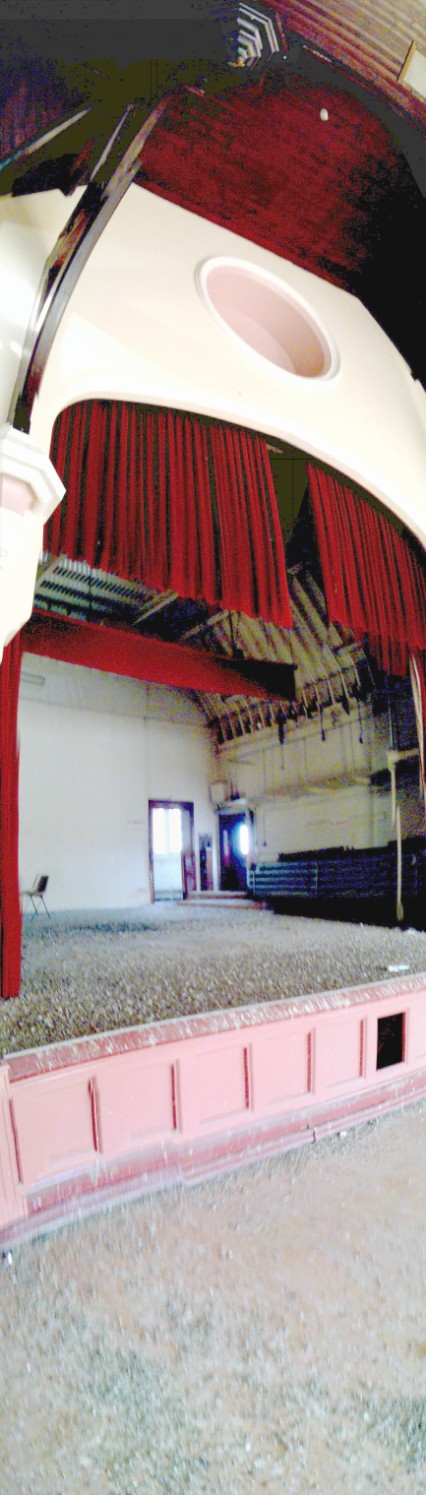
TOP RIGHT, CLOCKWISE TO TOP LEFT: The upstairs hall, detail of the stage, complete with quite a nice lighting rig and several tonnes of pigeon poo, the flies and more fantastic roof support detail.
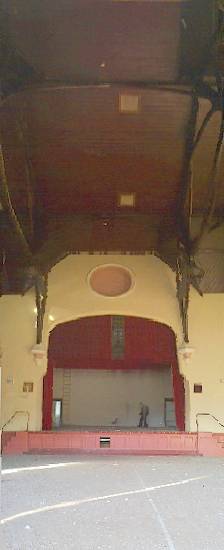
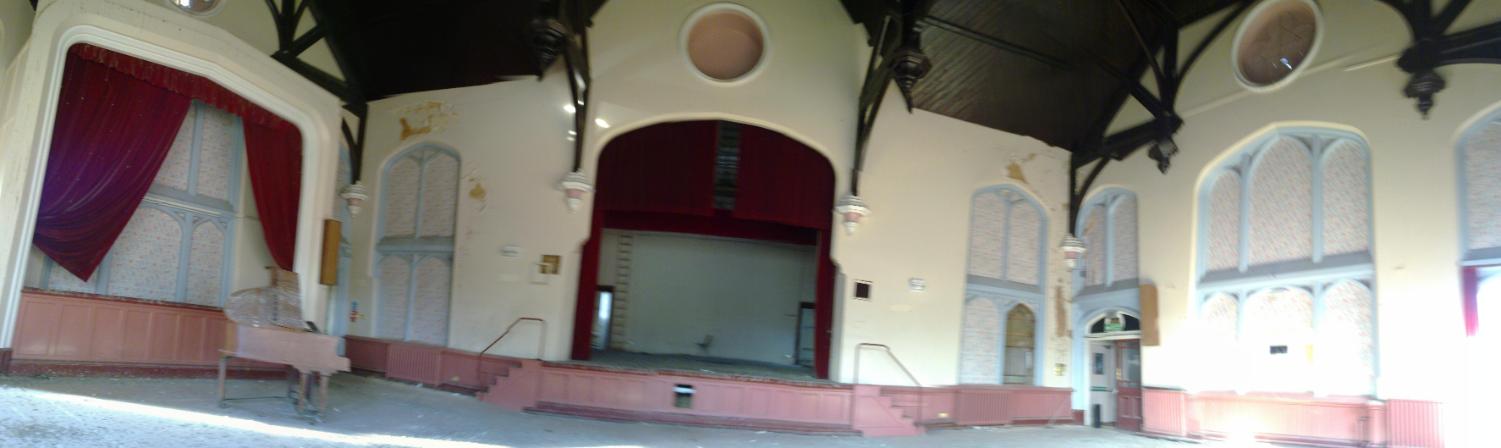
BELOW: Panoramic view of the upstairs hall, looking roughly North. The stage is towards the rear of the building, with the Tower behind it. Despite our looking, we couldn't get into the Tower - we found the appropriate doorway from behind the stage, but it is very securely padlocked and screwed shut.
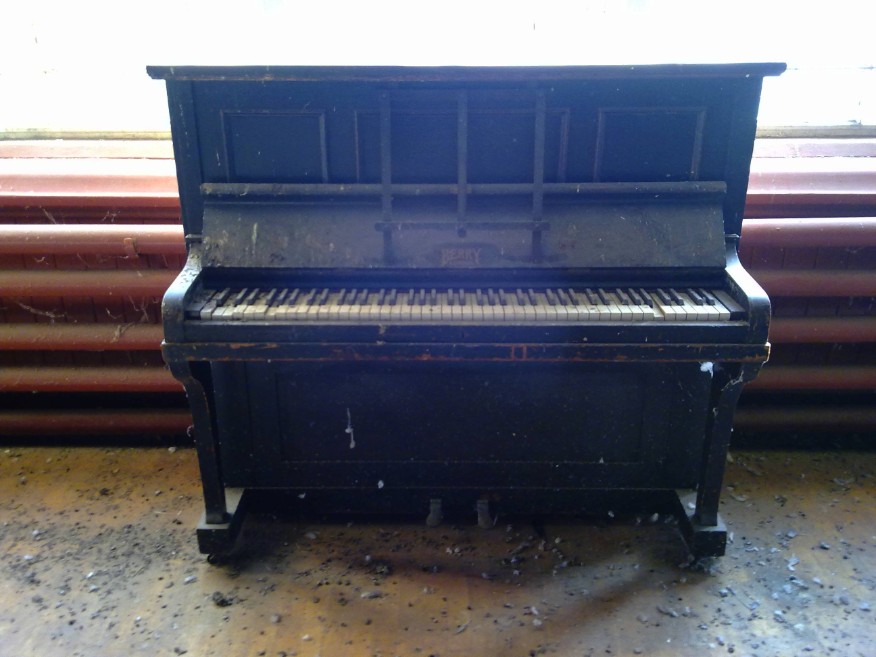
BELOW: One of the most iconic images for which Stonehouse is famous: one of two pianos which reside in the hall upstairs: an upright and a grand piano. It is often at this point that unwary Explorers forget the need to be sneaky, partake in a bit of jazz improvisation and get very quickly collared by Security... but not us! Spookily enough, as we were looking around this room, we heard a sudden blast of piano music that freaked us out a bit, being close to rather close to a pair of spooky looking discarded pianos. However, due to the proximity of builders, it could easily have been a mobile phone ringtone and the fact it was piano music was entirely coincidental.
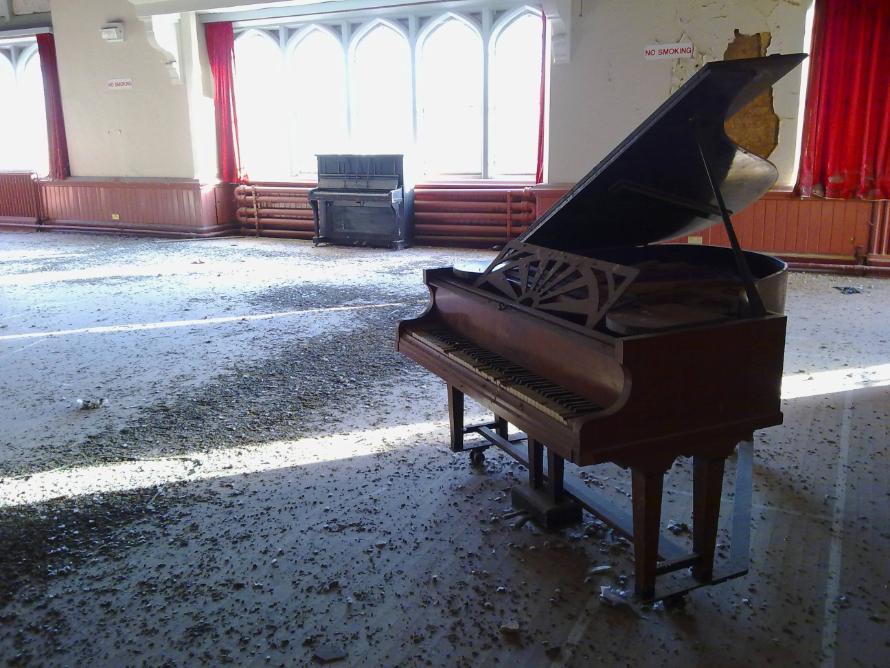
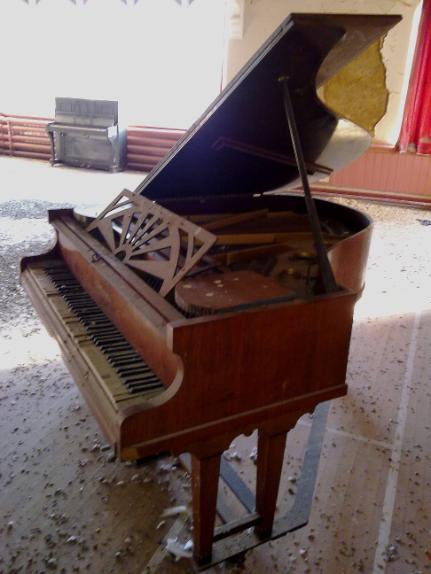
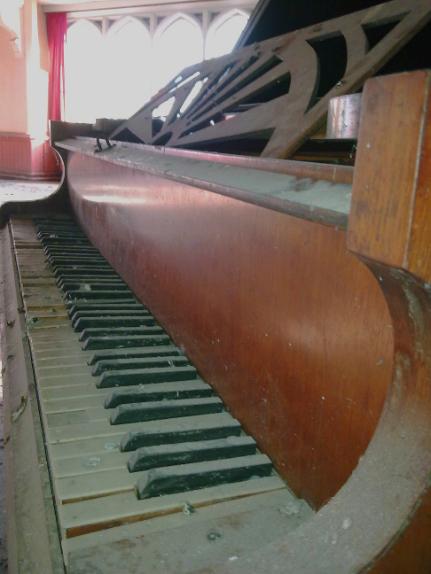
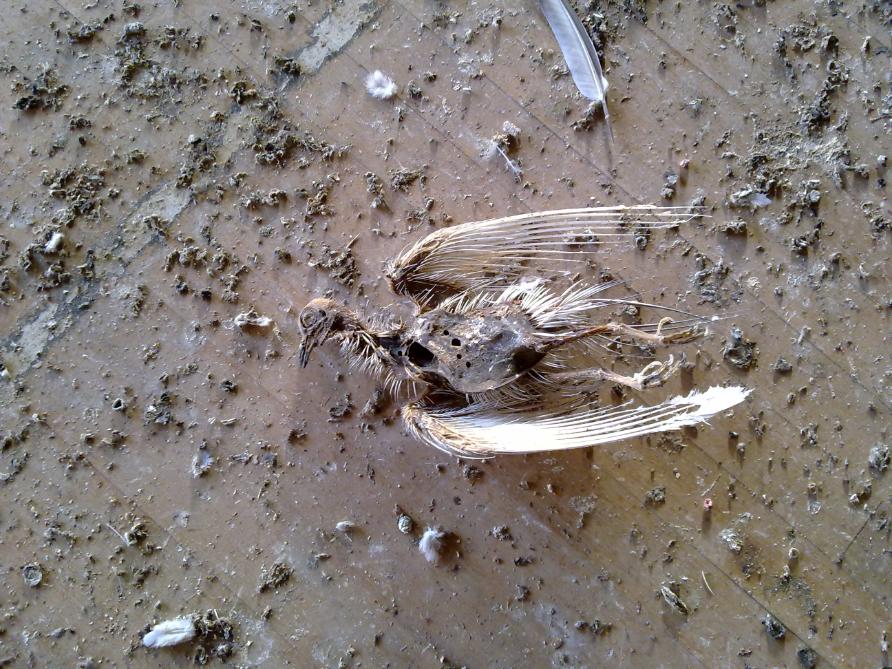
BELOW: Not a fan of piano music? Another Arty shot...! I have never encountered so much pigeon poo in my life and I'm wondering on hindsight if we should have taken masks. We tried to disturb it all as little as possible.
BELOW: This is the point at which we heard the sudden blast of piano music, which we think was a builder. It is funny however, that it happened just before ghost snapped the mysterious corona seen around the centre of the keyboard in this photo.
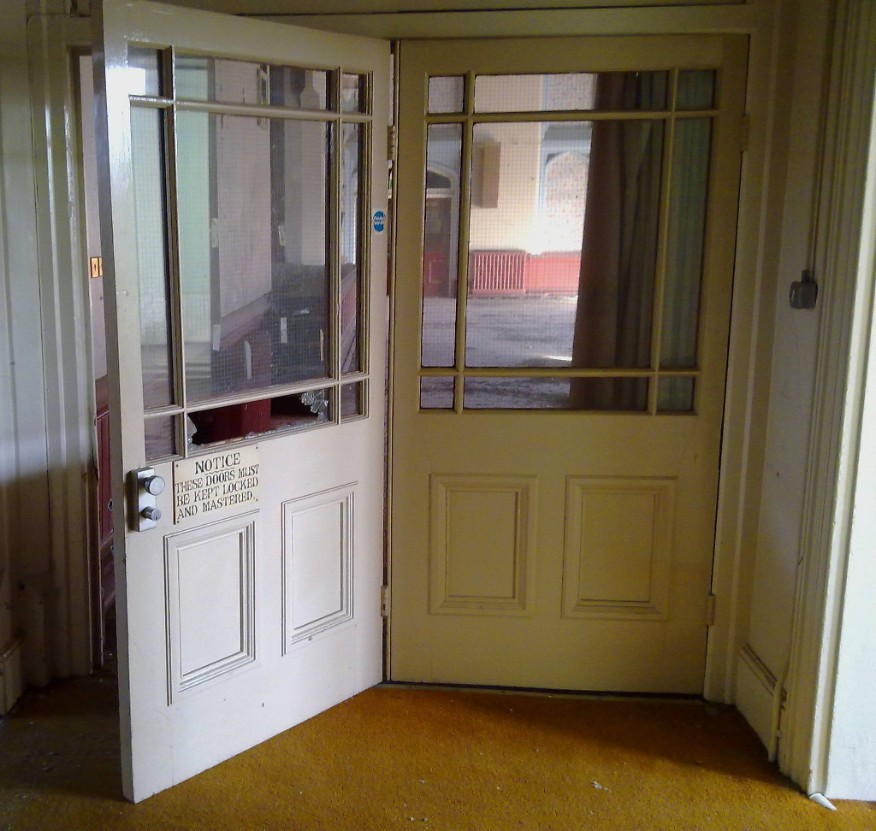
BELOW: The main access to the upstairs hall. The sign on the door is quite poignant: "NOTICE These doors must be kept locked and mastered". We are guessing that 'mastered' means manned with possibly a weapon of some kind....!
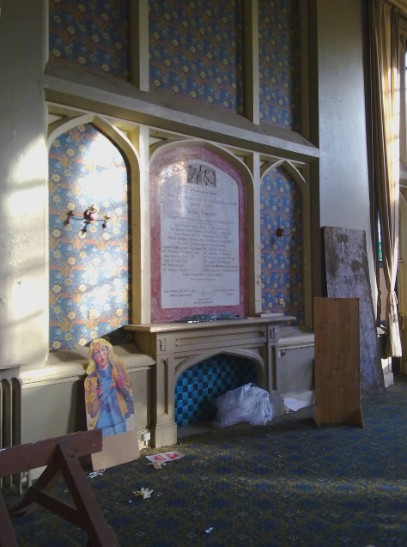
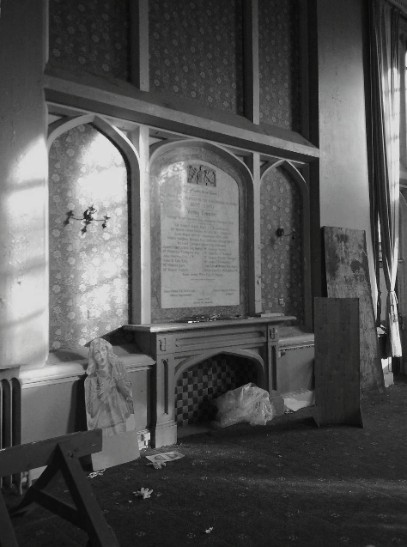
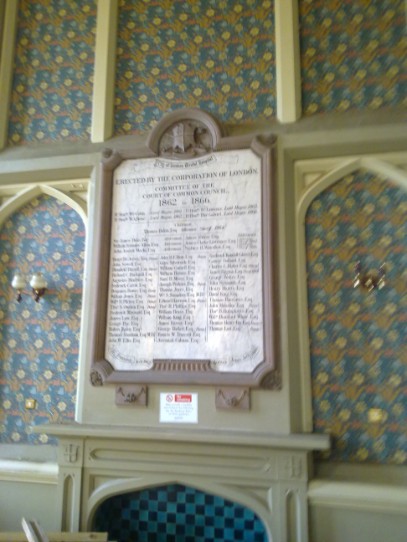
BELOW: We just had to return to the downstairs hall for a closer look at the beautiful stonework around the fireplaces. Not the commemorative plaques above the fireplaces.
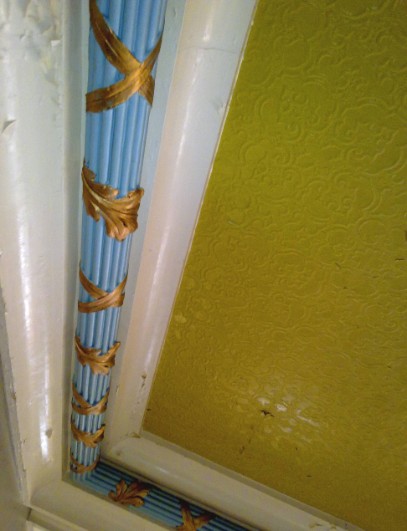
Fantastic and beautiful detail:
ABOVE: the Plaque above the North-eastern fireplace. it reads "Erected by the Corporation of London, Comittee of the Court of Common Council 1862 to 1866". I am not sure as to the relevance of the names, but they may be alderman involved with the inauguration ceremony.
TOP LEFT: Fantastic detail of decorative moulding, cornices and ceiling bosses in the lower hall. Beautiful.
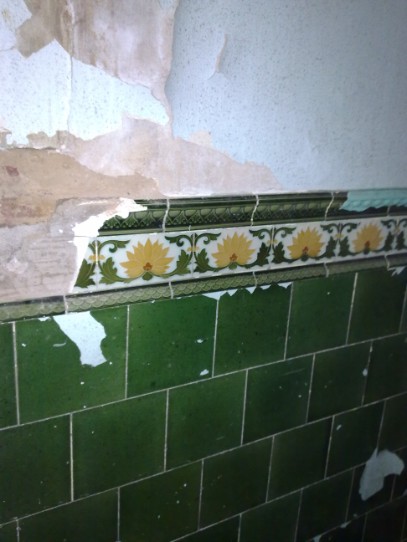
BOTTOM LEFT: As with Hellingly Lunatic Asylum and doubtless others we haven't been to, there is an amazing abundence of very decorative tiling.
ADDITIONAL RESOURCES FOR STONEHOUSE LUNATIC ASYLUM:
LOST HOSPITALS OF LONDON (HISTORY OF STONEHOUSE)
JARRELOOK.CO.UK (HISTORY OF STONEHOUSE)
DARTFORD.GOV.UK (REDEVELOPMENT BRIEF - PDF FILE)


----====********************====----