We'd heard a lot of good things about Newhaven and so, on a fantastic bright June day, decided to go have a gander.
First - a bit of History.
Newhaven Marine Workshops are on a patch of derelict land just south of the swingbridge in Newhaven and quite possibly date from the days when the London, Brighton & South Coast Railway first started to construct the rail network we know so well today.
The rail system between Brighton and the East Coast would have been gradually established between 1841 and 1847, with lines added towards Hailsham in 1849, so you can well understand our interest in this place given it's historical pedigree. The workshops as they appear today were rebuilt in 1882 and smaller premises were situated slightly further inland than the current buildings.
The buildings have obviously been adapted for various uses over the course of their working lives and so the interior represents an interesting and varied collage of periodical features, from coal fired boilers and hand operated gantry cranes, right up to emergency signage for some of the most recent trains of the last 15 years. The top storey was rebuilt in some places in 1940, possibly due to coastal bombing. The windows on the South side of the main building were also partially rebuilt, due to a barge full of explosives hitting a wayward mine in the harbour nearby - this also caused extensive damage throughout Newhaven, so the Marine Workshops were lucky to survive at all!
There are 2 huge hand operated gantry cranes on the site, said to be in fantastic condition for their age and an original forge inscribed on the hood with "Brighton Works, 1882".
The building contains a rich variety of interesting architectural features, including some fantastic cast iron pillars in the largest of the building and some beautiful round headed cast iron windows, containing 16 lights (panes), some of the biggest we've found.
However, this place isn't just a railway workshop. As the name suggests, it was also used to maintain boats, ferries and even a paddle steamer at one time: in the formative years of the LBSCR, communication with the continent was a key feature, adding to Brighton's popularity with tourists. A paddle steamer made regular calls to a landing stage at the end of the Chain Pier (now long gone but just to the east of Palace Pier) and Shoreham. Plenty of materials used in the construction of the railways were also brought in via boats and landed in Shoreham at first, but later Brighton beach and Newhaven, so it made sense to have somewhere fairly central to service the rolling stock and boats involved in this operation.
The buildings are Listed as Grade 2 and it will be interesting to see what will become of them, especially as the site is currently earmarked for quite hefty redevelopment.
The Mission.
With a screech of tyres and a shower of gravel, Agent Skyframe expertly handbraked the "ghost-mobile" into the carpark opposite Newhaven's Railway Club. As the sun beat down on the locals and their pints, the 2 strangers disembarked and crunched across the gravel to the saloon doors. Ghost took a deep breath and pushed the doors open. Heads slowly turned towards the shadow that now eclipsed the light from the door. A safety latch clicked in the deafening silence. A chair scraped backwards. Slowly, but very deliberately, the locals at the bar found something to hide behind....
Nah! We turned up in Hi-Viz gear, strutted across to the (very obvious) gap in the fence and just strolled in as though we owned the place. Who ever pays attention to guys in Hi-Viz vests? They're meant to be there, right? Got it in one - camauflage can sometimes be the total opposite. Cool, eh?
But seriously, we did want to look like we belonged. Don't forget, Newhaven is a port and it does have port officials and port officials can get really intense with people appearing where they shouldn't really be: they tend to think drugs trafficking is the order of the day and neither of us fancied having our cavities searched....!
So..... here we go. Yes, there is some commentary where necessary, but in most cases the pictures speak for themselves.
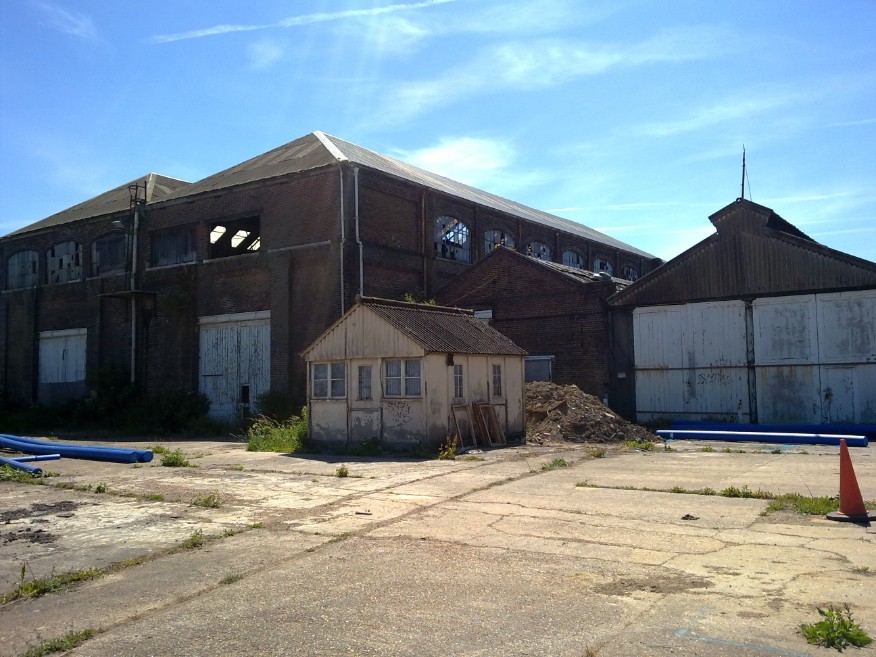
ABOVE: Here we are on the wrong side of the fences... The site is pretty much wide open, so any supposed workmen could come and go pretty much as they pleased - hence the use of PPE as camouflage. It does look as though the site is going to be redeveloped soonish, as there was a mini digger on site and a few bits and bobs of pipework.
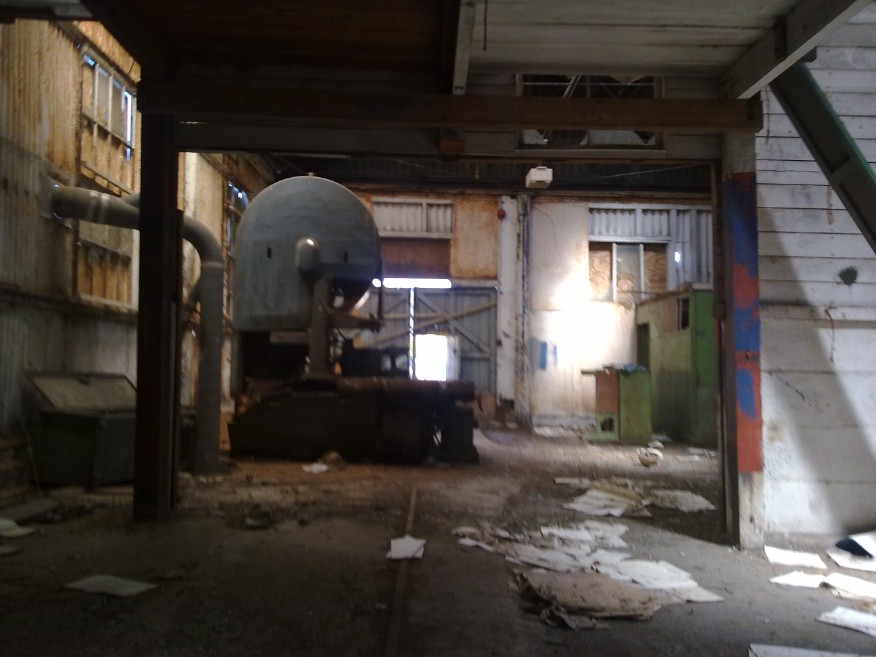
ABOVE: Just inside the doorway of the first building is this massive bandsaw. There are far better photos of it available on the web, but it was difficult to get a decent shot at the time due to strange light levels - the camera wouldn't have any of it.
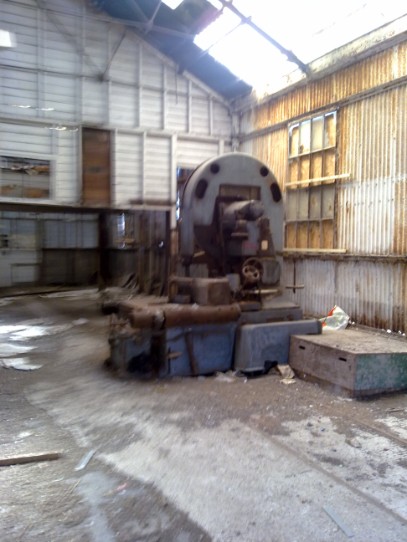
LEFT: Finally after a lot of messing about, the camera decided the light levels were acceptable and let me get a decent shot of the bandsaw. It's still a little bit blurry, but it's an awesome machine. It's difficult to gauge the size here, but stands probably 8 or 9 foot tall with a 6 foot by 4 foot bed.
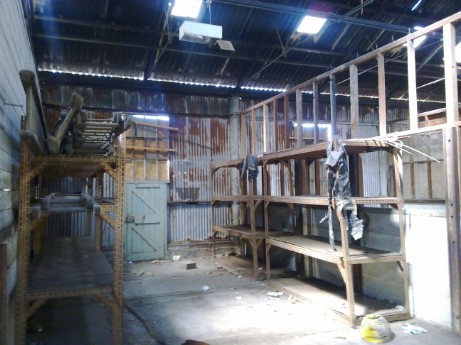
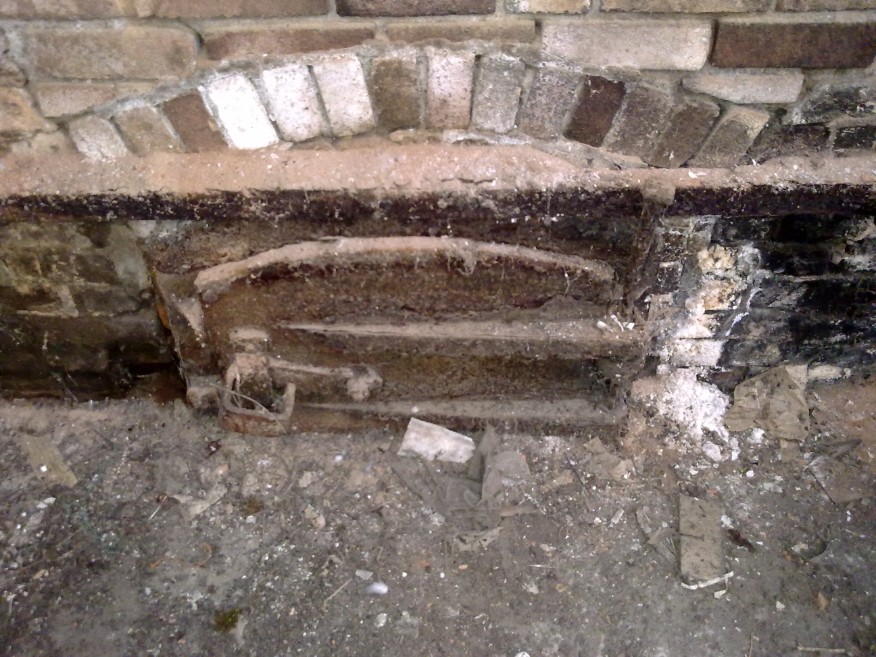
BELOW: It might look much from this overall shot, but this area inside the second building along had a huge amount of history crammed into it. Just to the right of the double doors at skirting board level is a pair of what look like boiler doors. These, we think, were left from days when there would have been steam driven plant on the site. it was strange seeing them in their current situation, as the floor level had been raised dramatically to bring it up to the current state. Also, there is no longer any evidence of the boilers (although the layout of the place suggests that there was originally enough depth inside the buildings to the right of the doors to support the inclusion of boilers. There were also rail tracks inset into the floor of the main area, although we weren't able to really date these.
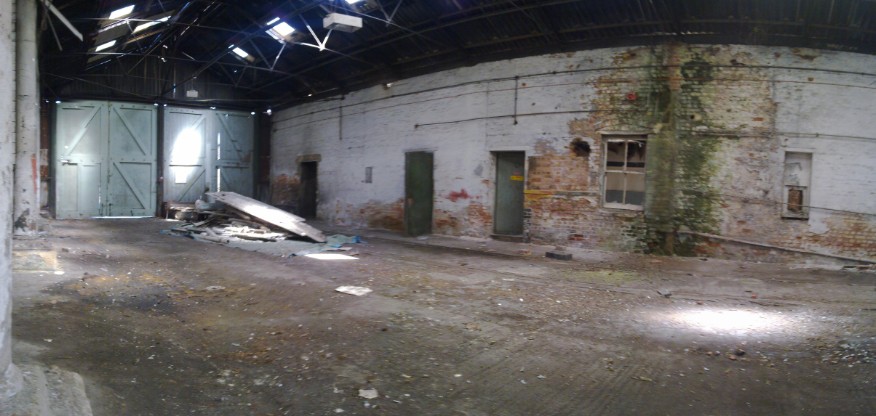
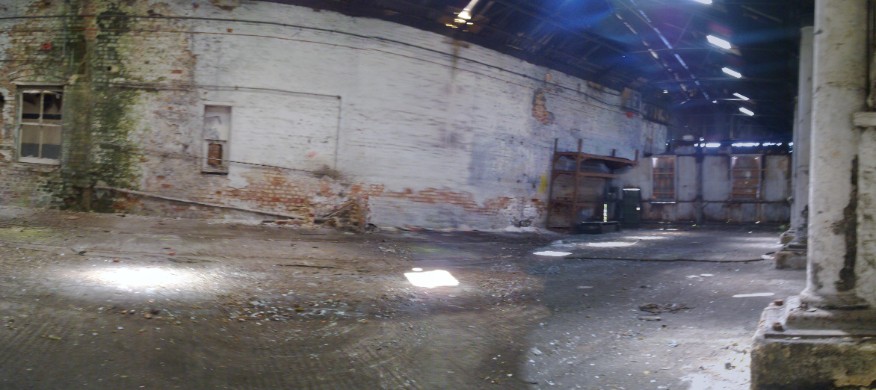
BELOW: The opposite view of the photo above, looking into the building from the left of the double doors seen in the last photo. The pillars are cast iron and date from 1882. Fantastic!
BELOW: Remains of a workshop area just off the main open area, at the rear of the building.
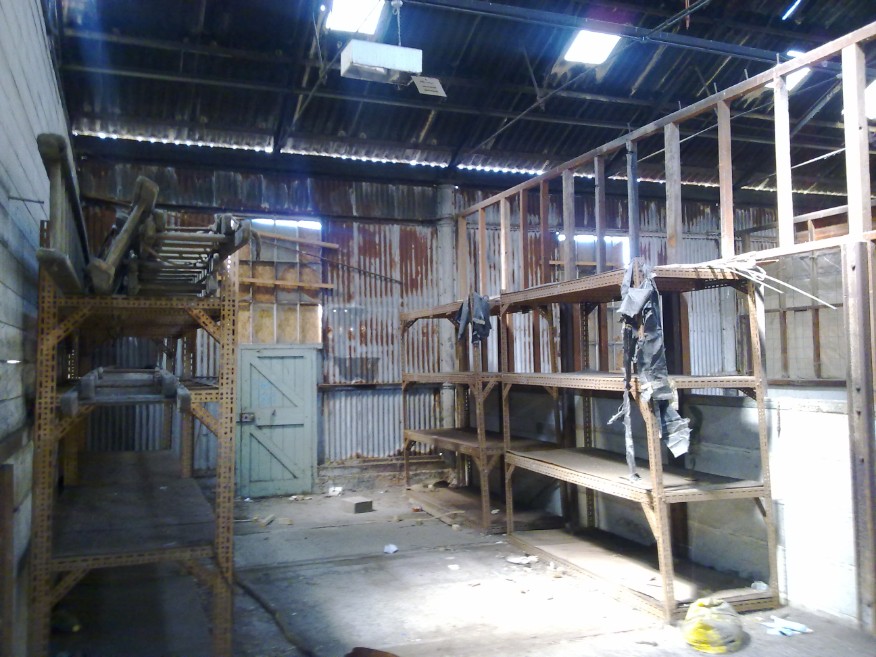
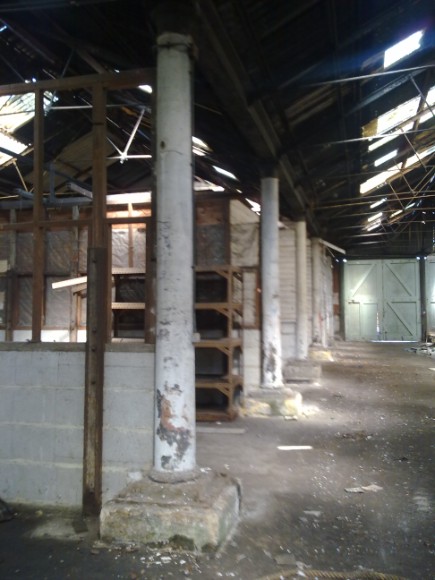
ABOVE LEFT & RIGHT: Views looking along the line of cast iron pillars back towards the double doors. The workshops can be clearly seen on the left.
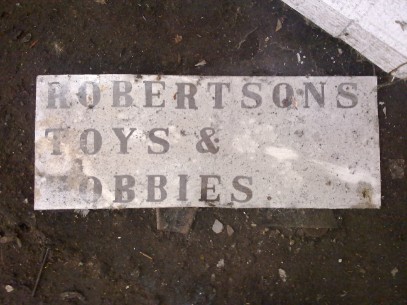
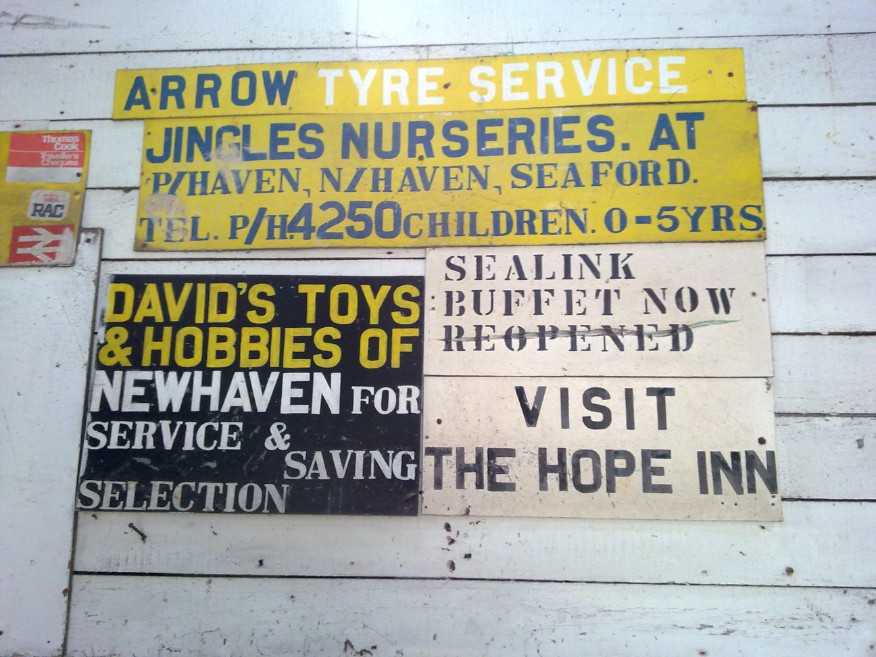
RIGHT & BELOW: In later years, this building was used as a marketplace, hence the signage for toys & hobbies etc.
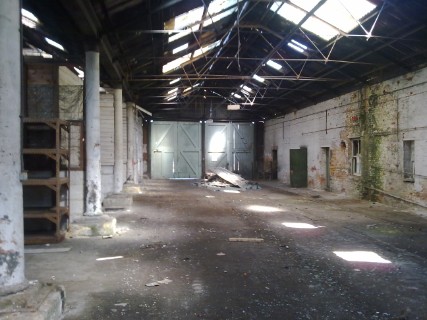
BELOW: View from the double doors, looking towards the pillars and workshop spaces.
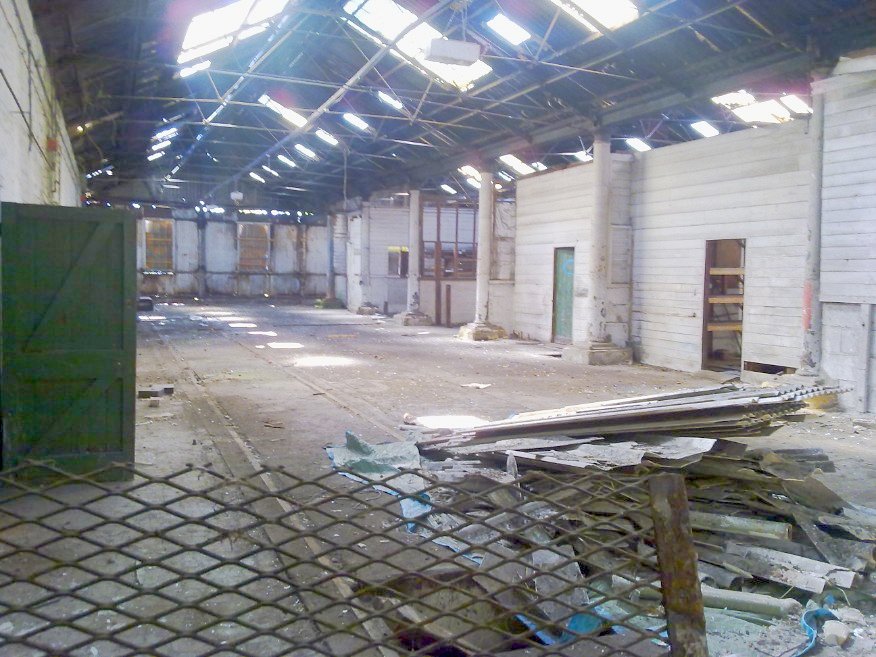
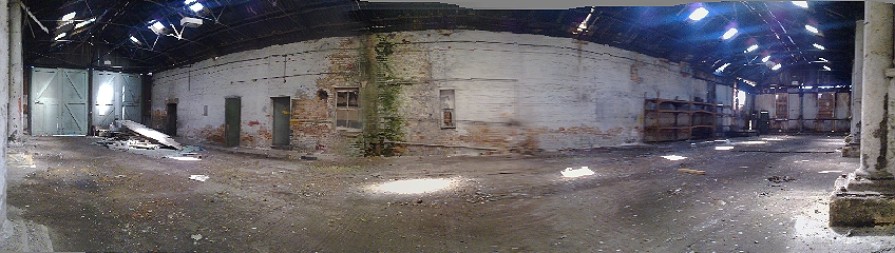
BELOW: Panoramic shot of the entire internal area of the second building.
BELOW: As mentioned previously, there was evidence that this building originally contained boilers and steam plant. One of the boiler doors (to the grate area) is seen below. The floor has been raised substantially as the purpose of the building has changed over the years. This hatch would originally have been at chest height, some 4 foot above the floor (I have based this on the boilers at The British Engineerium). The room behind these hatches bears no correlation to the boiler doors and there is no evidence of a boiler beyond.
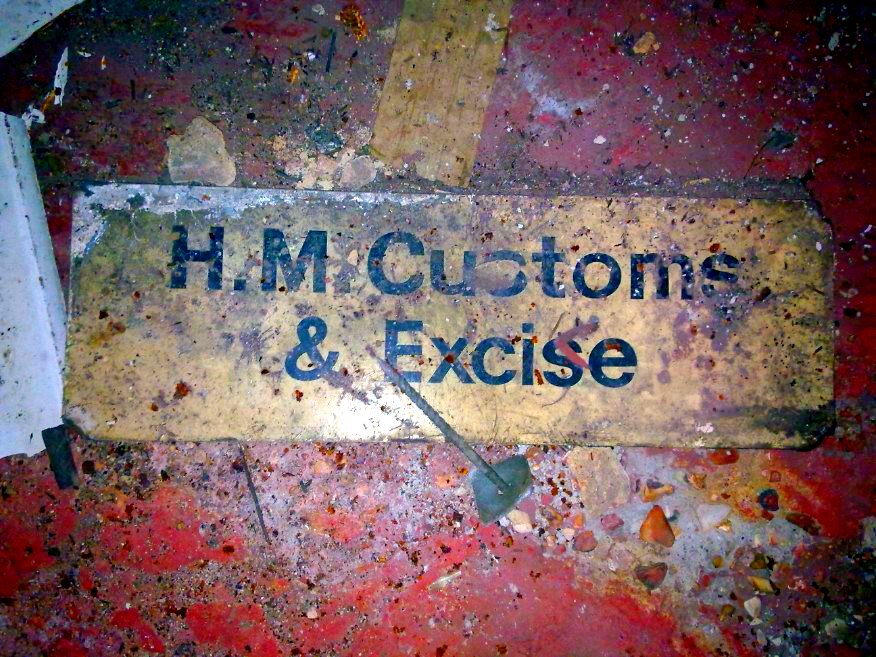
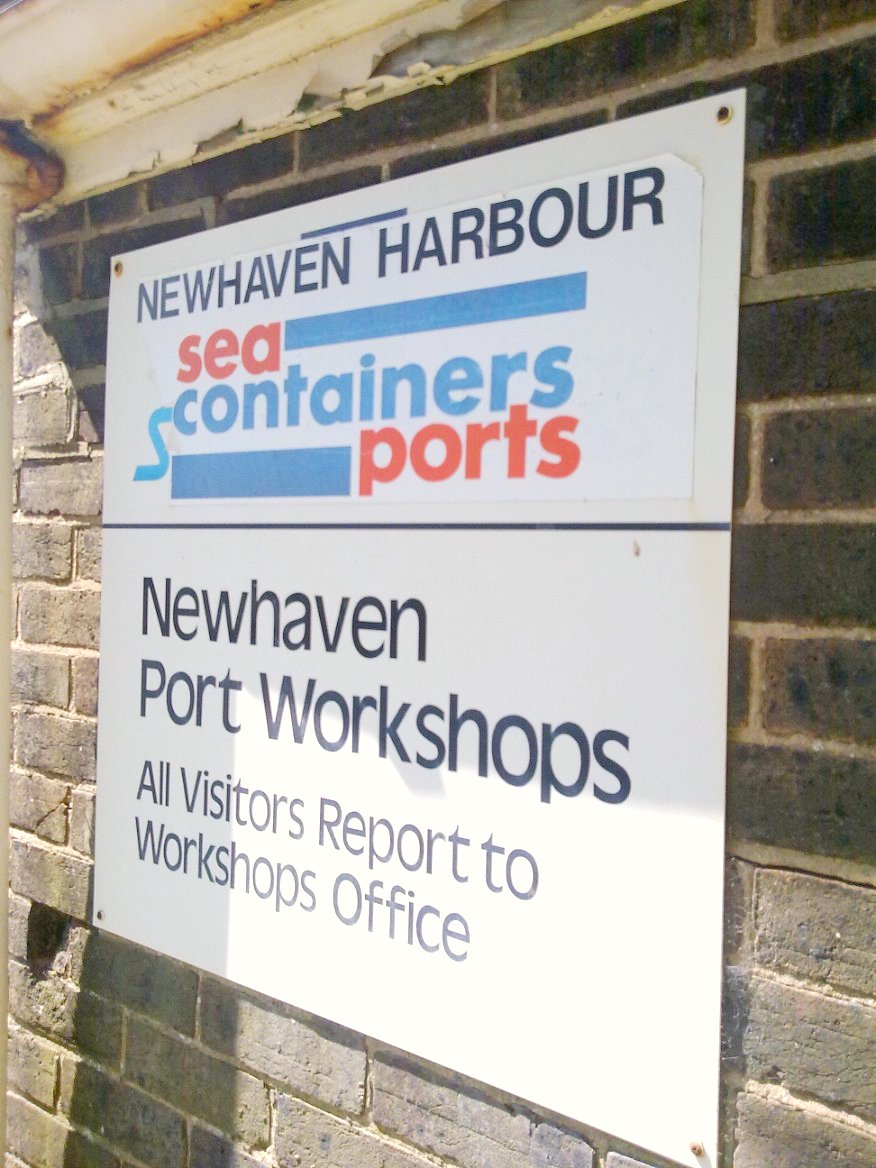
BELOW: We found this sign on the floor of the little store room behind the boiler door, where the boilers should have been, but weren't! It is easy to forget that the Newhaven Marine Workshops are on land owned by the Port Authority and comes under the jurisdiction of Customs and Excise, hence our camouflage as workmen. We didn't want to get caught somewhere we shouldn't really be by these guys, as they take a very dim view of people messing about where they shouldn't be. They tend to associate such activities with drug trafficking and this isn't our cup of tea at all, so we particularly didn't wish to avail ourselves to the searches usually associated with hiding drugs on ones' person....
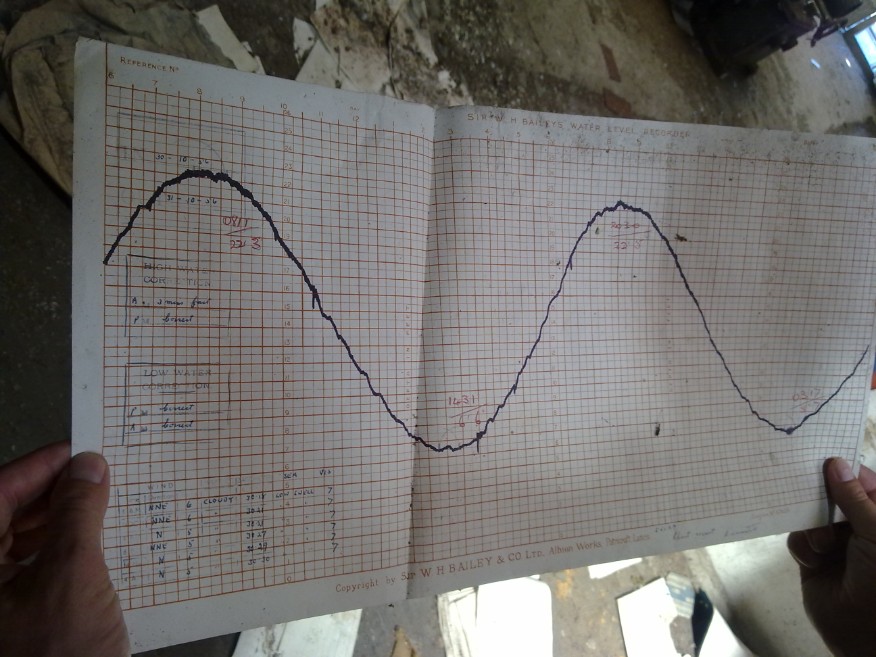
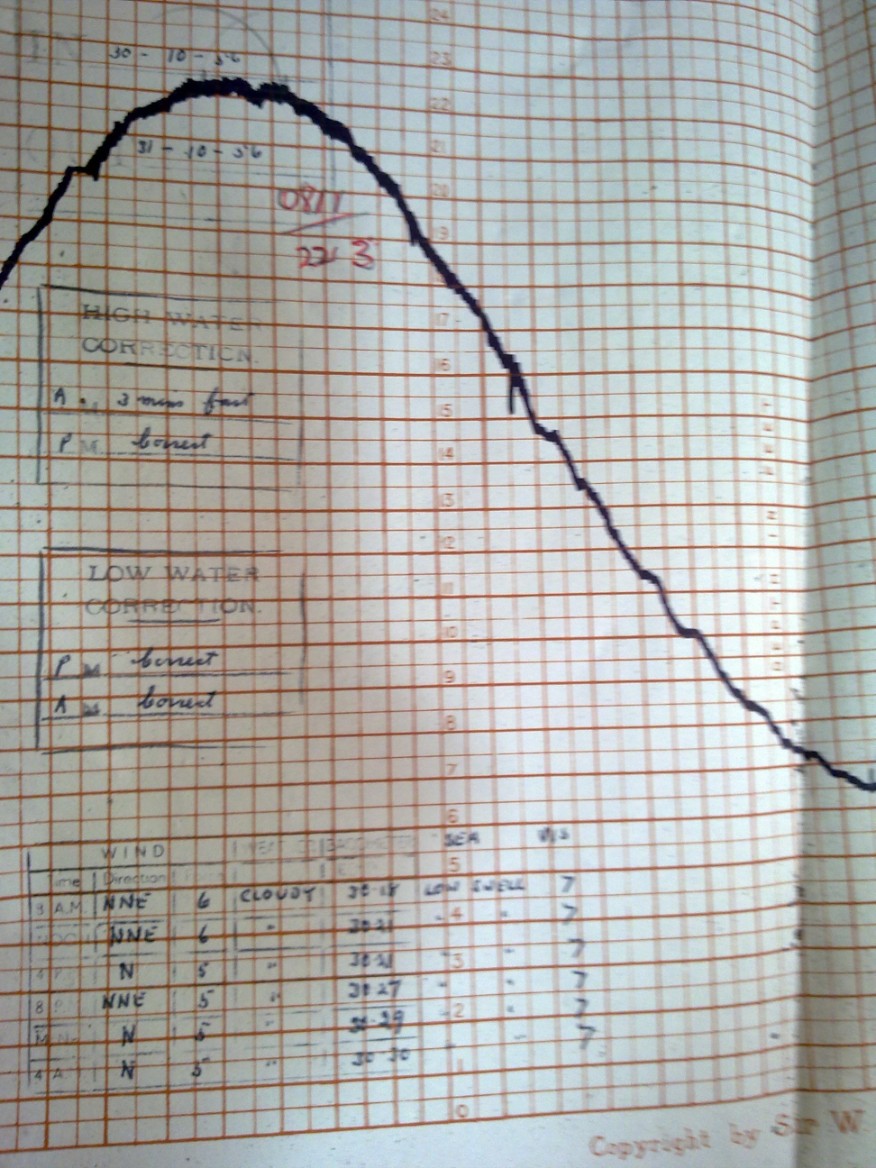
ABOVE & BELOW: There were a lot of these graphs scattered around on the floors in various places: they show (on closer inspection) high and low tides and the water levels over time in between high ad low tides. Note the high and low water corrections and the notification of windspeed and wind direction.
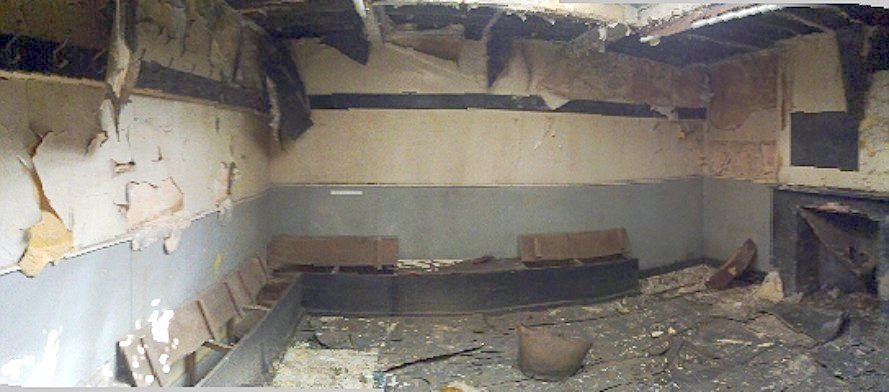
BELOW: We think this particularly grim room was either a staff room or office. We think more likely to be a staff room due to the bench running all round the outside of the room. It's not very clear in this picture, but there's a fair sized fireplace on the right hand side of the room.
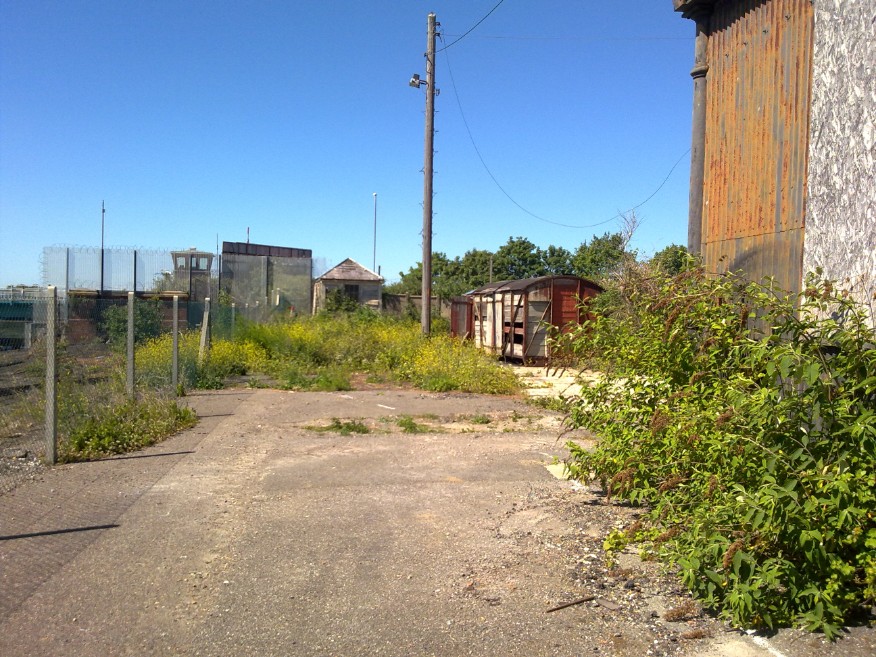
BELOW: This is the area to the rear of the first building. There was only so far into the site we could go through our chosen route, so we went back outside and round the back to try and find another way into the buildings further south on the site. Note the little level crossing cabin and the grounded van body next to the telegraph pole.
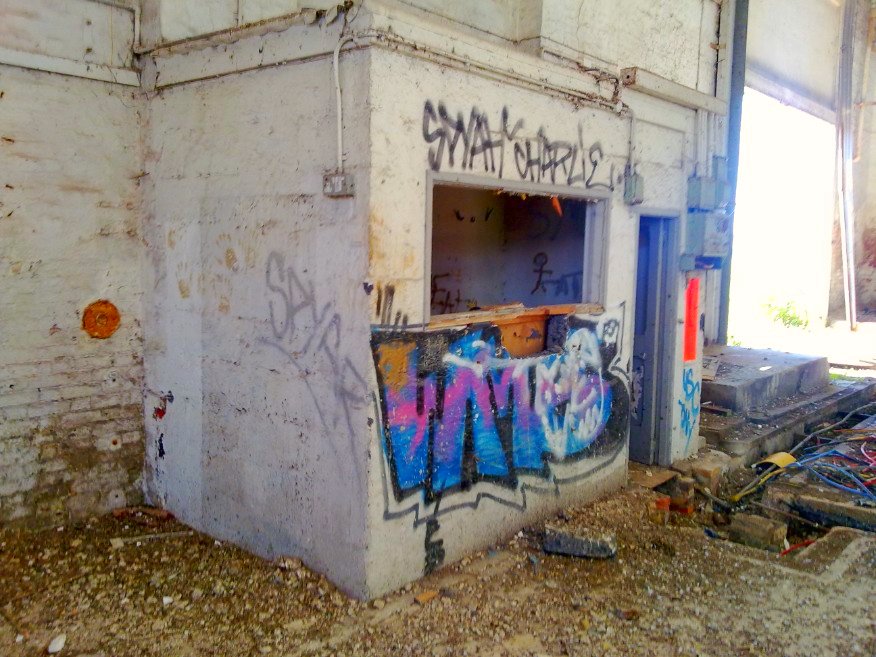
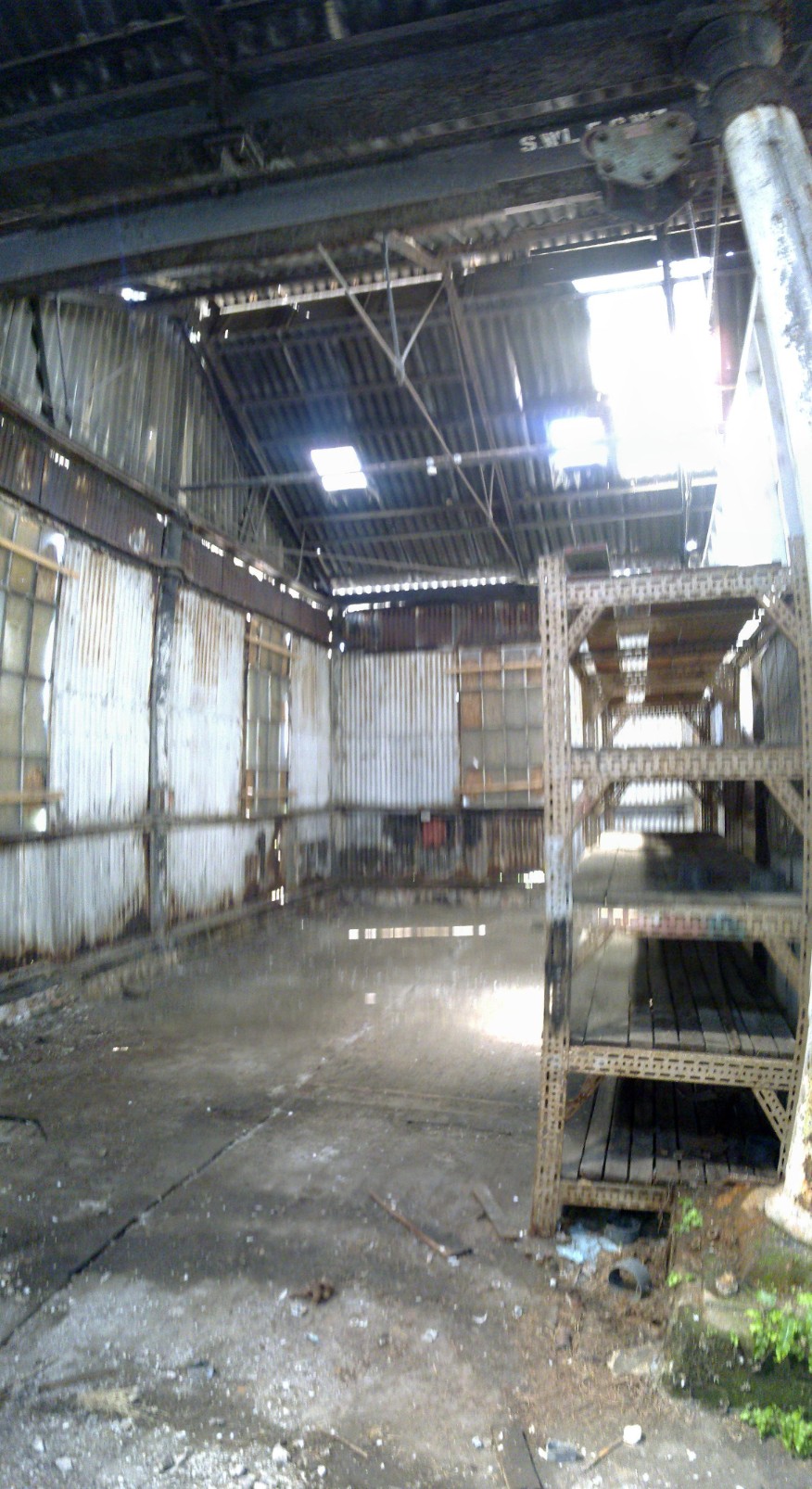
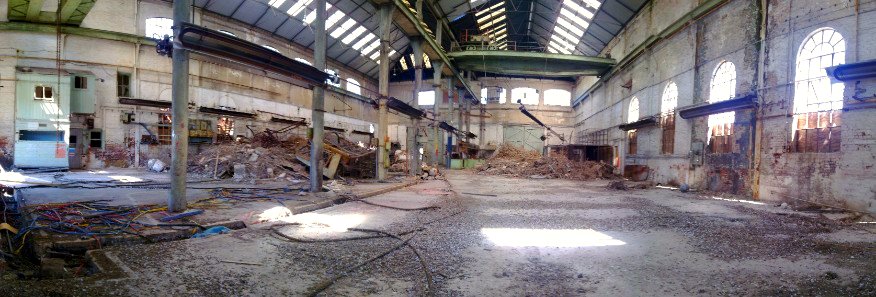
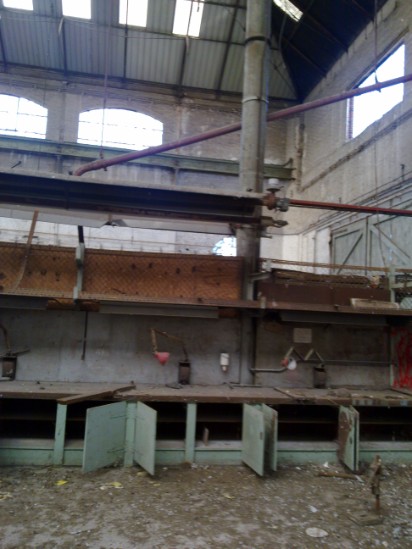
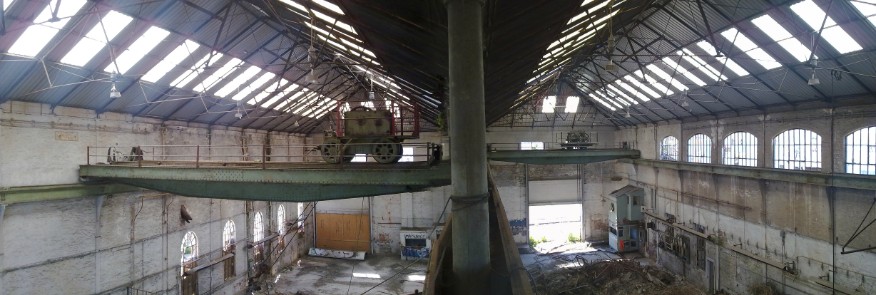
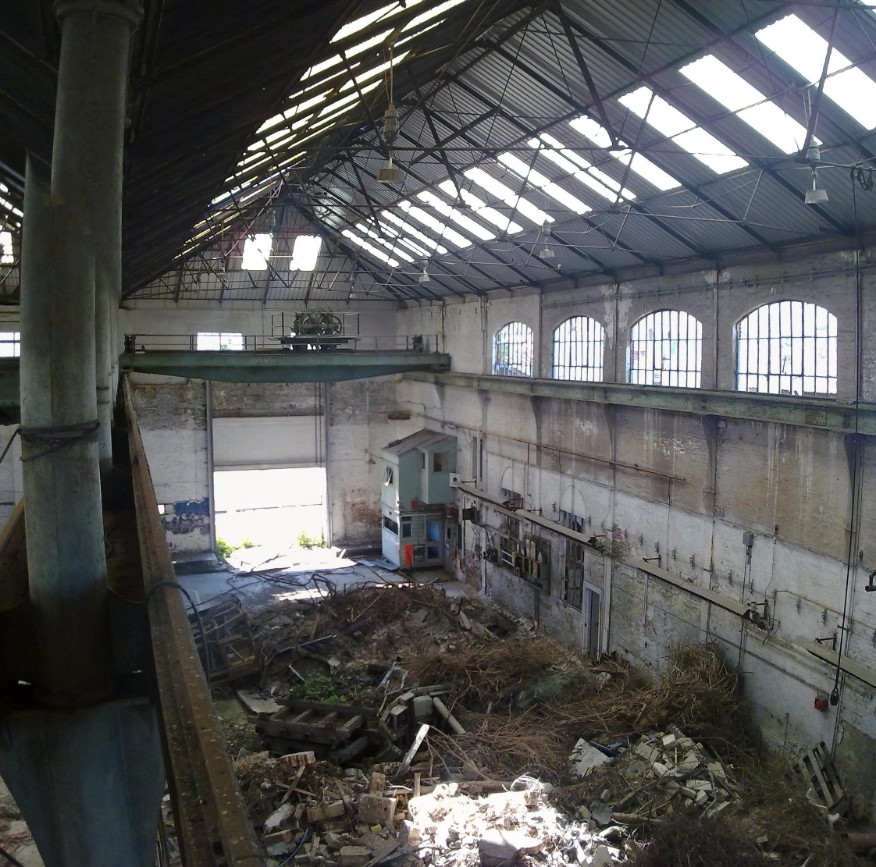
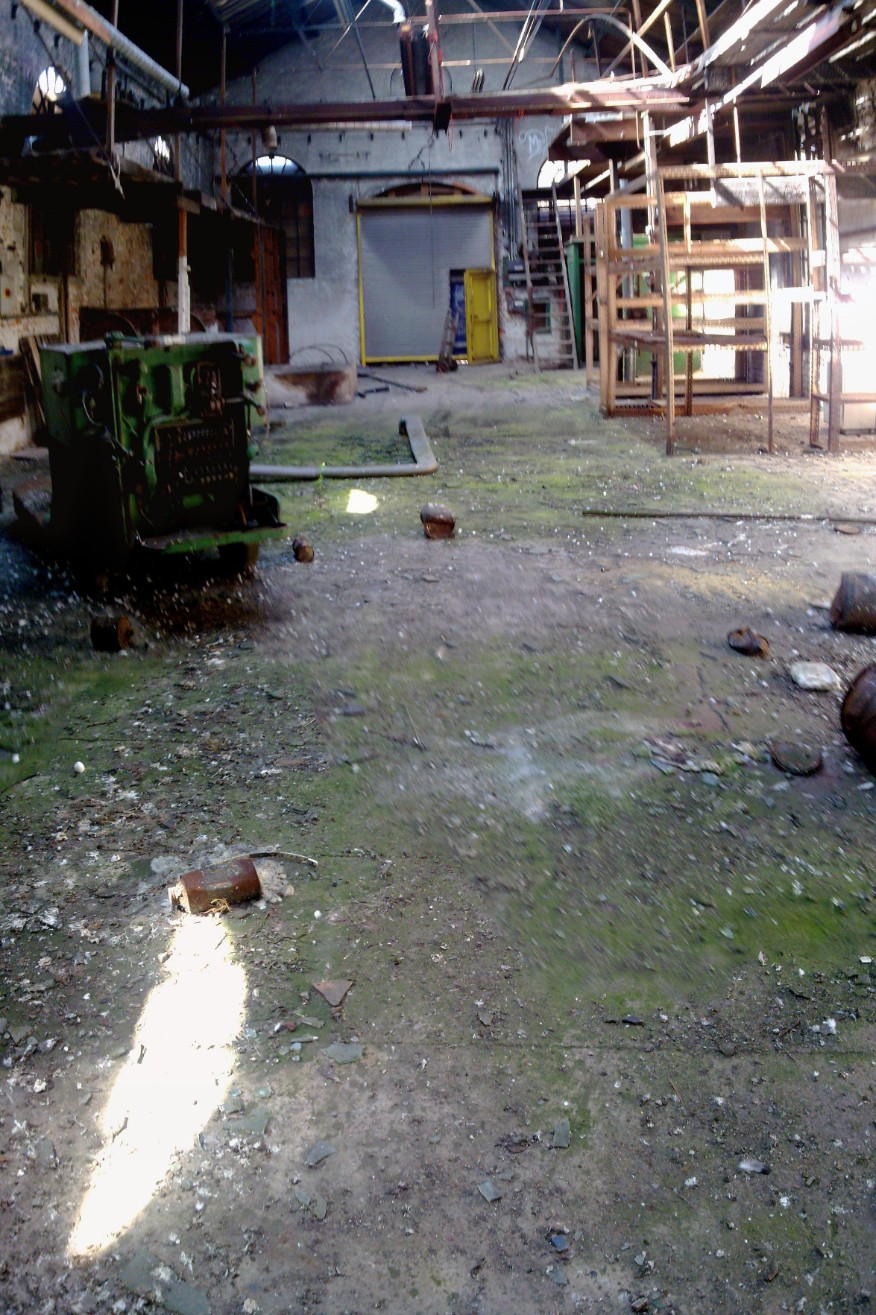
BELOW: This is what we came for. This is the main workshop complex - although now in the process of being cleared out, there are some fantastic features that are still worth looking at. There are still workbenches at the far end of the workshop. There are also 2 enormous overhead travelling gantry cranes (one can be seen just off the centre of the photo) that date from when the building was first built. The 16 light windows are original and some of the biggest we've found.
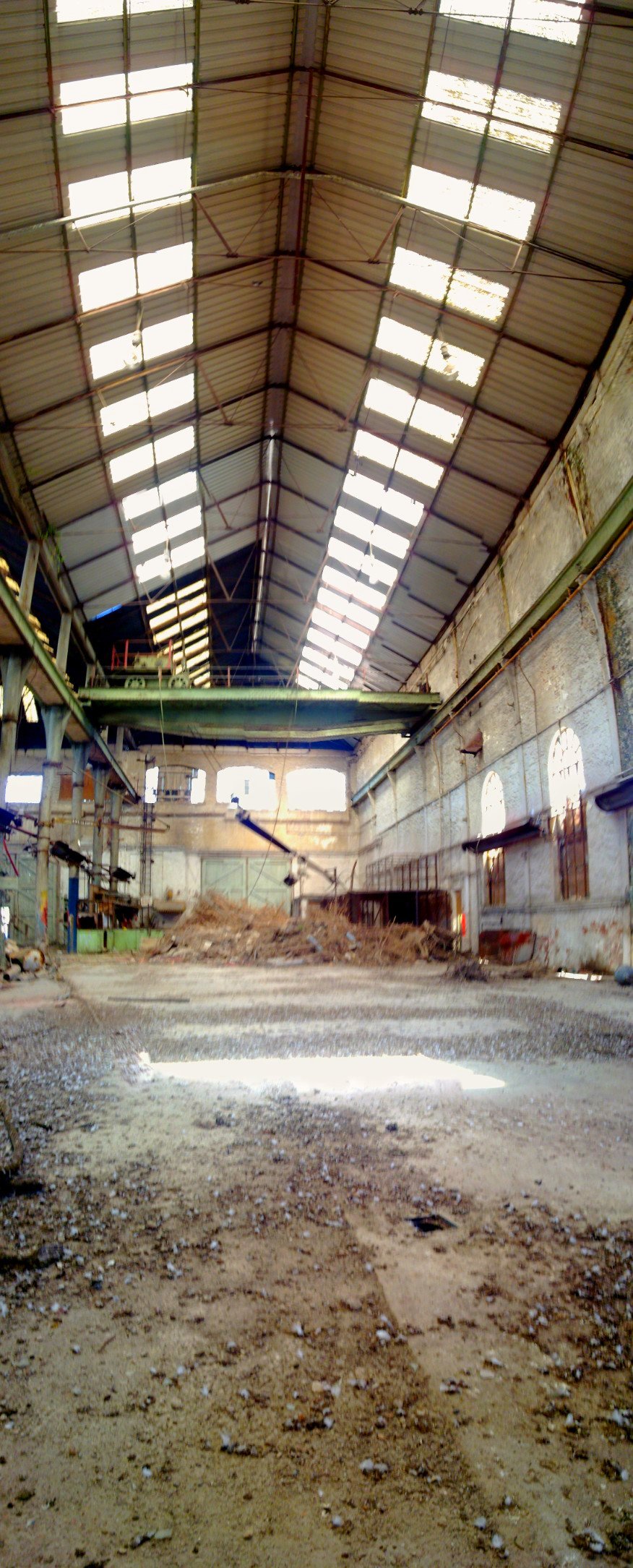
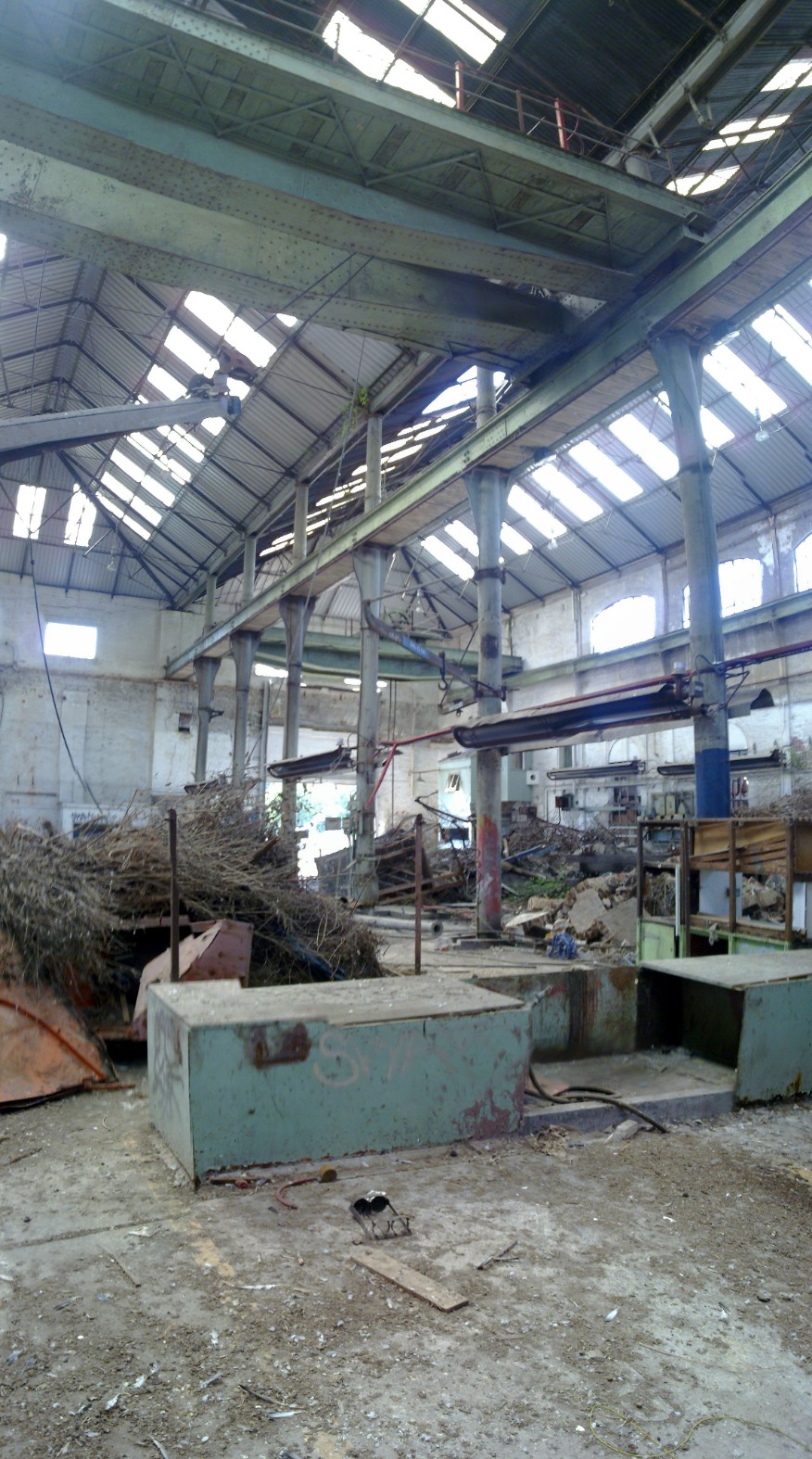
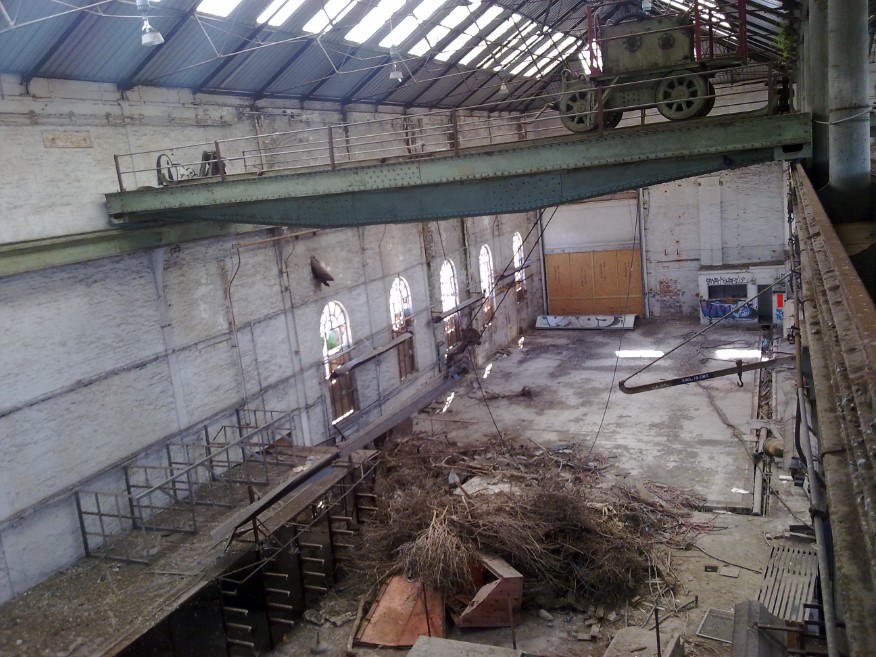
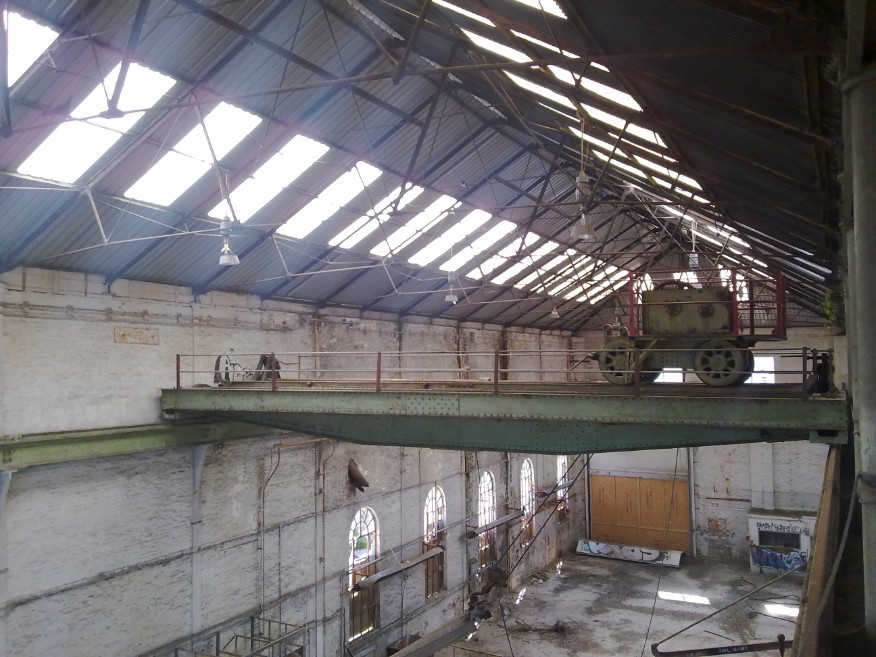
BELOW: This vertical panoramic shot gives a better impression of the scale of the place - it is quite a large building. It also shows one of the overhead gantry cranes in better detail - they are hand operated and (if you were brave enough to venture up onto the walkway between the pillars), it is still just about possible to move them around. Someone has recently used one to hook a length of the heating and lighting strip.
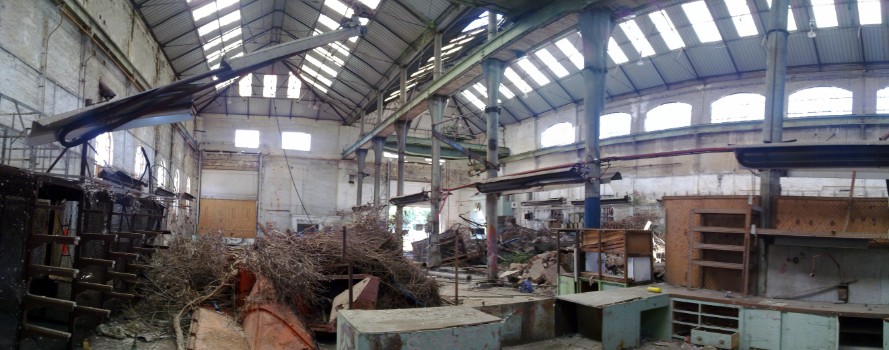
ABOVE: Looking back across the workshop to the roller shutters at the enterance (roughly west).
BELOW: The roof and underside of one of the gantry cranes. Note that the roof isn't original. it would possibly have been built up felt, we think. It doesn't look strongly enough supported for it to have been a slate roof. Then again, we're not sure that the supporting roof members are original, so it may have been the case that the roof was tiled - the cast iron pillars certainly look strong enough to support more than they appear to at present.
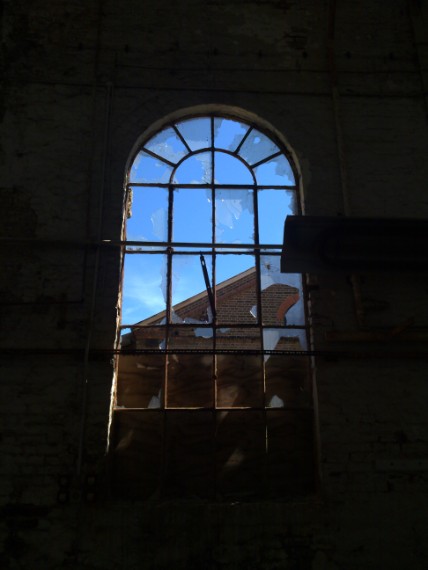
ABOVE: The windows in this place are incredible.
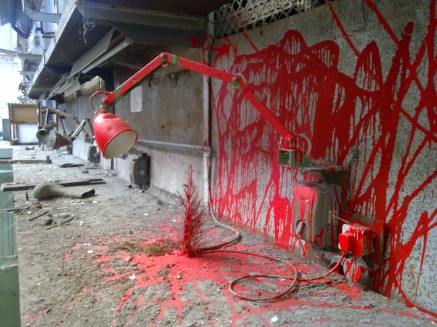
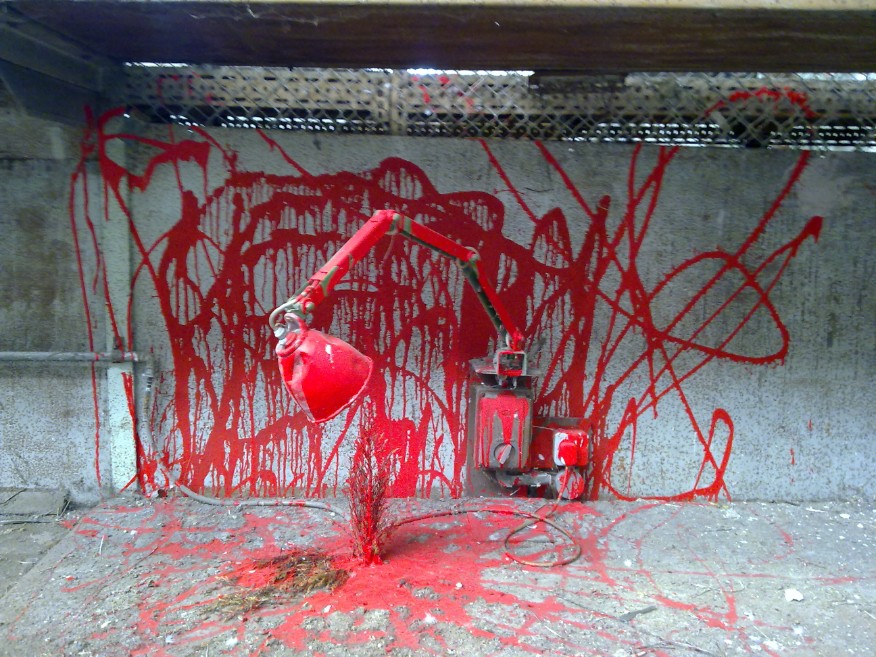
RIGHT HAND TOP: I'm not quite sure wat this is all about, but looks like someone has prepared a piece of installation art utilising a lamp, some electrical flex and a small and particularly suicidal Christmas tree.
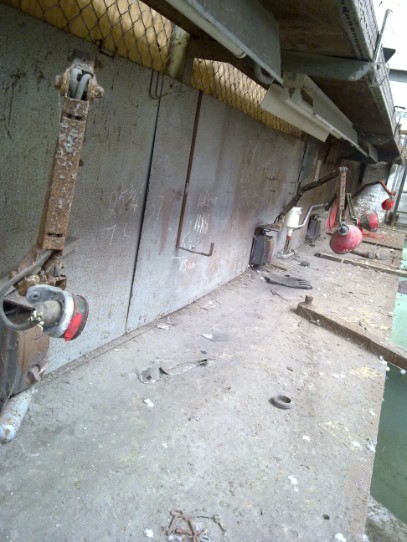
RIGHT HAND BOTTOM: Work benches and overhead heaters. Gas would have been pumped through the overhead pipes into the heaters and deflected downwards onto the workers. This place must still have been quite cold in winter despite the heaters.
BELOW: Our suicidal Christmas tree in slightly more detail. id he die from explosion due to compressed air, possible electrocution or was he shot by an angle poise lamp? We shall never know.
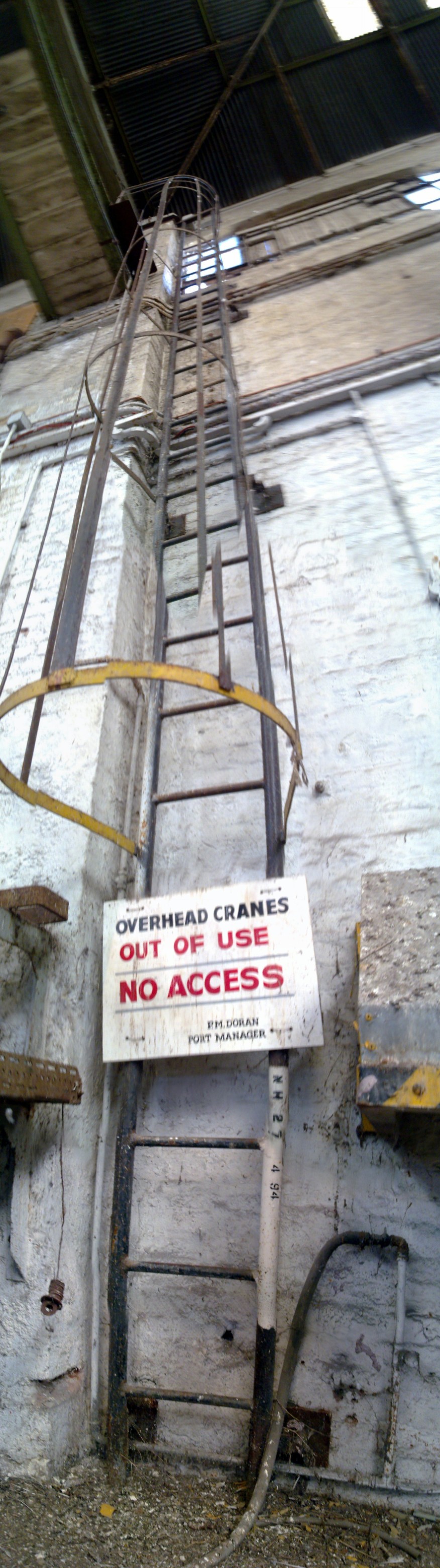
BELOW: This is the access way up to the overhead walkways and the gantry cranes. Ghost isn't at all good with heights, so he stayed firmly on the ground. Agent Skyframe, however, eats such inconveniences as fear and height for breakfast. Grabbing our trusty camera, he ascended to the full 30 or so feet above us and got some fantastic aerial photos of the workshops and gantry cranes. It is every bit as scary as it looks.
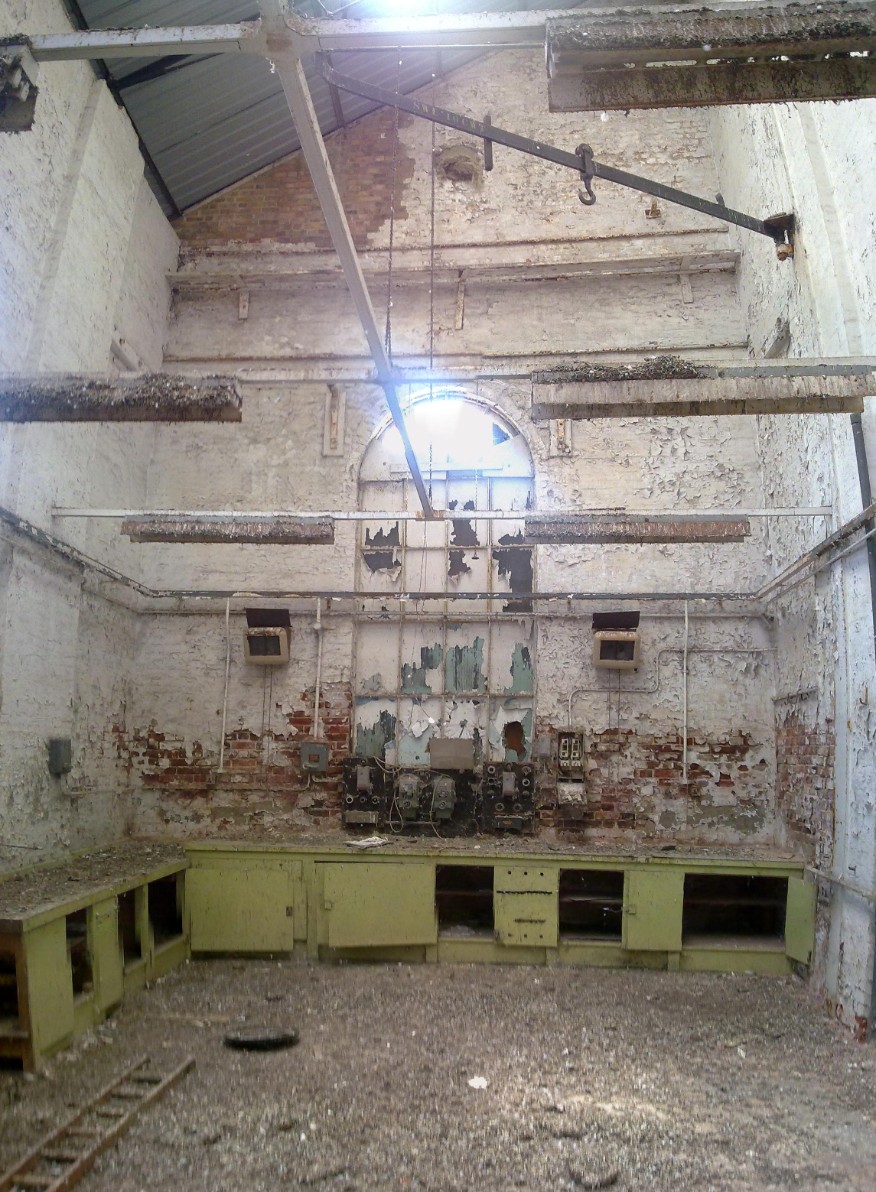
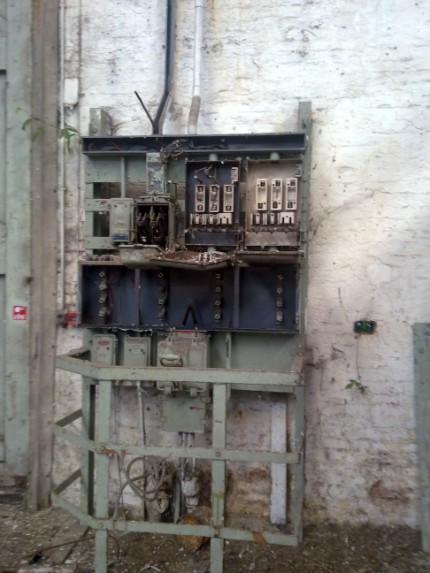
BELOW: We found this smaller workshop just off the main ones, to the south. Note the fantastic array of electrical switchgear and the decades of pidgeon crap. There is evidence that there may have been overhead line shafts in this workshop: the walls bore signs of being repared where fixing plates would have been attached to support the line shaft fixings.
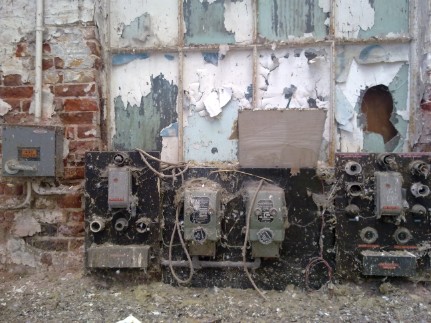
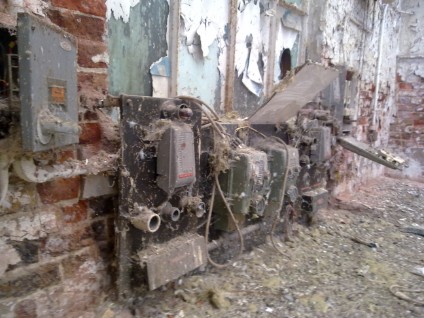
BELOW LEFT & RIGHT: Some of the switchgear in more detail. It was at this point that a pidgeon relieved itself all over Ghost...
BELOW: Same workshop looking in the opposite direction towards the foreman's office.
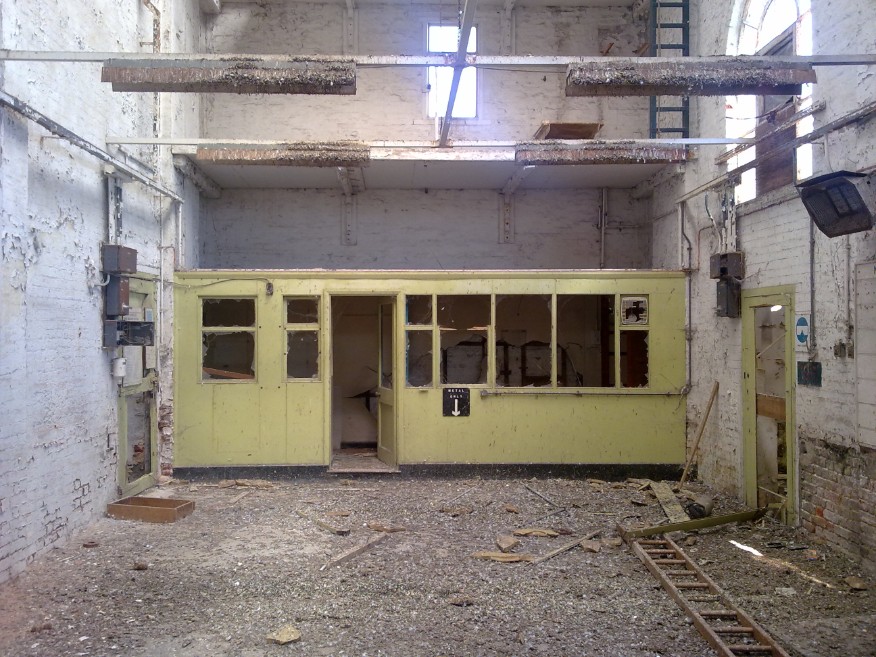
BELOW: A heavy metal joke. It had to be done, we're afraid.
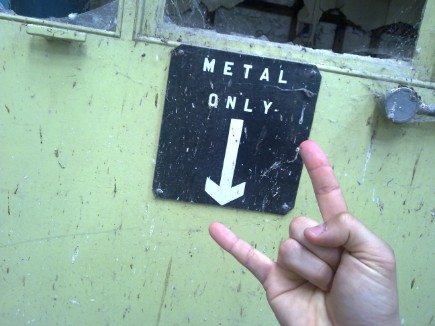
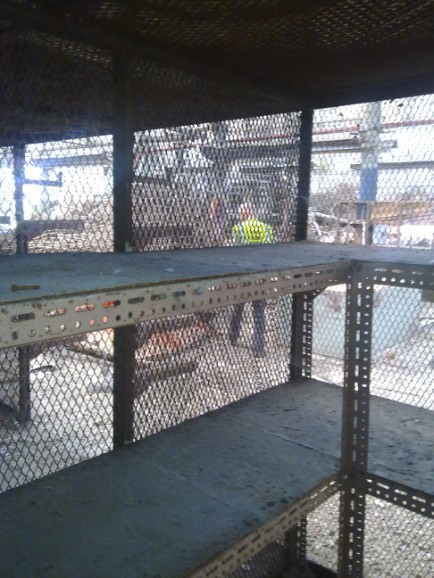
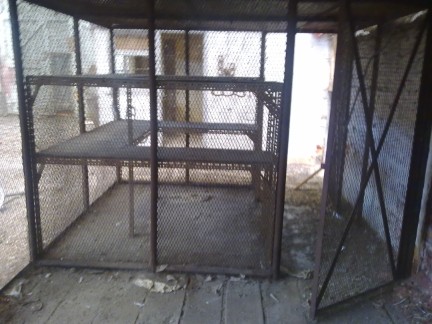
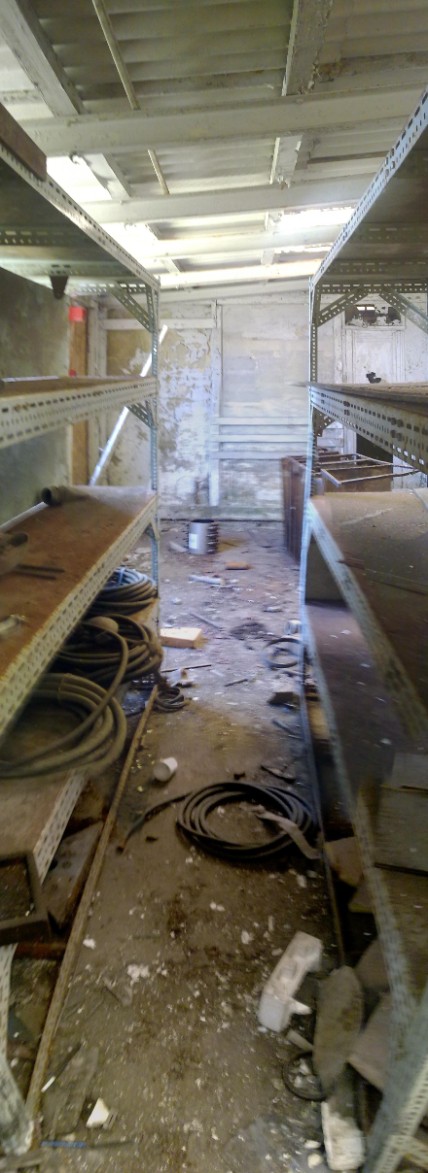
BELOW & RIGHT: Metal store and nut & bolt / fixings stores in the next block along. Agent Skyframe is eager to check the rest of the stores...
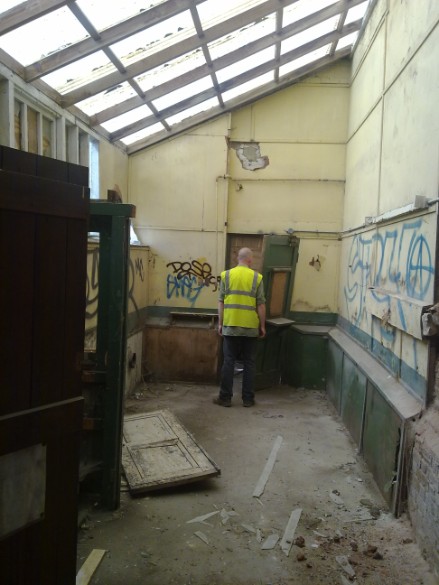
BELOW: More lovely electrical switchgear.
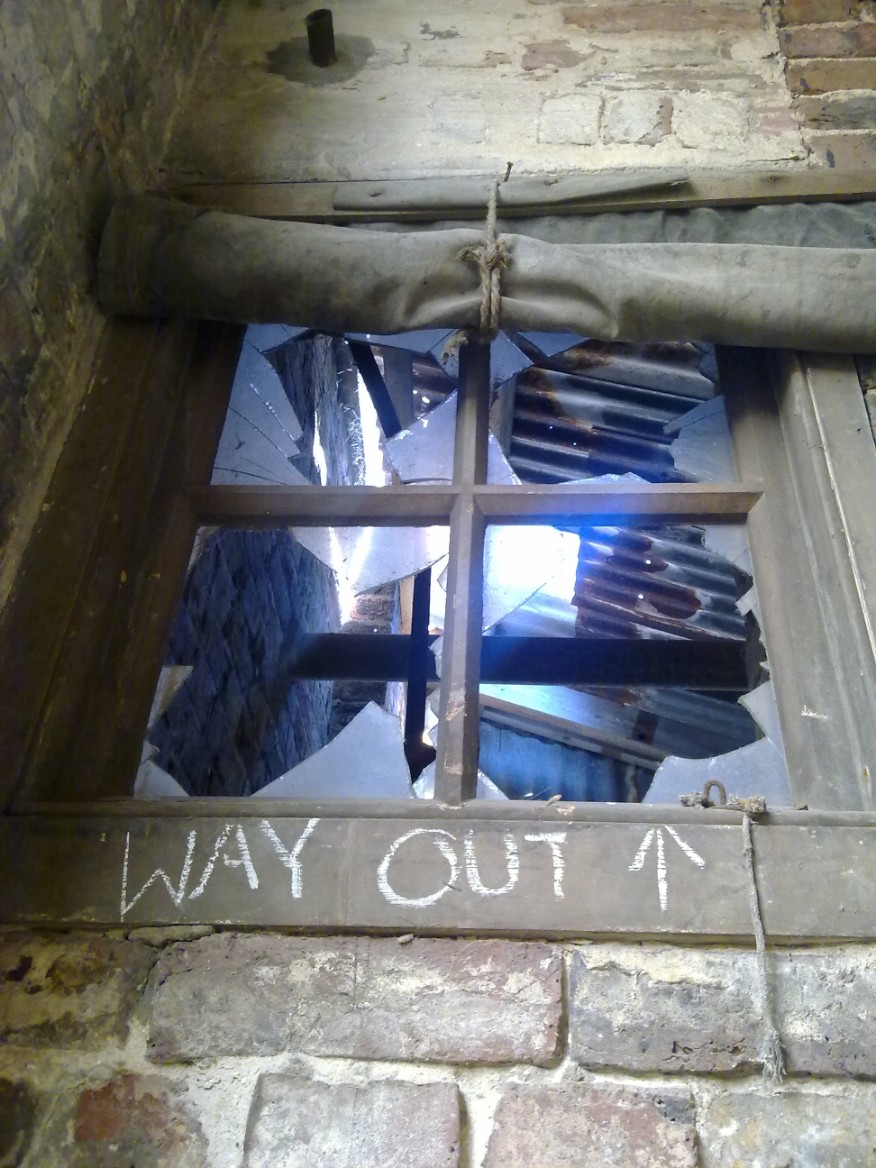
BELOW: "Way out" - not for us, due to excessive pie and beer consumption, but made quite a nice photo.
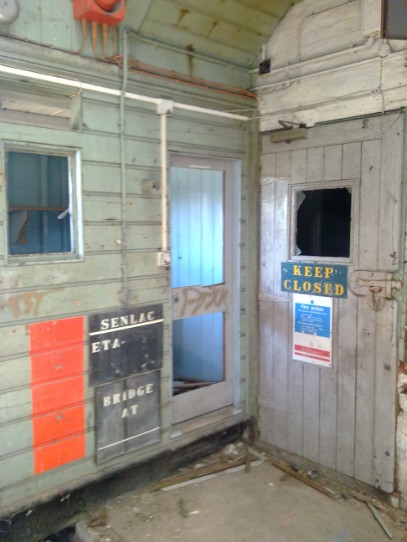
BELOW: Senlac was the name of one of the cross channel ferries and Bridge refers to the opening times of the nearby Newhaven swingbridge.
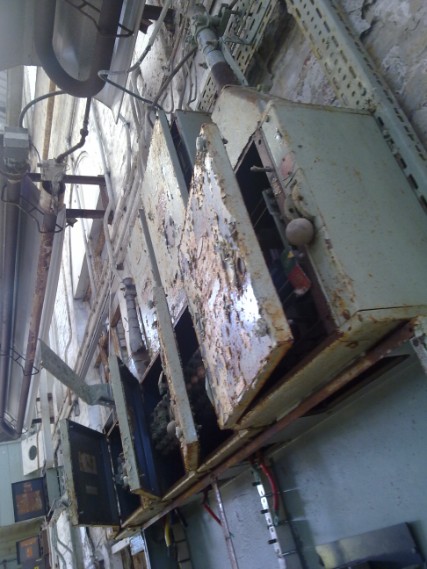
BELOW: This part of the site shows possibly the most recent changes to the site: this area looks like it has been set up as a spray booth for paint spraying. The nut&bolt and fixing stores can be seen in the background, centre of the photo.
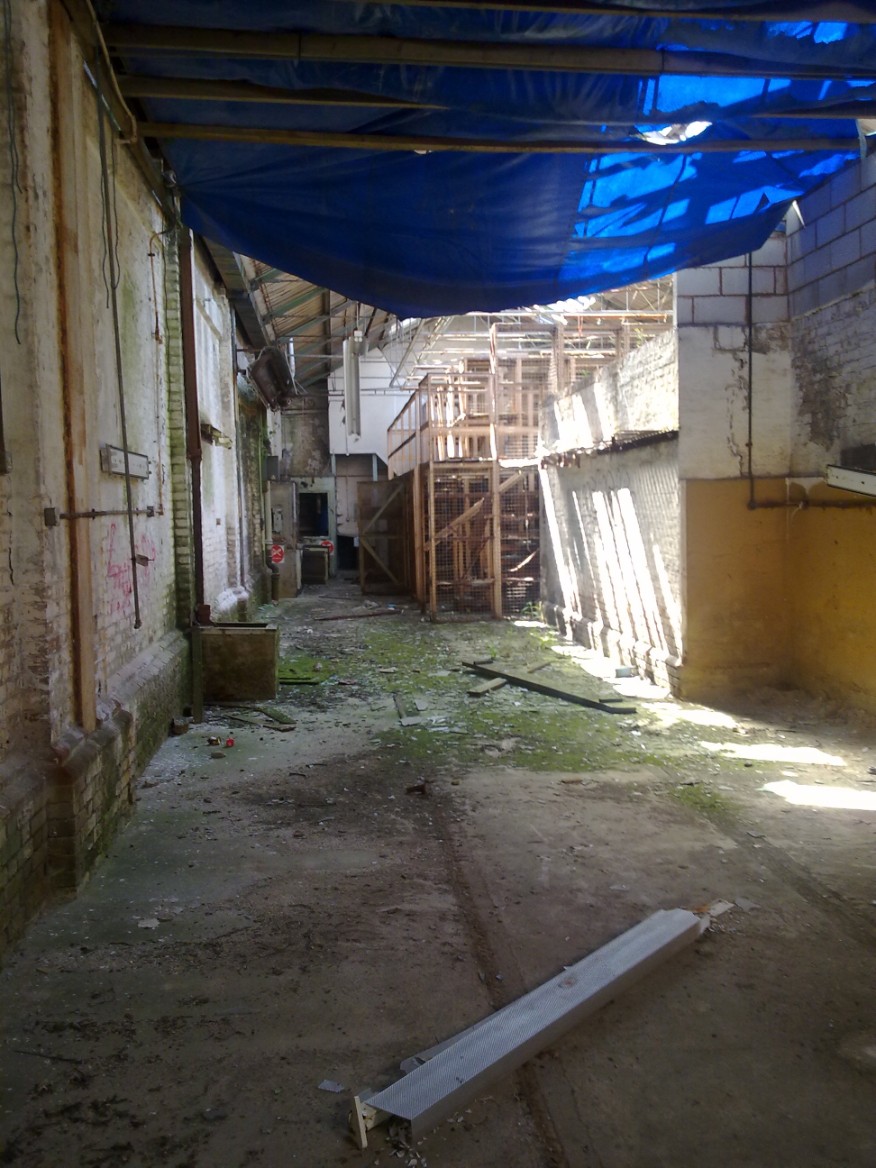
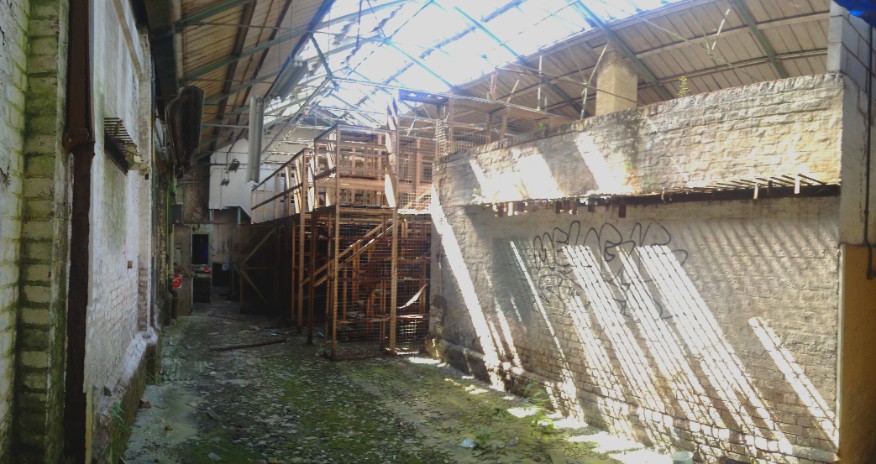
BELOW: The nut&bolt and fixings stores are something to behold. It must have taken several people quite a long time to construct this structure, as it is made entirely from pre-drilled angle iron. We aren't sure what sort of area this area covers, but it is sufficiently strong that walkways have been constructed over the top of it. Very impressive!
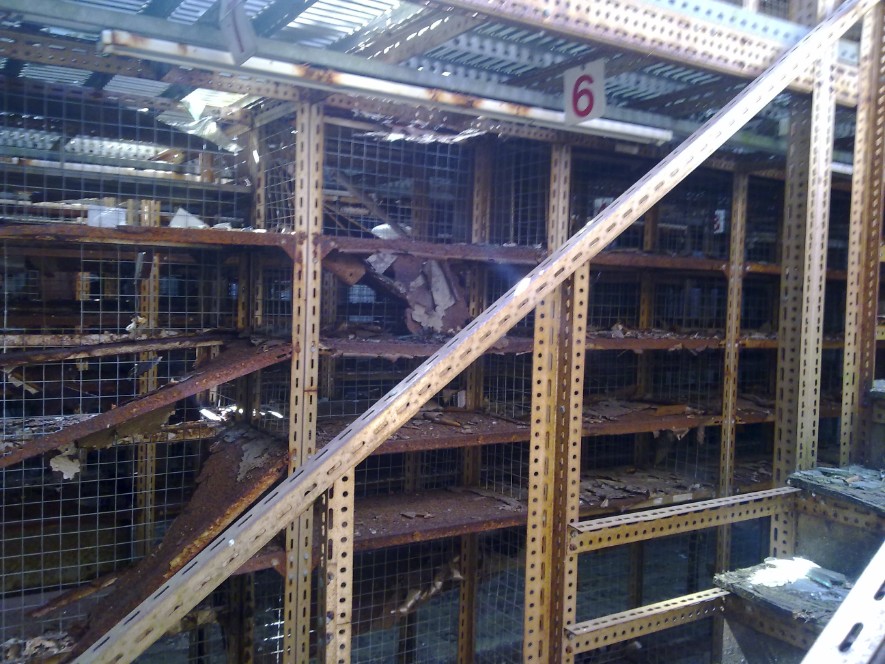
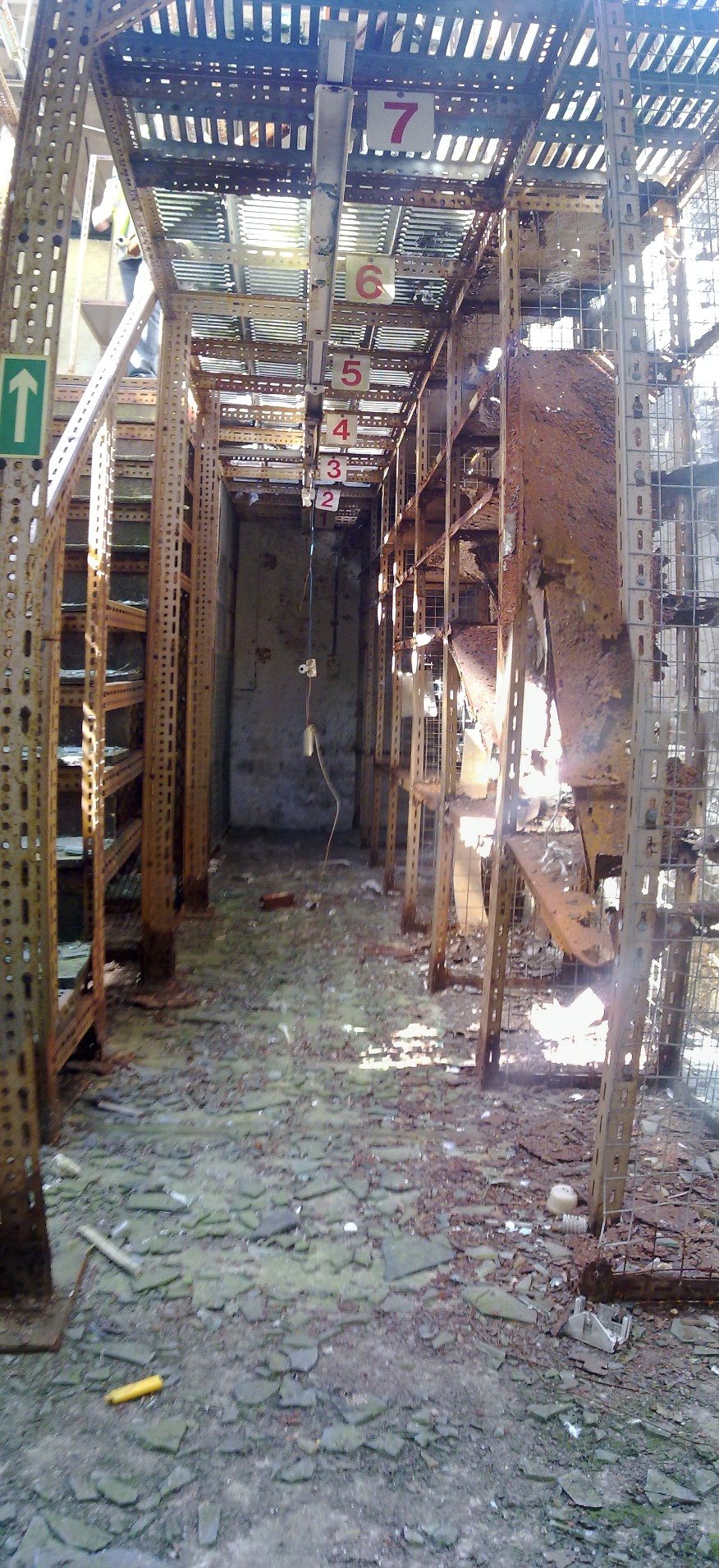
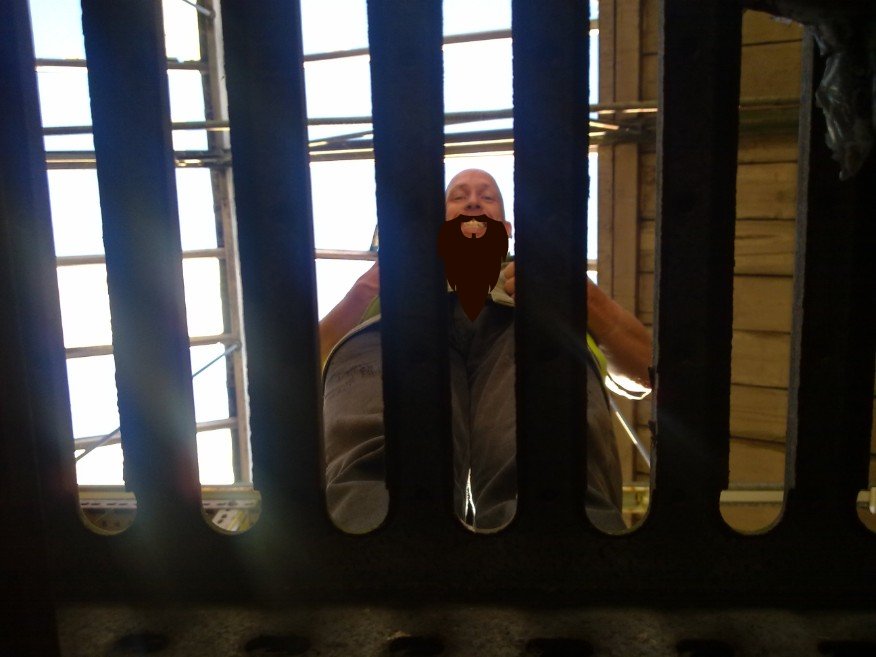
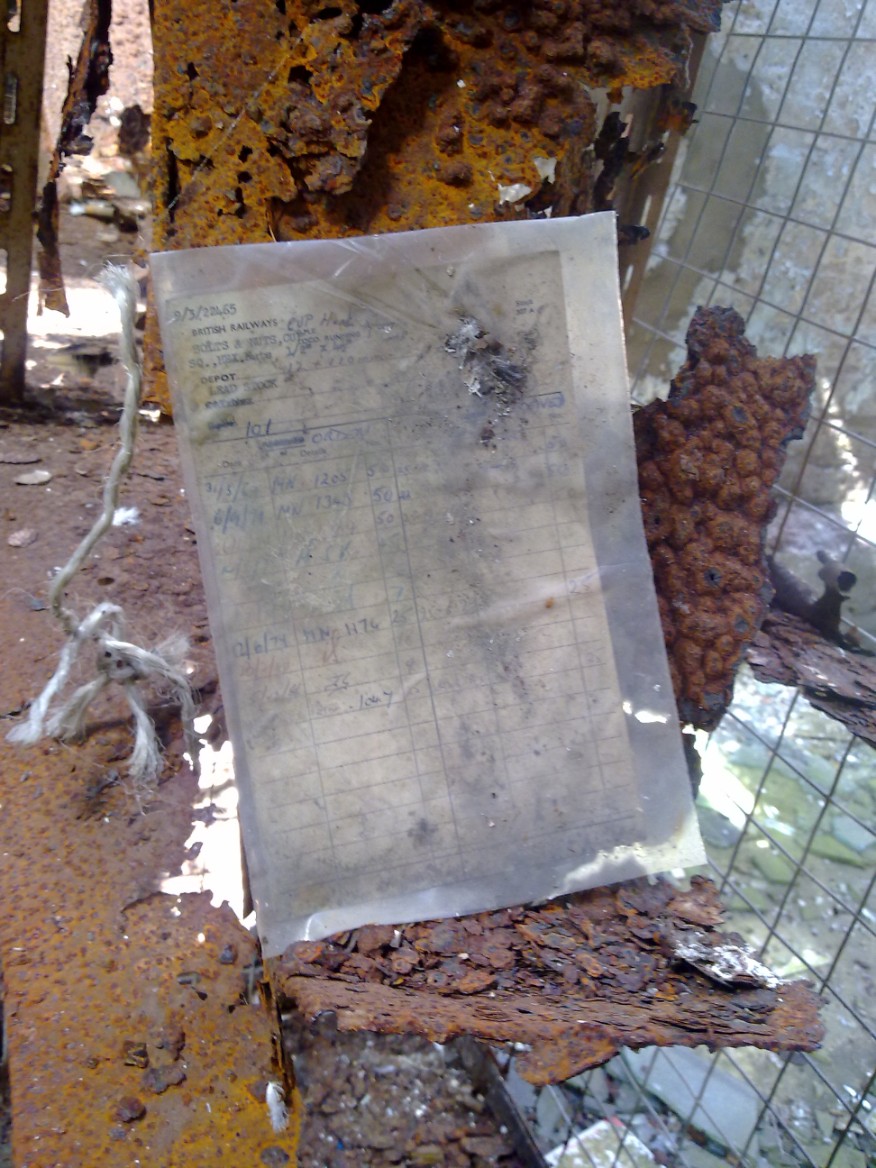
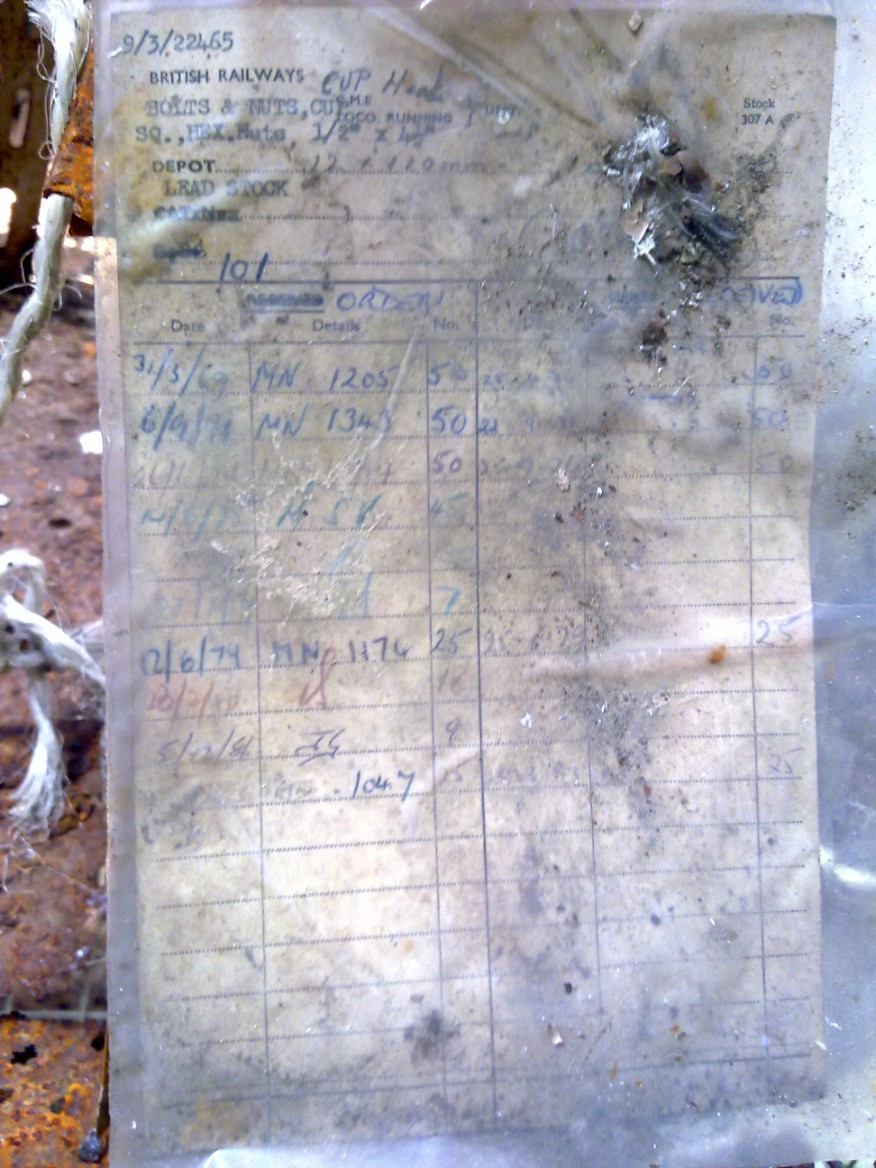
BELOW: Record of stock levels dated 31st May 1969 to 5th December 1981. The rusting metal contrasting with the mesh made a fantastic backdrop for this photo.
BELOW: Close-up of the records.
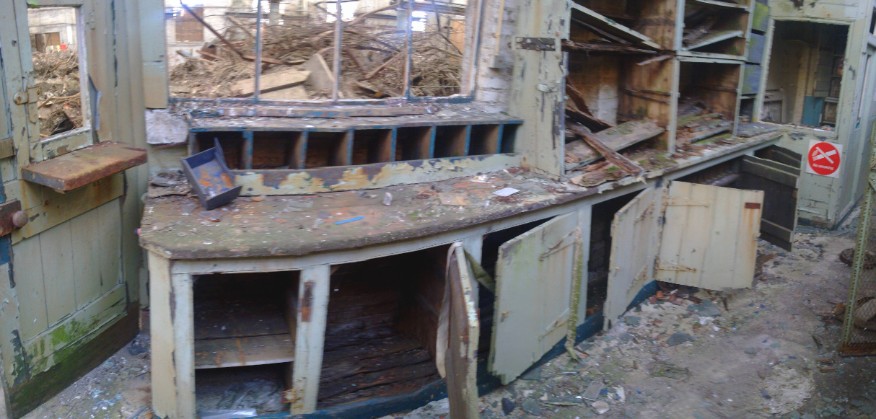
BELOW: Workshops adjacent to (oddly enough) the main workshops . Nice to see the workbenches still in situe and in reasonable condition.
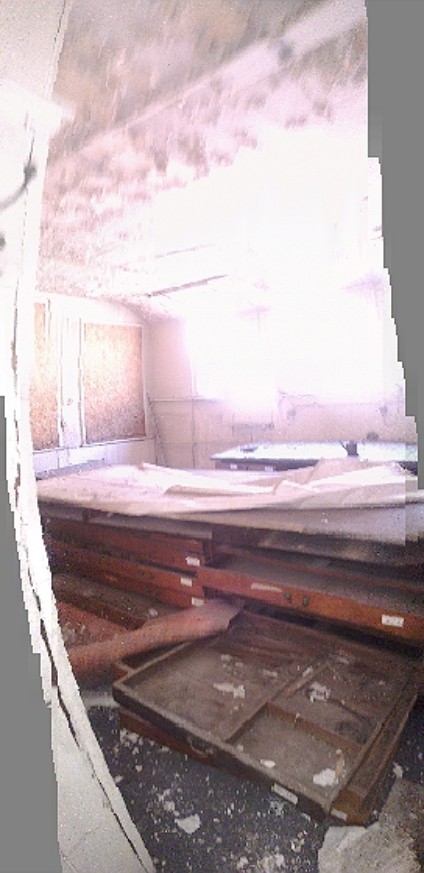
BELOW: This is the first floor drawing office. The light was incredibly bright in here after the relative gloom of the stairway down to the workshops. The camera didn't like it much, hence massive over exposure. Despite my best efforts, it doesn't clean up very well and loses the detail of the drawers.
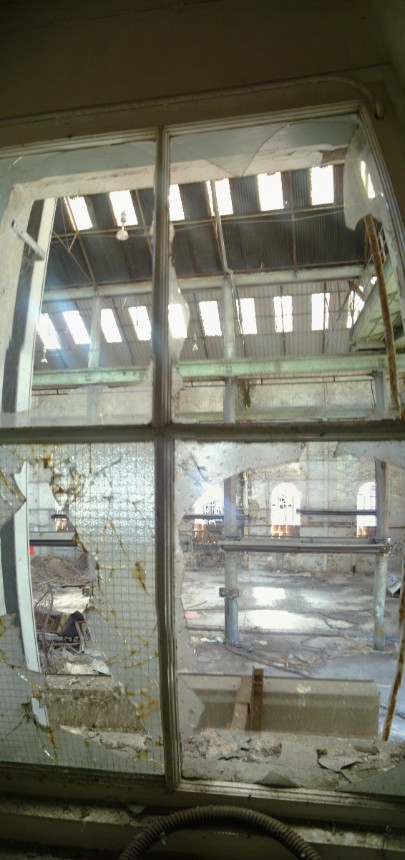
BELOW: This view is looking out over the huge workshop with the gantry cranes, looking through the window of the drawing office. Again, it gives a good idea of the scale of the place that this photo is taken from a first floor window and still the walls rise up beyond it.
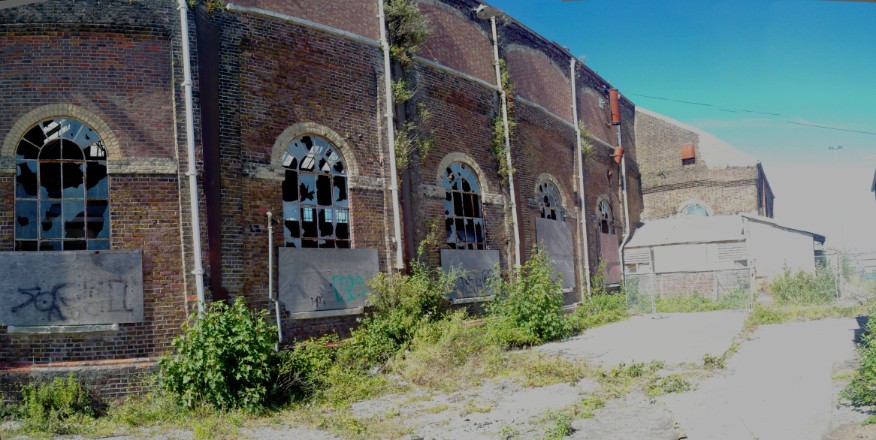
BELOW: External view of the main workshop building, showing those lovely windows.
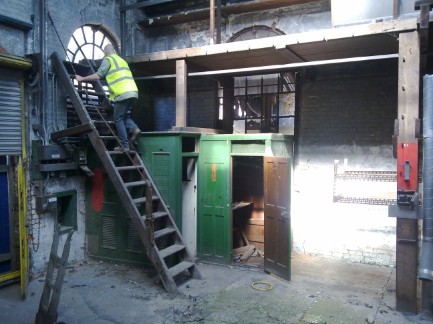
BELOW: This is the last building on the site and alongside the main huge workshop building, this is one of the views that Newhaven Marine Workshops is most famous for. In the foreground is a Greenbat electric trolley, dating from around 1936. In the background is Agent Skyframe about to check out the storage area up the ladder.
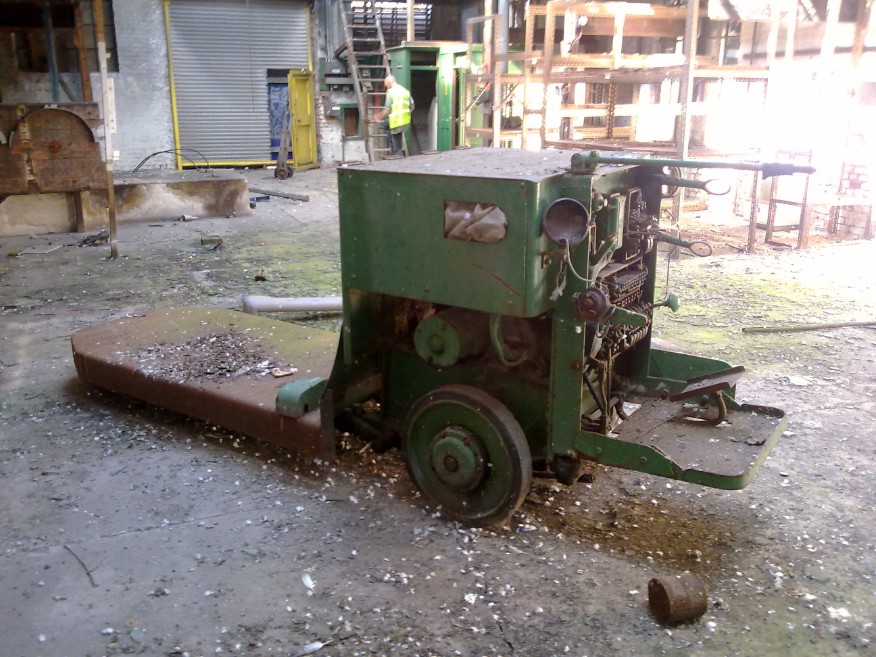
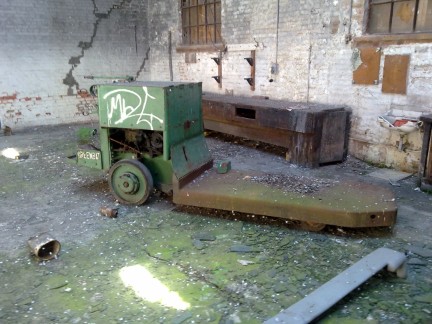
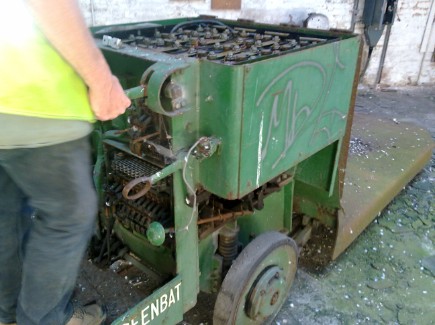
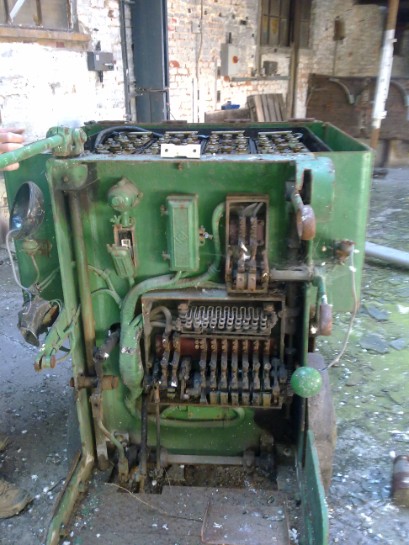
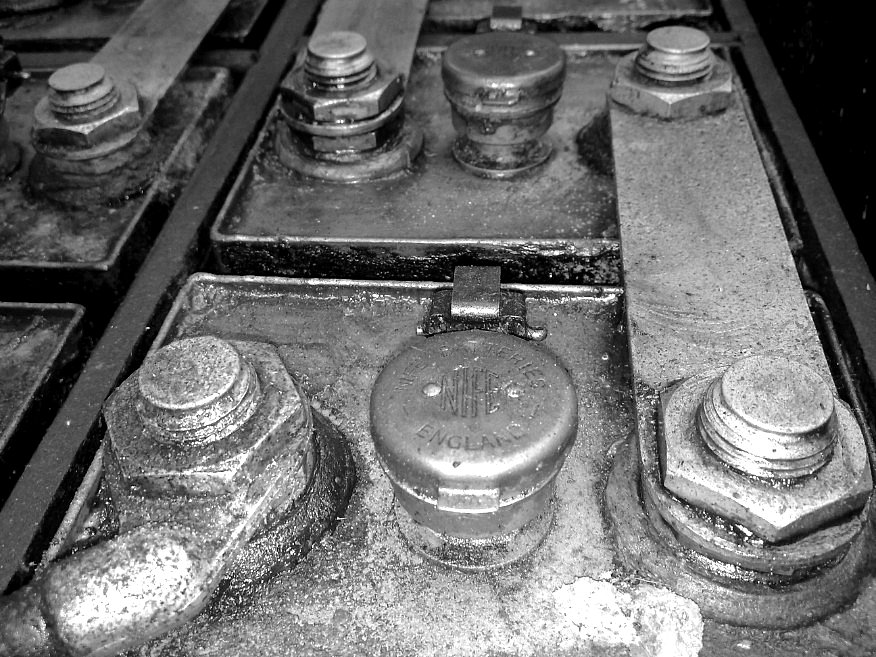
ABOVE & RIGHT: The huge amount of batteries needed to power the thing, also Agent Skyframe demonstrating the control gear. This funny little machine had its own handbrake (in hand), direction lever below and emergency stop button (the domed push button at the bottom of the three). It also had working headlights and a horn or claxon. Note the massive row of contactors (RIGHT).
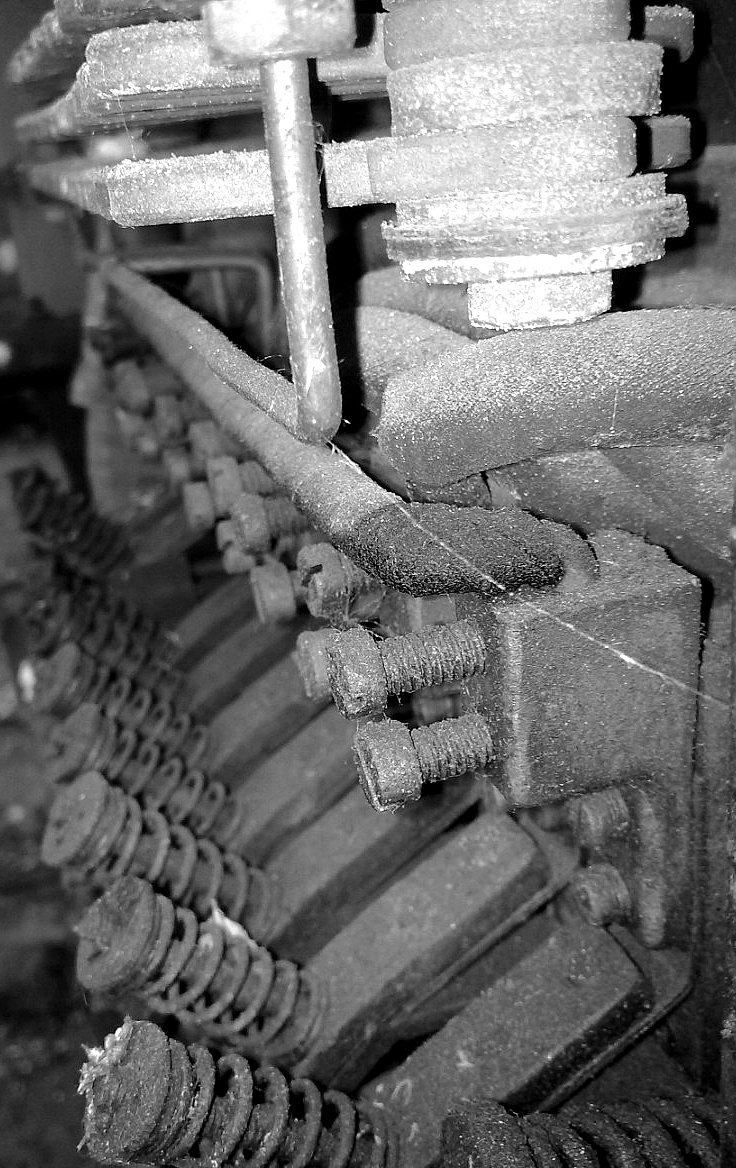
BELOW: Arty black & white shots of the Contactor array and batteries.
********************