C o n n a u g h t H o u s e
Melbourne Street, Lewes Road, Brighton
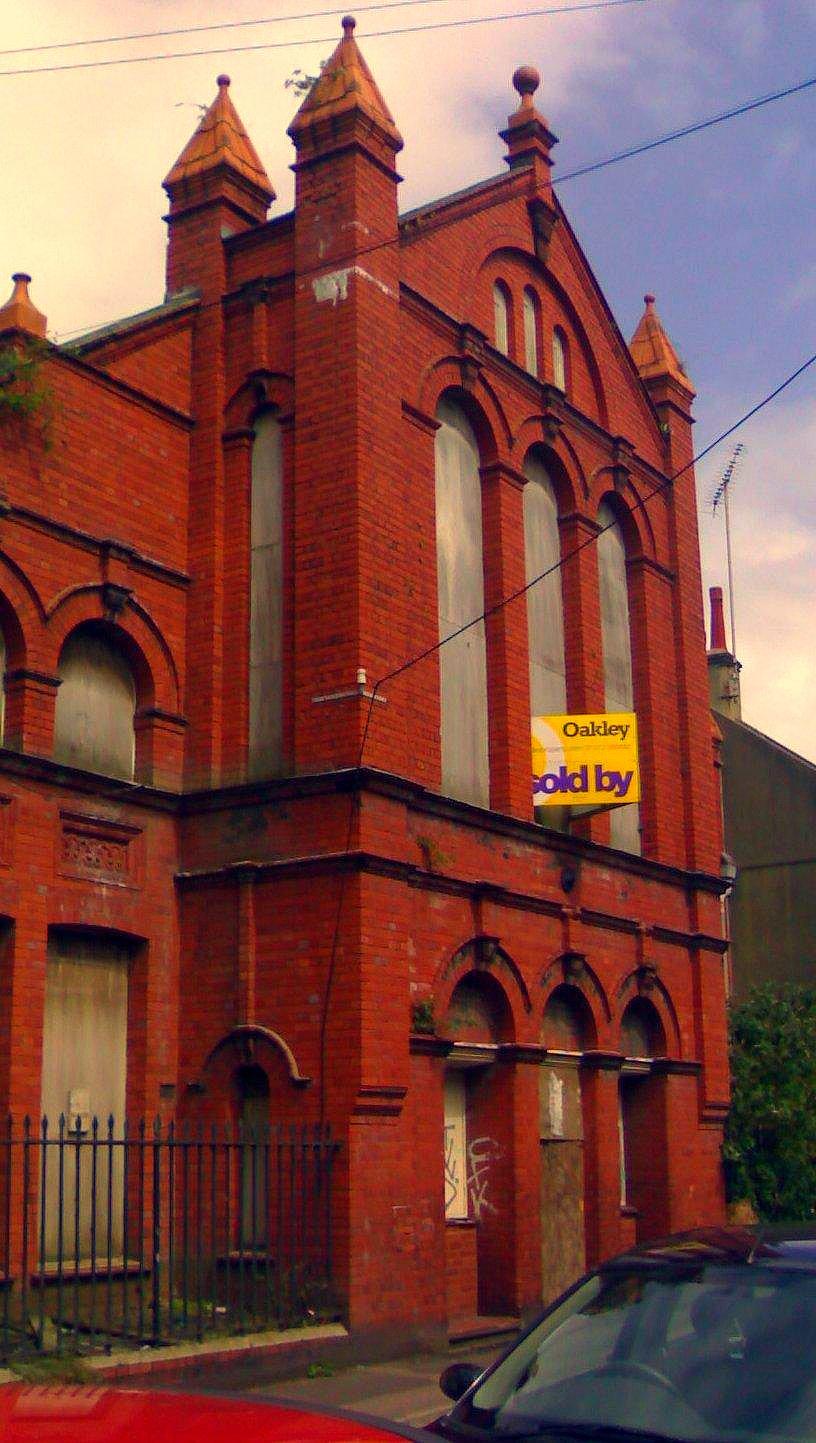
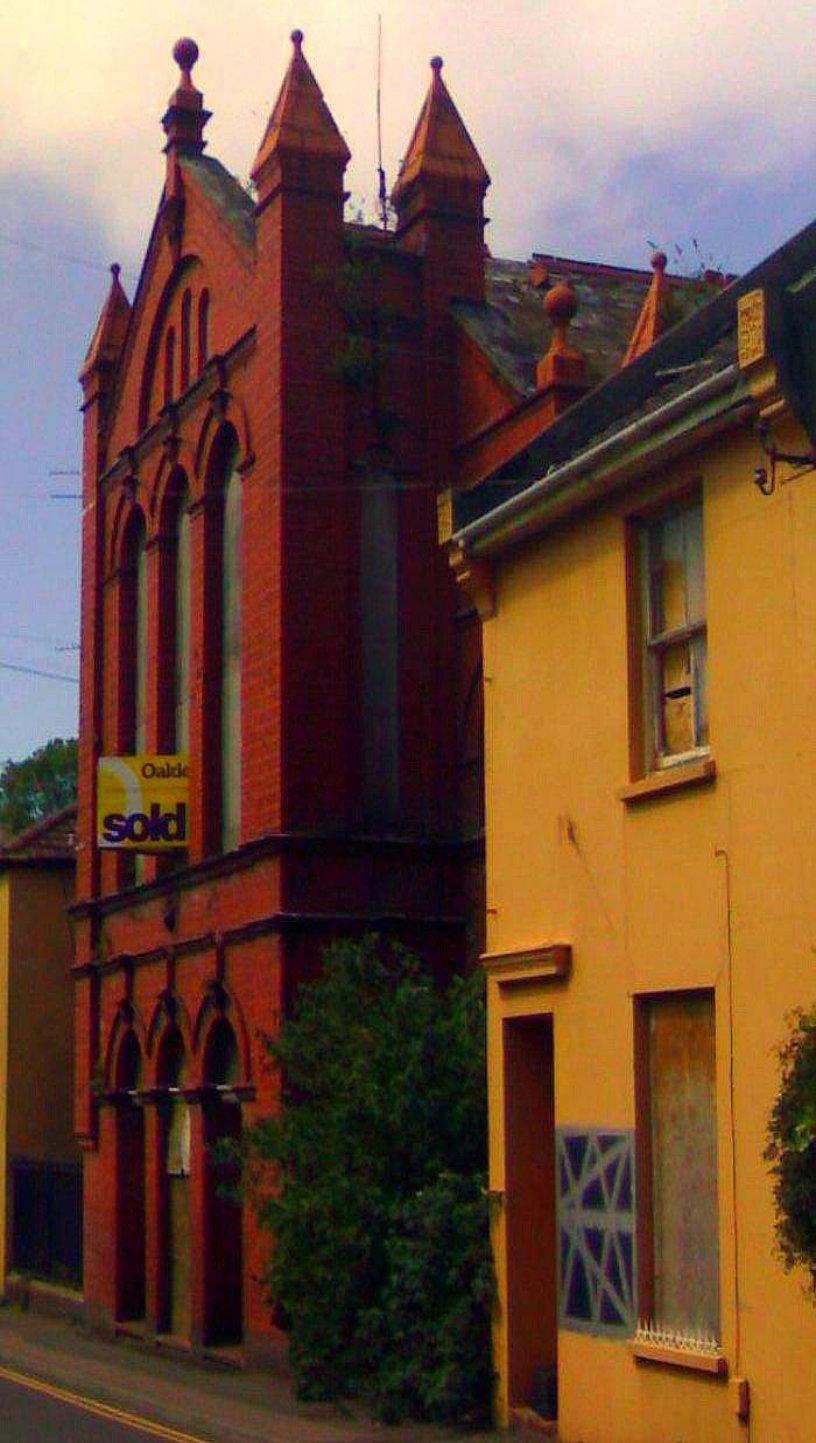
Connaught House, the church like building in Melbourne Street, Brighton was opened in 1879 as a soldiers' home and a mechanics institute.
When it first opened, it housed a temperance bar, reading rooms, a library and lecture rooms. It also housed a branch of tyhe Medical Mission, an organisation which visited sick people in their own homes (now known as Domicilliary Care Work). The fabulous red brick facade which borders Melbourne Street houses a hall, which was capable of seating 1000 in its heyday. It was most recently used by the Connaught Christian Fellowship, but has has also been known as Connaught Institute and The New Life Centre.
It has been derelict since 2006, brought on largely by the relocation of Covers Building Merchants from an adjoining yard and office premises. There are plans currently in circulation to redevelop the site into the dreaded "affordable housing" and it looks as though Connaught House will be demolished. It would be great if they could convert the building into flats as they have done with the church opposite Melbourne Street in Lewes Road.
*** Addendum*** There was an article in the local newspaper (The Evening Argus) about air quality in the Lewes Road Area a few days ago (17th May 2009) and it appears that the problem is so prolific that the council has banned any developments in the area. This means that for the moment, the demolition and subsequent rebuilding on this site has been halted, which has the added bonus of giving us more time in which to investigate the site.
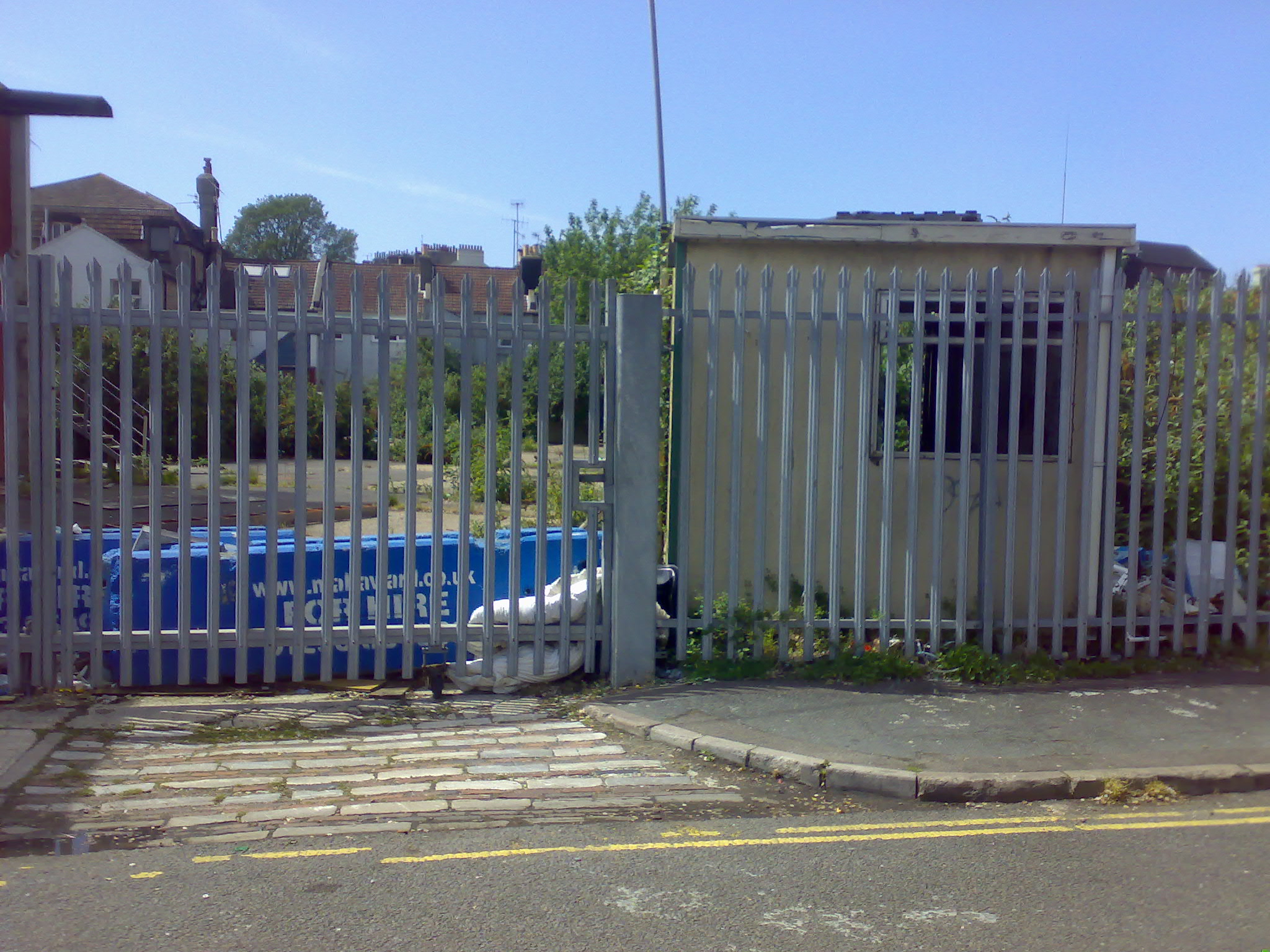
Above: the way in: the recessed bolt on the door makes a handy foothold. The roof and flat pillar top help no end, as does the handy duvet to put over the spikey fence! The blue concrete block makes a handy step up.
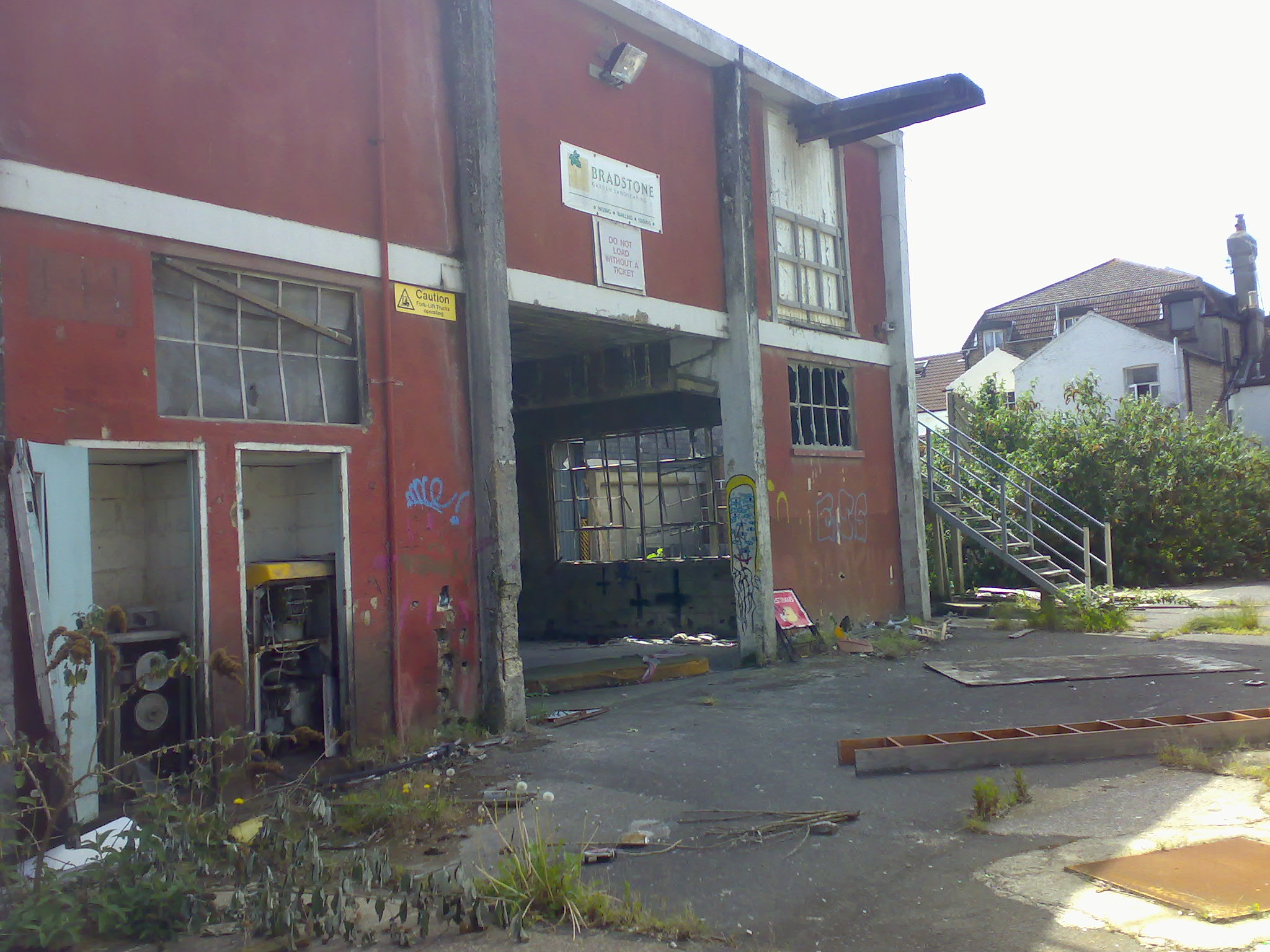
Above: access to the rear of the site looking roughly south-west. The main hall is just behind the flight of stairs.
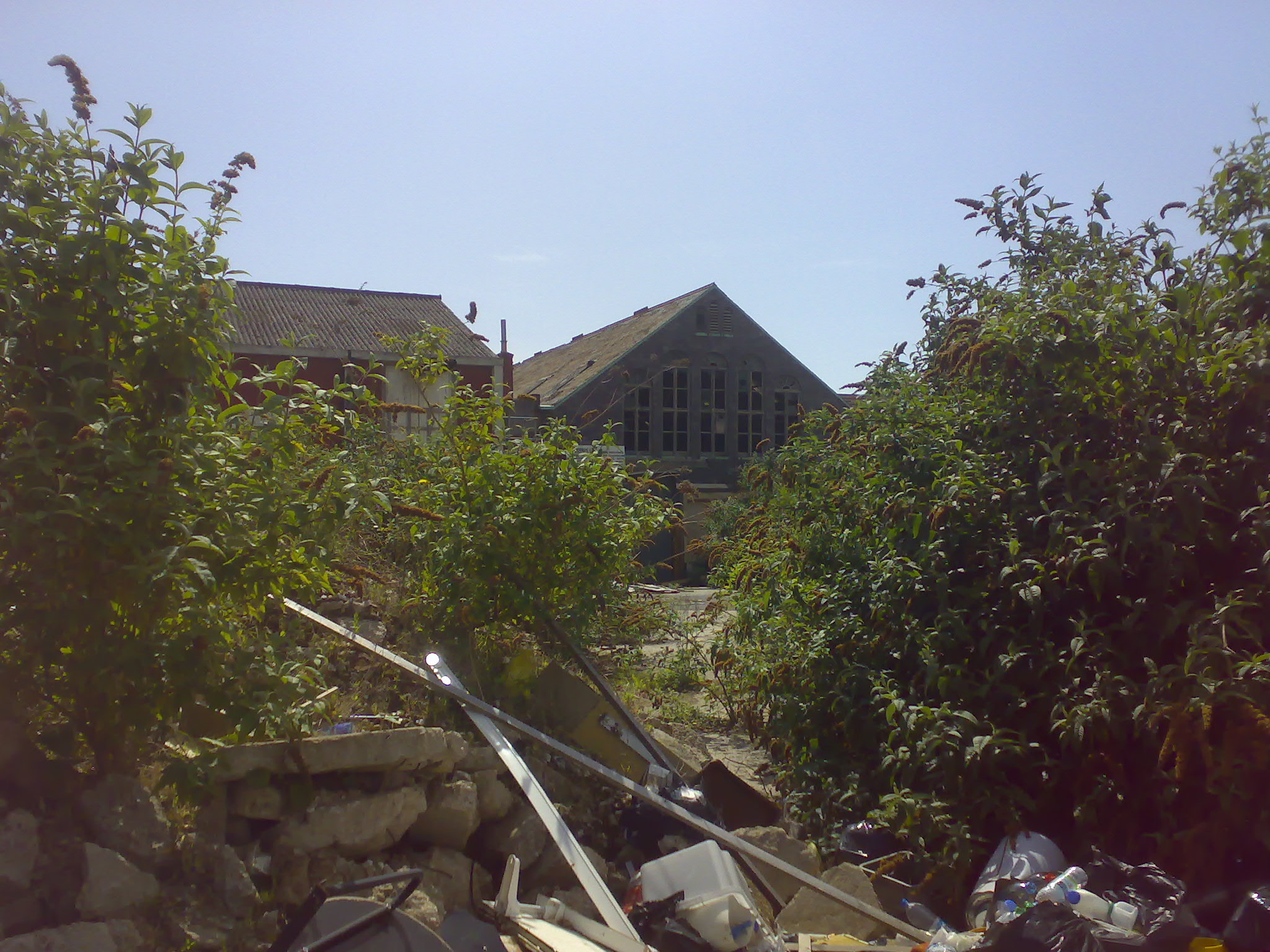
Above: The rear of the building viewed through the fence. It's not immediately clear whether the building is entirely accessible. It looks interesting though! The builders yard in the foreground is host to fly-tipping since it closed in 2006.
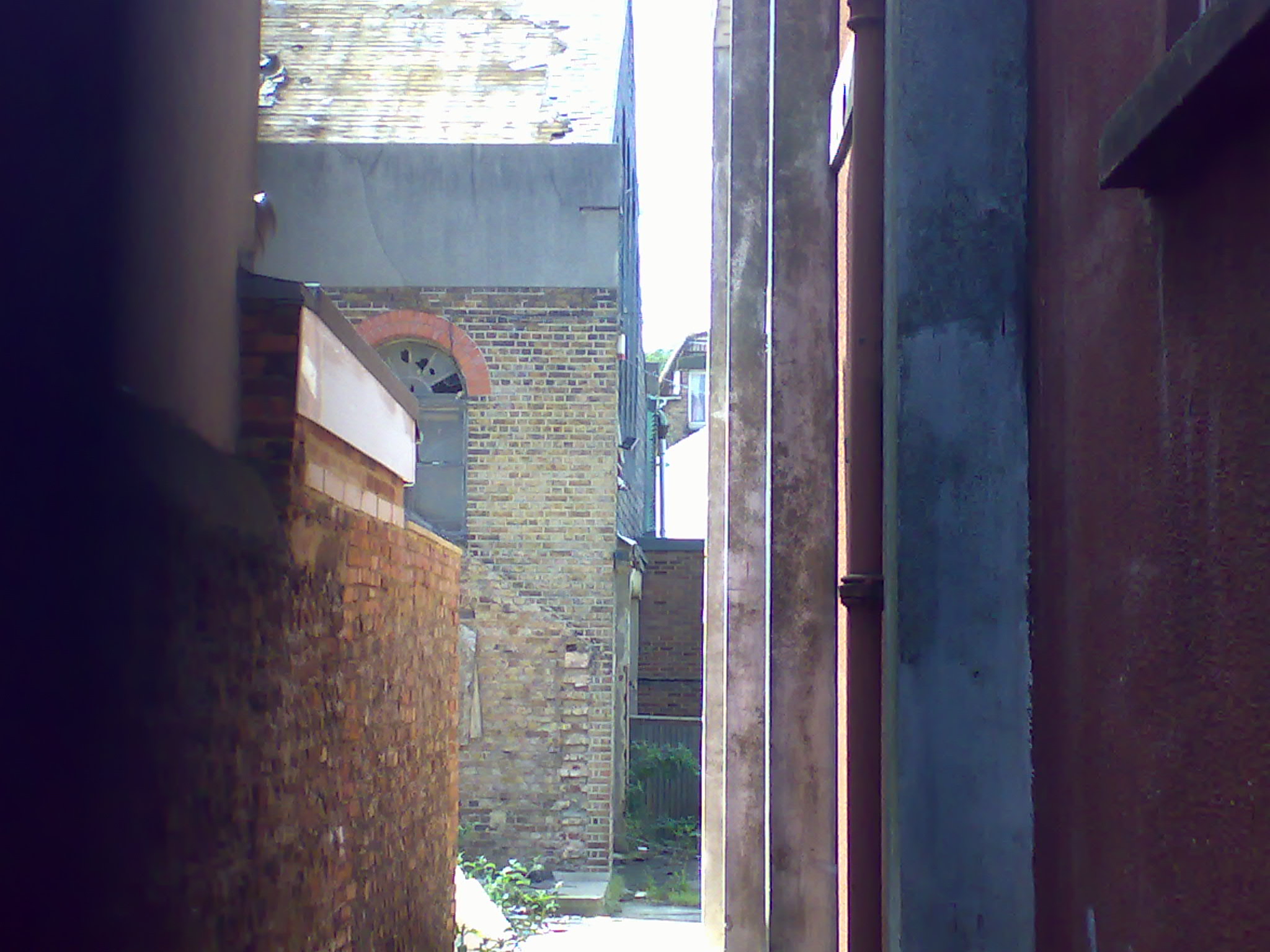
Above: the hall viewed from the east. There is a security grille blocking this accessway.
**********************
S i t e V i s i t
O p e r a t i v e s : G h o s t & S k y f r a m e
A c c e s s / D i f f i c u l t y : 4 / 5
D a t e : S u n d a y 1 7 t h M a y 2 0 0 9
On a particularly wet and turgid Sunday morning, Ghost and ASkyframe met up to have a look round this site. After a quick smoke and a cup of coffee, we had a quick look around the area for potential easy ways in, but the only one looked to be by using the gate and the security hut. As you can see from the photo of the way in, there is a handy recess where the bolt for the gate is and this makes for a useful foothold. The flat top of the gate post and the roof of the security hut are also very helpful. Skyframe was over the fence like a rat up a drainpipe, but Ghost, not being one of natures great climbers, struggled a bit having all the agility of a bag of spuds. However, with the help of a cunningly placed bit of wood with notches in, we both managed to make it into the builders yard around the Hall.
Immediately to the left of the gate is a warehouse type building which we had a brief nose around. This proved quite handy because on close inspection, the electrics for the site are still live and as it spent most of our visit pissing down with rain it was somewhere handy to shelter. There was also a very handy fire escape up to the first floor of this building, from which we were able to get some nice panoramic shots of the rear of the main hall, once Ghost had stopped shaking with adrenaline from going over that damned fence.
We next turned our hands to the task on finding our way into the main hall. The obvious notion of getting in via the large sliding door at the rear of the hall fell flat on it's face due to the large padlock nestling to one side of the door. This would have needed a lot of work with some quite hefty tools. Next we had a quick look at other ways of getting in: there are some lovely big windows at the rear of the hall which are covered by chicken wire to keep the pidgeons out and in places this had been pulled away from the window frames. However, closer inspection revealed that there was quite a large gap between the wall and the roof, so that put a kybosh on that avenue of enquiry.
The only viable access point which presented itself was just to the left of the sliding door. There is a window with what appears to be the remains of a low doorway underneath it. On closer inspection, we found that this was blocked off using the usual plywood sheet, but there was also a bloody great mound of rubbish piled up behind it which we just couldn't shift. We were just about able to move the top left hand corner enough to see daylight inside and to find that there was what looked like a sofa on top of the heap and possibly a piano leant up against it, but sadly not big enough a gap for either of us to squeeze through.
We did wonder if the derelict Victorian house to the left of the Hall would offer us any alternative ways in, so we crunched our way over a huge pile of broken slate roof tiles and through a Ceonothus hedge towards the house. An outbuilding at the rear of the house looked promising, but closer inspection revealed it to be adjoining the house rather than the hall and we concluded that it was probably the outside toilet (although the total absence of said toilet had raised our hopes somewhat).
There was no other way into the Hall via the house and it looked as though it had served fair time as a squat, due to the huge proliferation of "Special Brew" drinks cans around the place. One thing which was curious was that there was no consistency to the debris strewn around the place. In the same room as an upturned trolley full of lumps of concrete, we found the remains of a sattelite receiver and quite a serviceable looking toaster. The house was a total mess and interestingly damp and spooky, but not really what we had come for, so we turned our attention back to trying to get into the Hall, our ultimate goal.
Now Ghost and Skyframe, both being of the engineering persuasion, decided to take advantage of the abundance of timber around the site and use it to provide levers, props and in one instance a battering ram in order to gain access, but to no avail. This was causing far too much noise and with the site being in the middle of a highly residential area, I think just about everyone must have known we were there. There was one "pants fillingly worrying moment" when a police car went past, but we later found it outside Sainsburys....
Sadly, we admitted defeat with the main hall, but agreed to return on a weekday at a later date and give it another try. It was quite frustrating being just a few inches from success and we had toyed with the idea of getting an arm around the ply board and just taking some photos like that, but I'm quite attached to my trusty camera phone, so we decided against that.
And so we departed for the gate and spiky fences of the exit, defeated on this occasion but determined that we should not give up and come back to try again. Once outside the site, we did find one last suprise. We walked around to the front of the hall, which is beautiful terracotta brickwork and has cast iron railings on either side of the heavily boarded-up doorway.
What we found curious about the entrance was that behind each area which was fenced off with the railings was a layer of built up plywood on the floor and on closer inspection, we found these sections to be hollow. A bit of creative use of our flashlight revealed that there is a basement to this building, something which is not at all apparent looking at the rear of the place. On close inspection we found that the floor of this basement was some 30 foot below the pavement surface and that there was a boarded-up doorway down there but there was no possible way of getting down there: as I have mentioned, the area is largely residential and we would have needed some mightily hefty tools to get through the layers of Ply and pigeon shit. We are guessing that there must be a stairway somewhere under the plywood sections which leads down to the doorway, but as I say, this wasn't an option to consider for access.
And so we concluded the morning's activities...
ABOVE: This is the way in. Note the recess in the gate where the latch is and the flat top to the gate-post. Note further the lovely flat roof on the security hut and the duvet (which if you were really devious, you could put over the nasty spikey fence). Very handy.
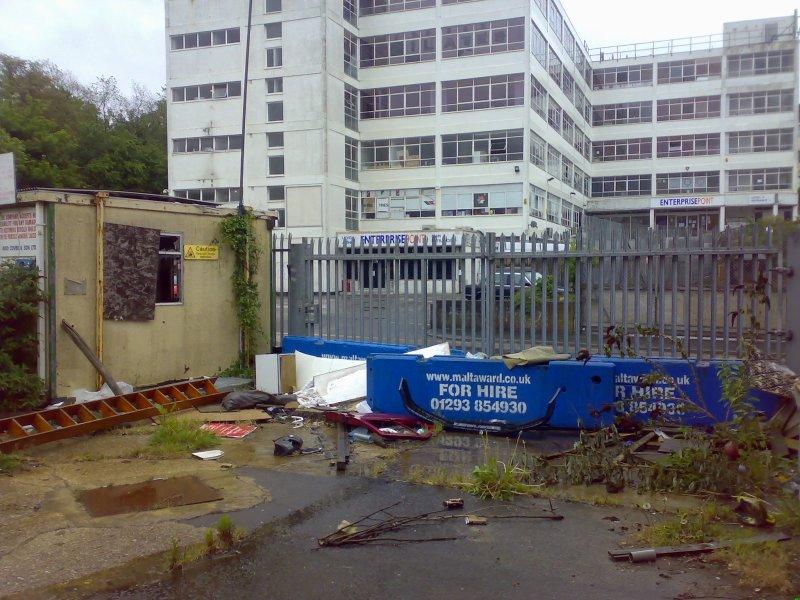
ABOVE: The view in the opposite direction. Is this a good idea? It's also interesting to note that the Kemptown Railway Viaduct came through this corner. The brick pier would have stood just behind the security hut, on the left. More details about the Kemptown Railway can be found HERE
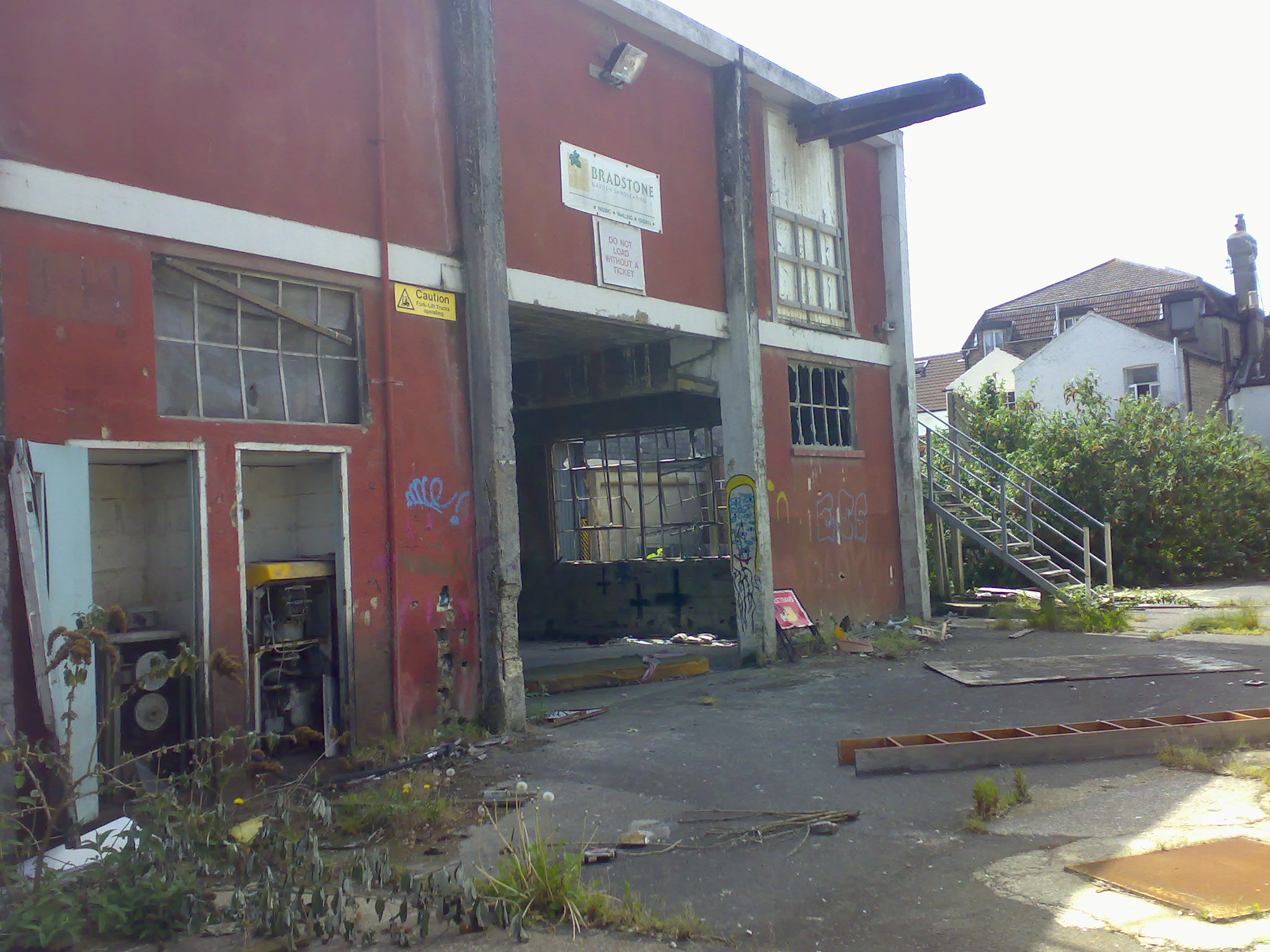
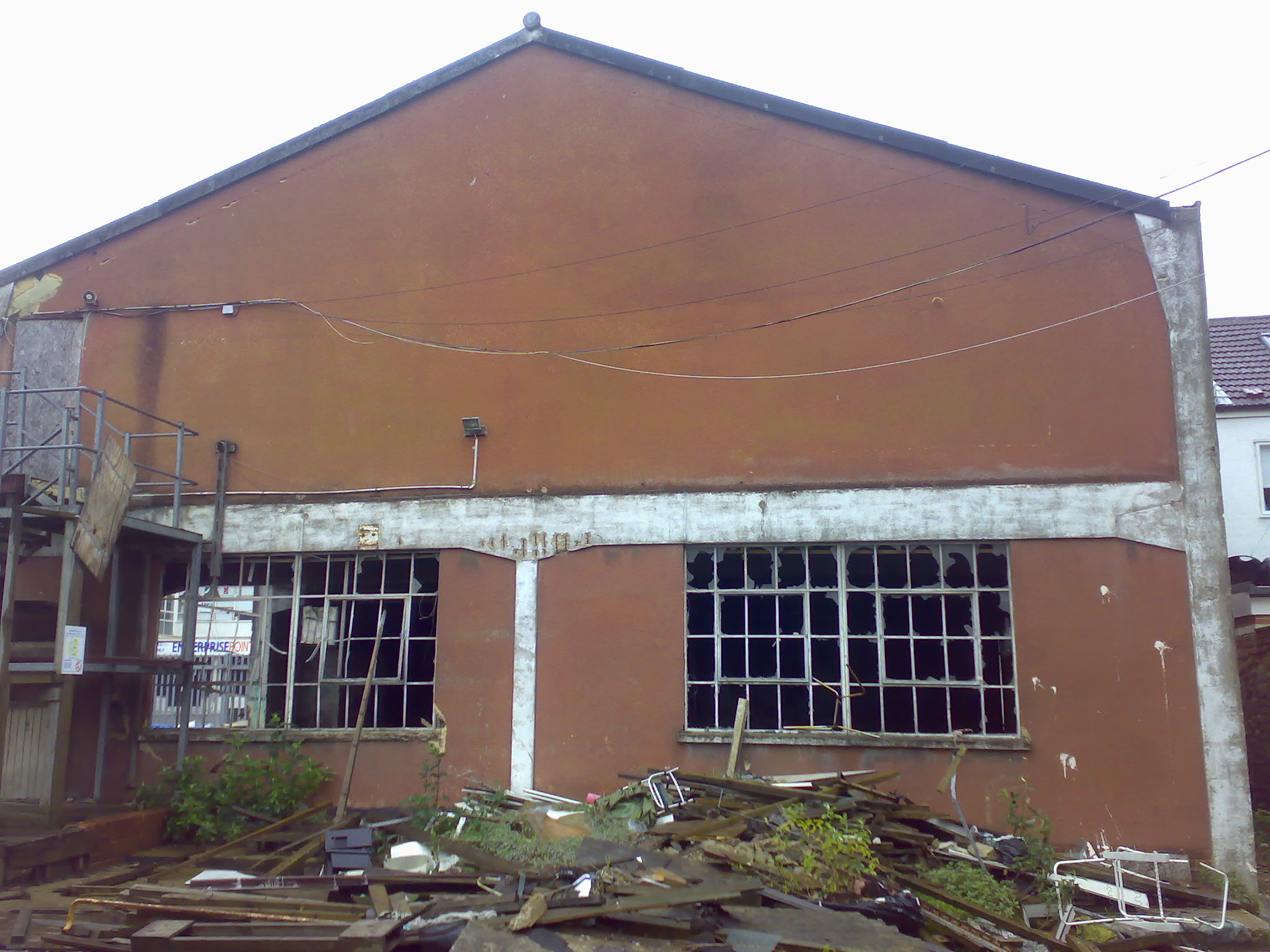
ABOVE: This warehouse type building is just to the left of the access gate and while there wasn't much in it that worthy of note, the stairs up to the top level allowed some good panoramic shots of the Hall, which is just round the corner of this building (to the left)
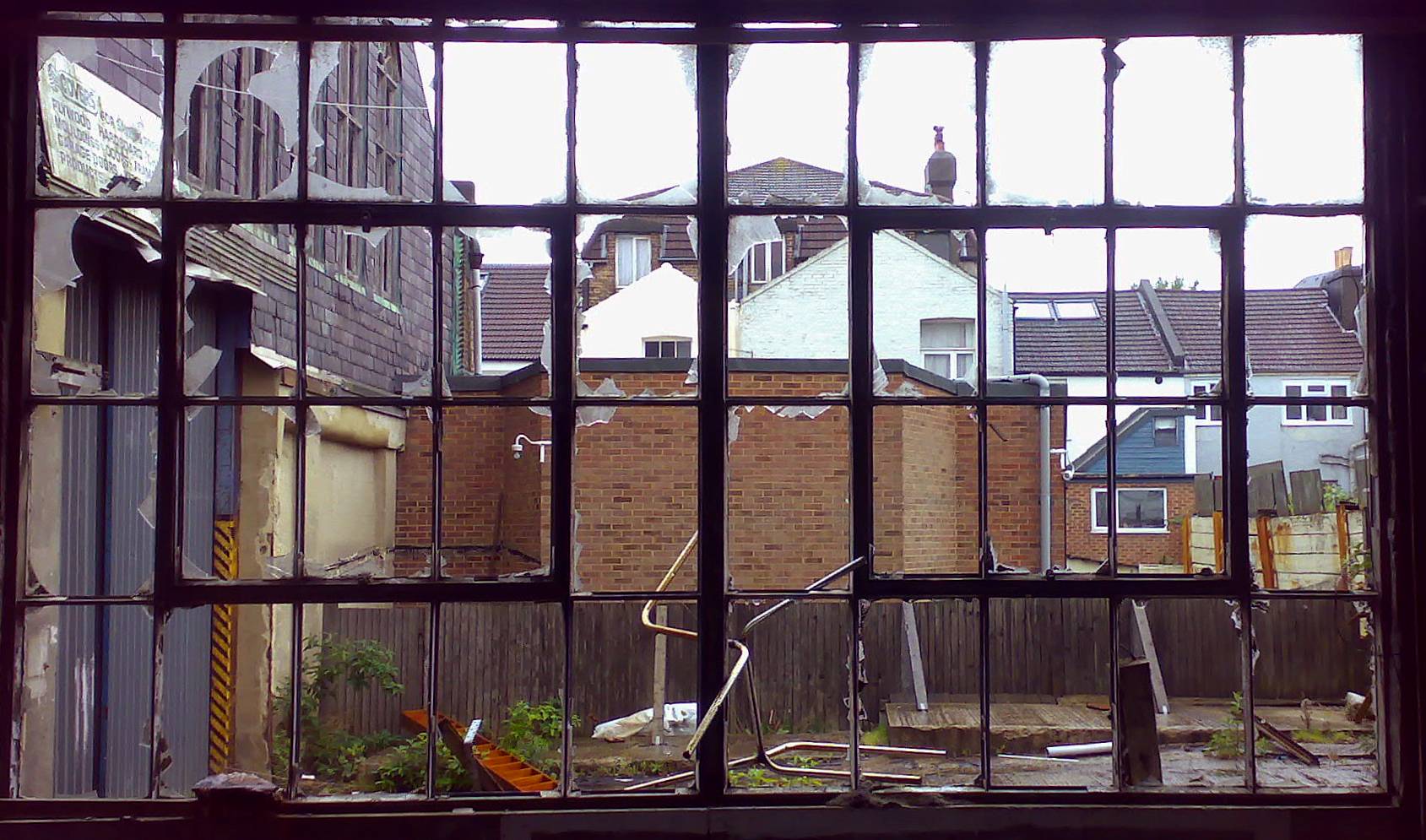
ABOVE: An arty window shot looking out from the ground floor of the warehouse. This view is looking due west. The back of Connaught House can be seen on the left.
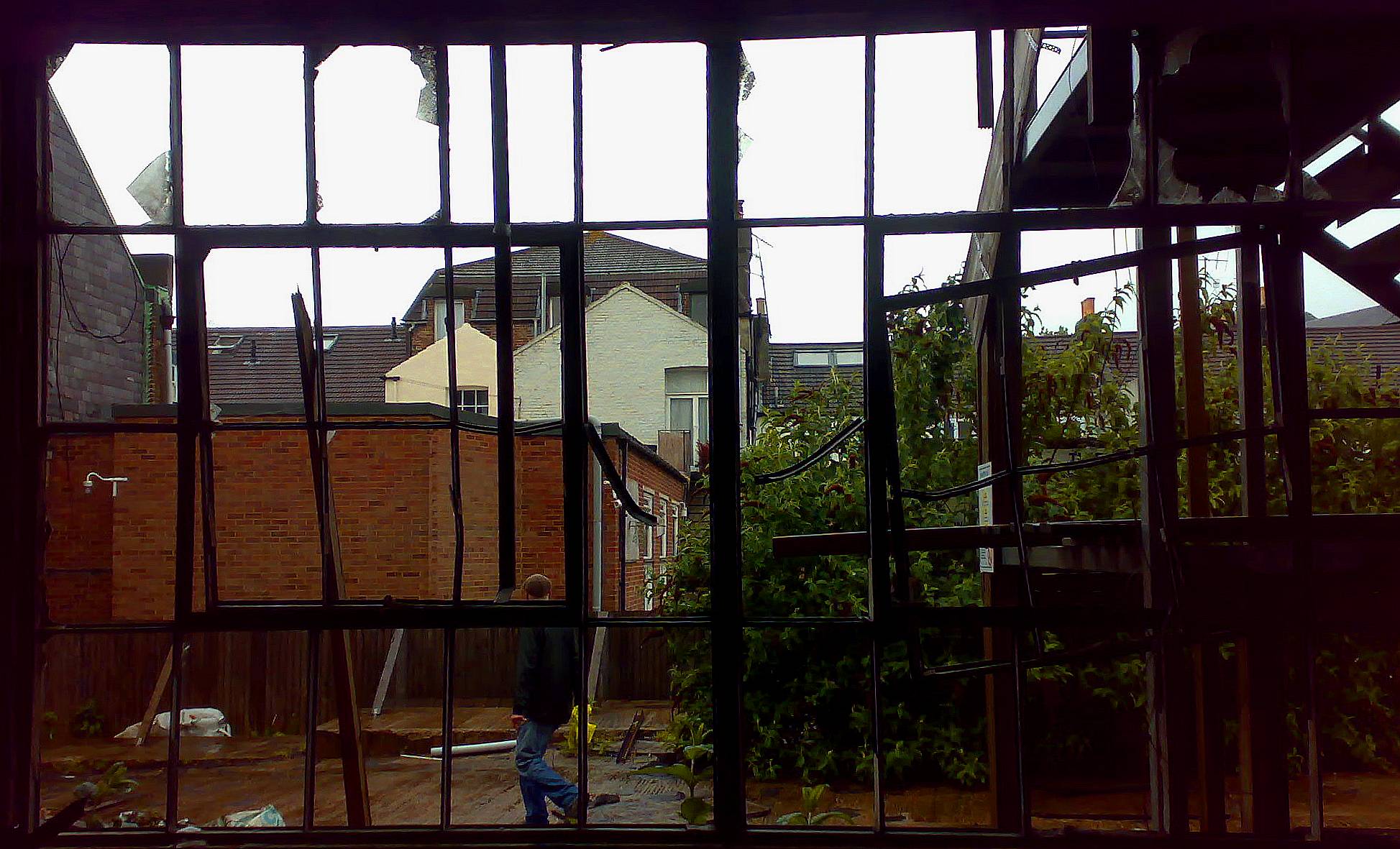
ABOVE: Agent Skyframe has a quick rekke for ways into the hall.
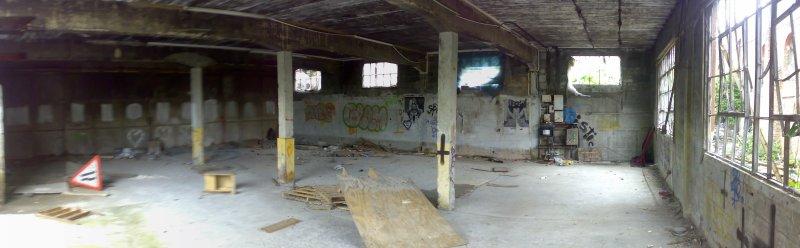
ABOVE: Inside the warehouse. As I said, there wasn't much in here that was of much interest, apart from some vaguely pornographic posters on the walls (thankfully not clear in this picture). It was quite handy to shelter from the rain in here, as the morning we went for a look round it was pissing down with rain.
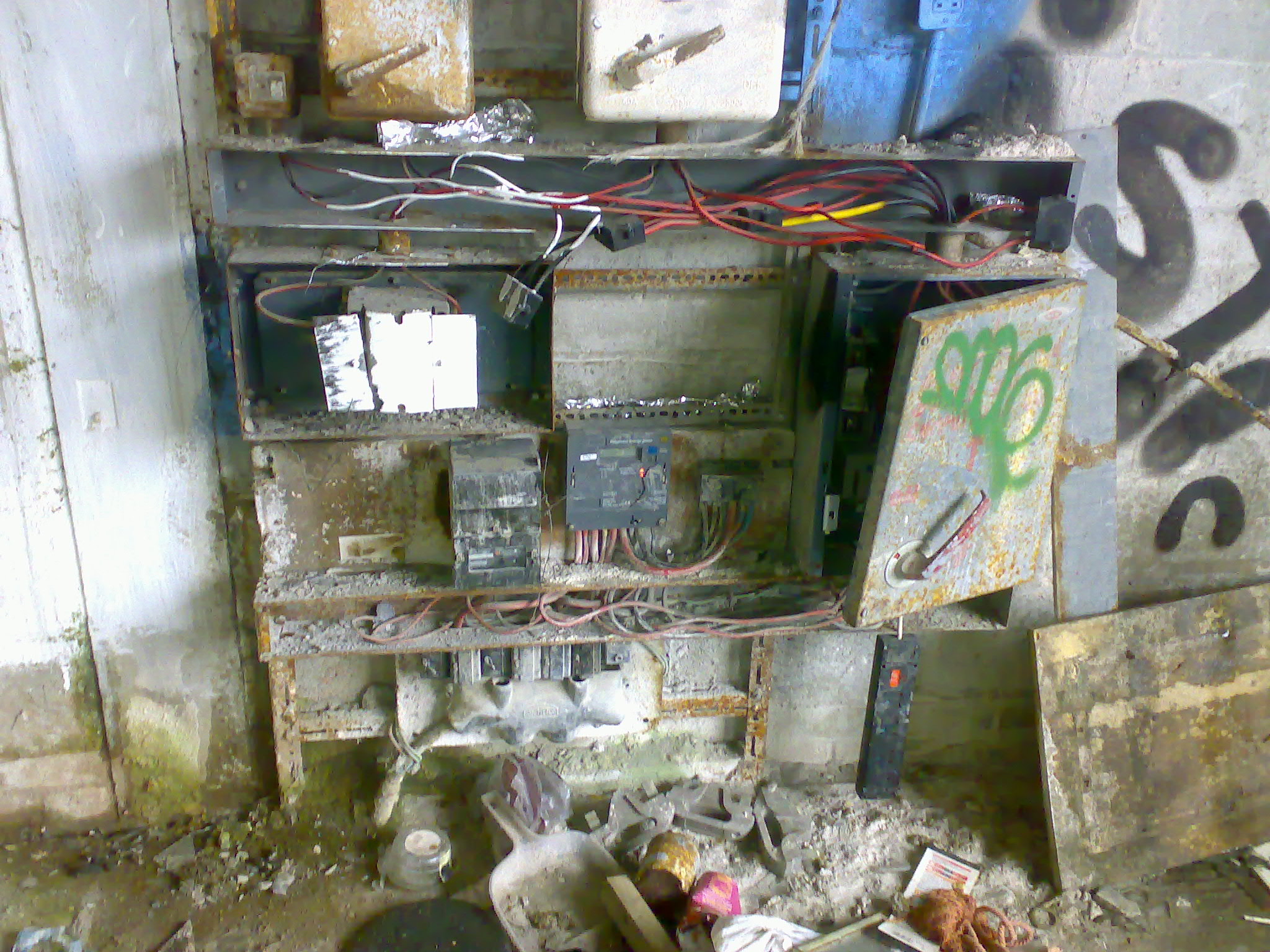
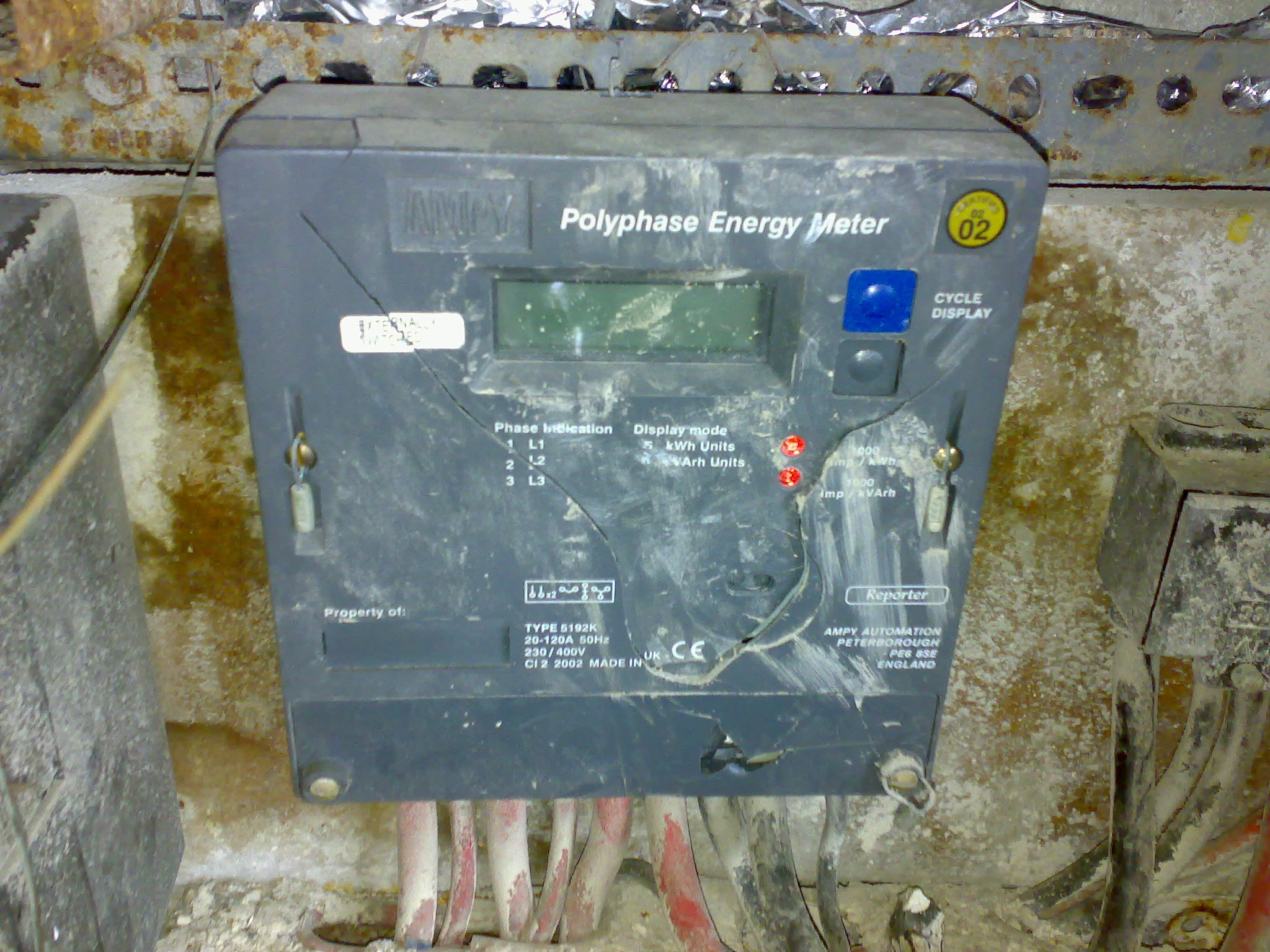
ABOVE: These shots of the electrical equipment in the warehouse show that it was all STILL LIVE. Note the red lights on the energy meter. I was finding a suitable spot for a wee at the time and I'm quite glad now that I didn't do it here....
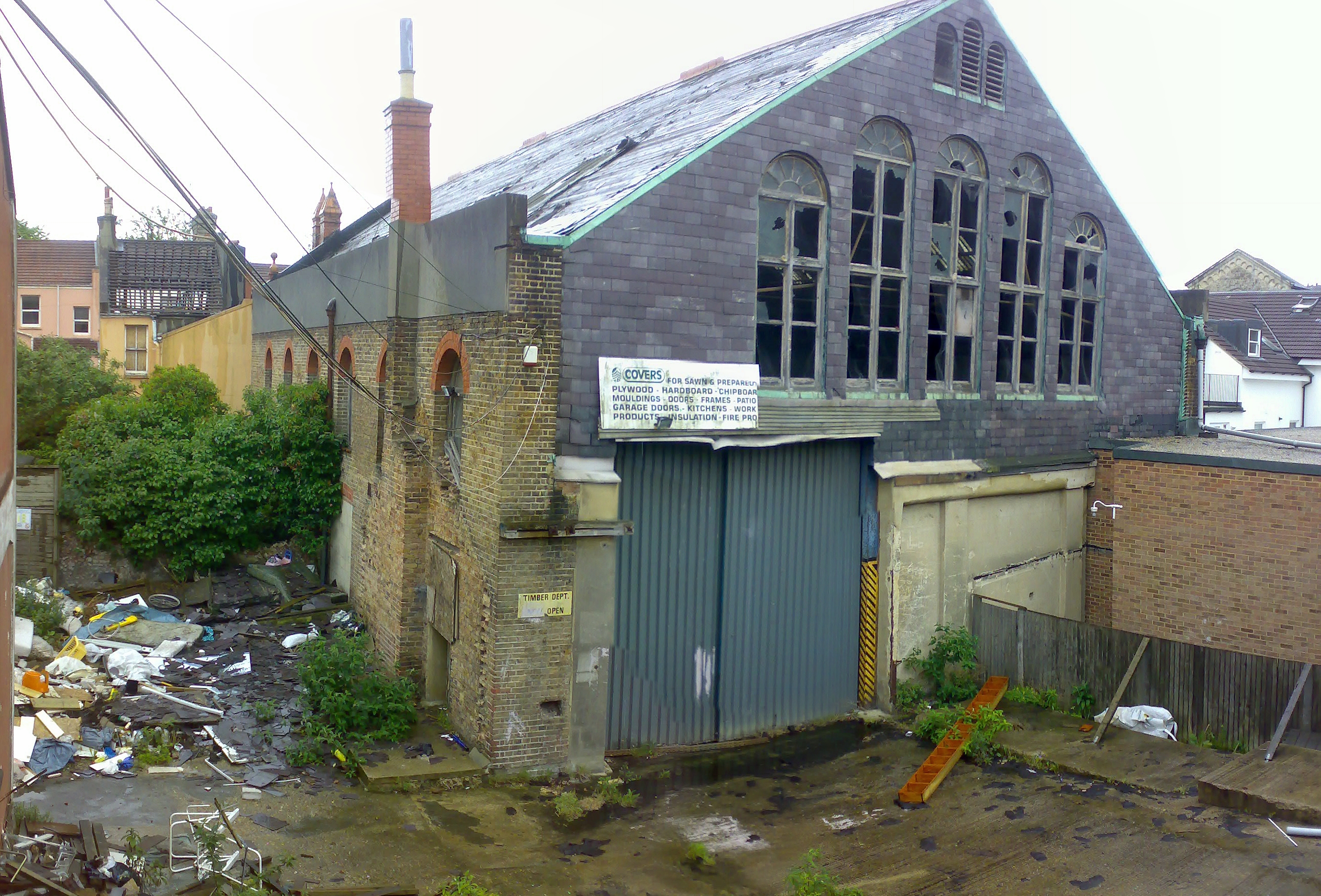
ABOVE: This panoramic photo shows the rear of Connaught House, our eventual target. It is a very pretty building from all angles and I love the windows. The obvious point of access (or so we thought) might have been the sliding door, but some one had very inconveniently left a bloody great padlock on it. The only way we could have got in is just to the left of the sliding door, where the board is attached to the wall. Note the derelict house, top left of the photo: we got in there, no problems.
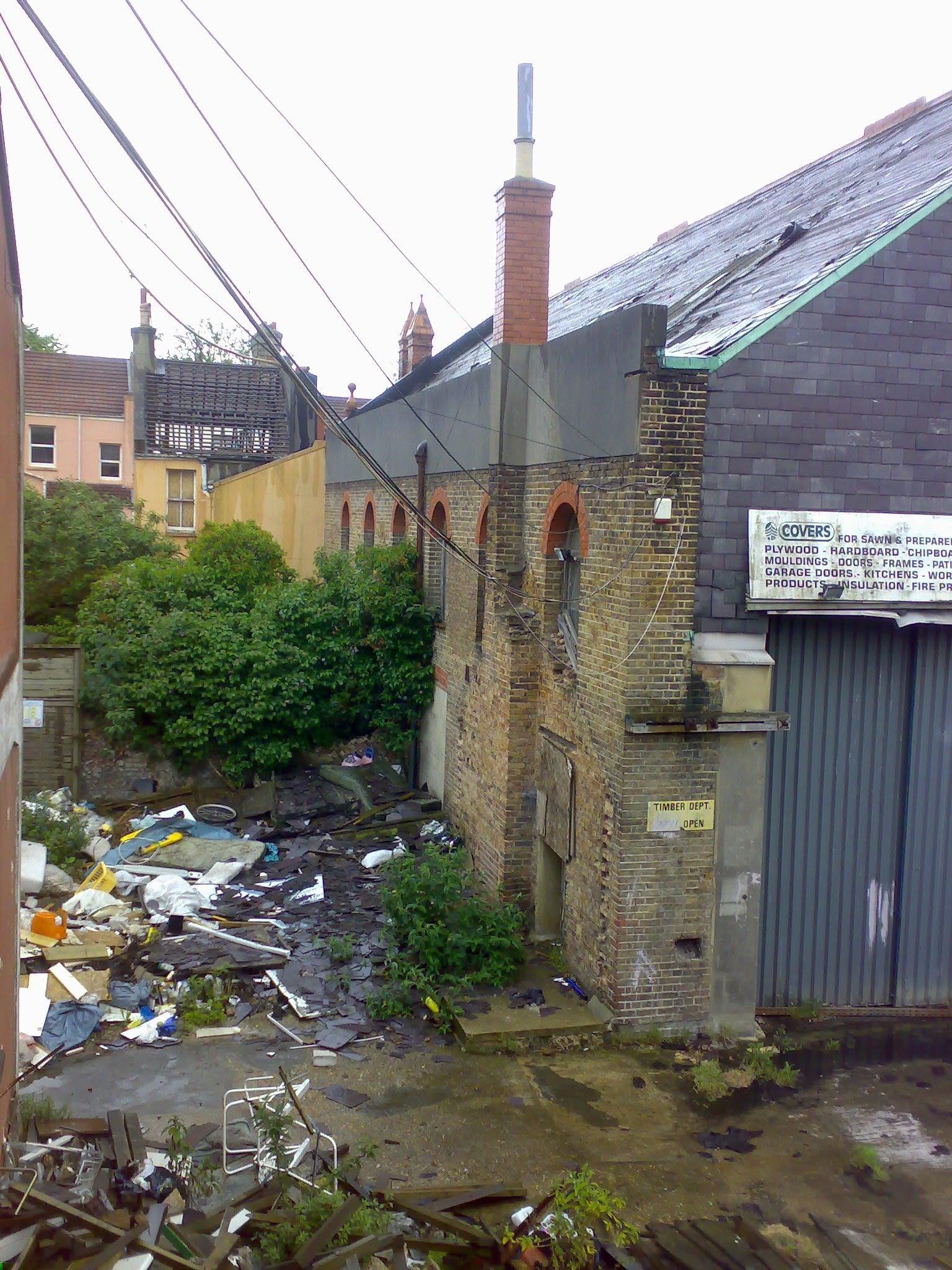
ABOVE: Close shot of our only possible way in. The little doorway behind the board has also been boarded up from the inside, but it is just possible to see into the hall. Unfortunately, there was a huge pile of crap behind the inner board, which was impossible to move very much. We did try and lever it out the way and prop it up or move it, using the huge abundence of timber around the place, but this was quite noisy and as the area is largely residential, we had to admit defeat on the main hall. We're thinking about going back on a week day and having another go. Watch this space....
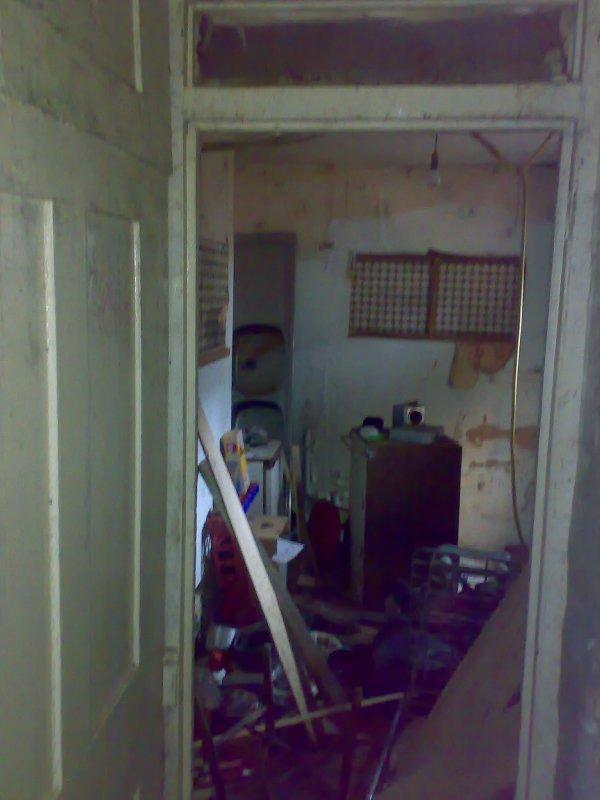
ABOVE: Remember that little derelict house? We got in there okay. Not quite the same, though...
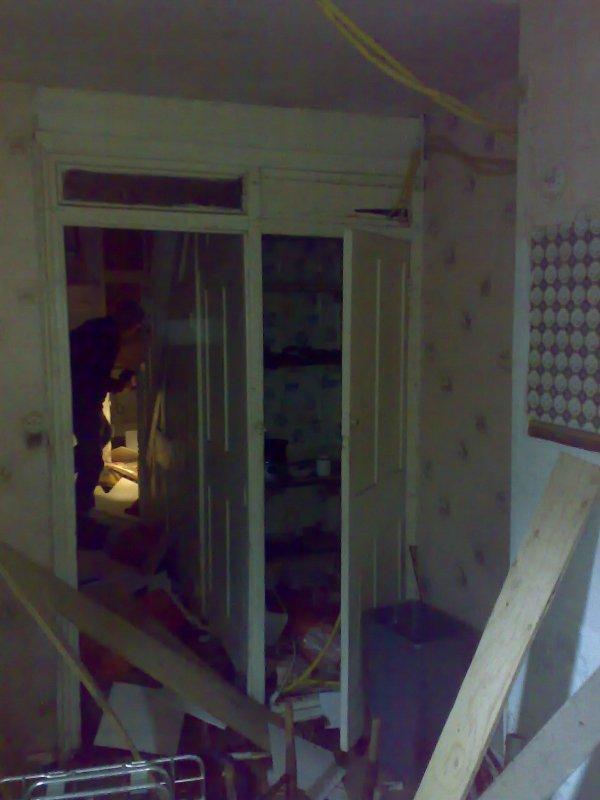
ABOVE: Agent Skyframe in best "burglar" pose. The spotlight is 1million candella and the best £20 I've spent for some time! This place had been used as a squat some time previously and was absolutely crawling with Special Brew cans. We were quite intrigued by the incongruity of the debris inside: there was an upturned shopping trolley full of lumps of concrete and yet, not far away, there was a sattelite reciever and quite a serviceable looking toaster. Weird.
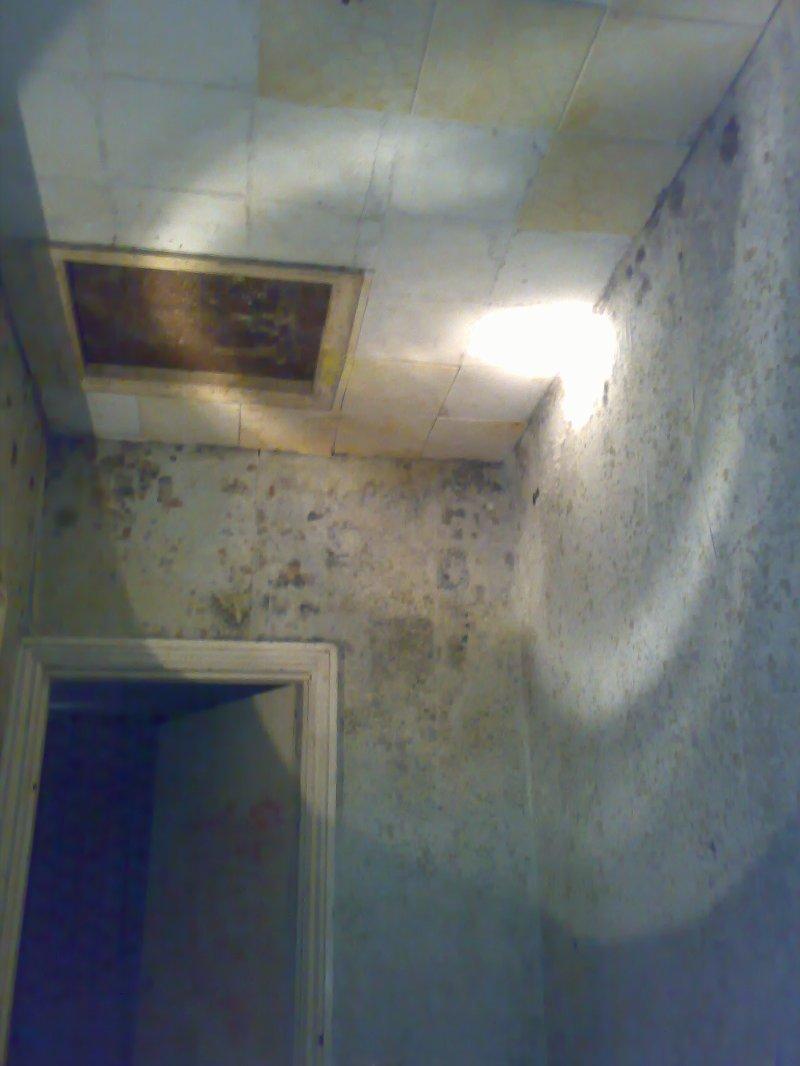
ABOVE: Bit of a silly photo, but we were having a great time arsing around with the spotlight. There's no roof left on this place and it was quite annerving standing in the gloom being dripped on from sources unknown. We were wondering whether we could get into the hall over the roof, but only for about 3 seconds. Climbing and heights don't agree with me. The damage caused by the damp is quite tremendous: the building has only been derelict for about 3 years.
ABOVE: This is the fabulous terracotta frontage of Connaught House. Behind the railings there is a layer of plywood on the floor that doesn't look quite right. We had a closer look and through a gap in said wood, we found a 30foot deep drop to what appears to be a cellar level. There is a doorway boarded up down there and we are guessing that there must also be a flight of stairs leading down to it around the frontage somewhere. Despite the flimsy boards, which could be removed by any intending investigators in minutes, this end of the site is a highly residential area and is overlooked directly from the main Lewes Road, a horribly busy thoroughfare. Maybe if we have better luck on a return visit, we could get to the bit downstairs.
EPILOGUE
22nd December, 2009 onwards.
Seeing as this fabulous building is literally a stone's throw from where I work, I thought I would pop down and see what has changed.
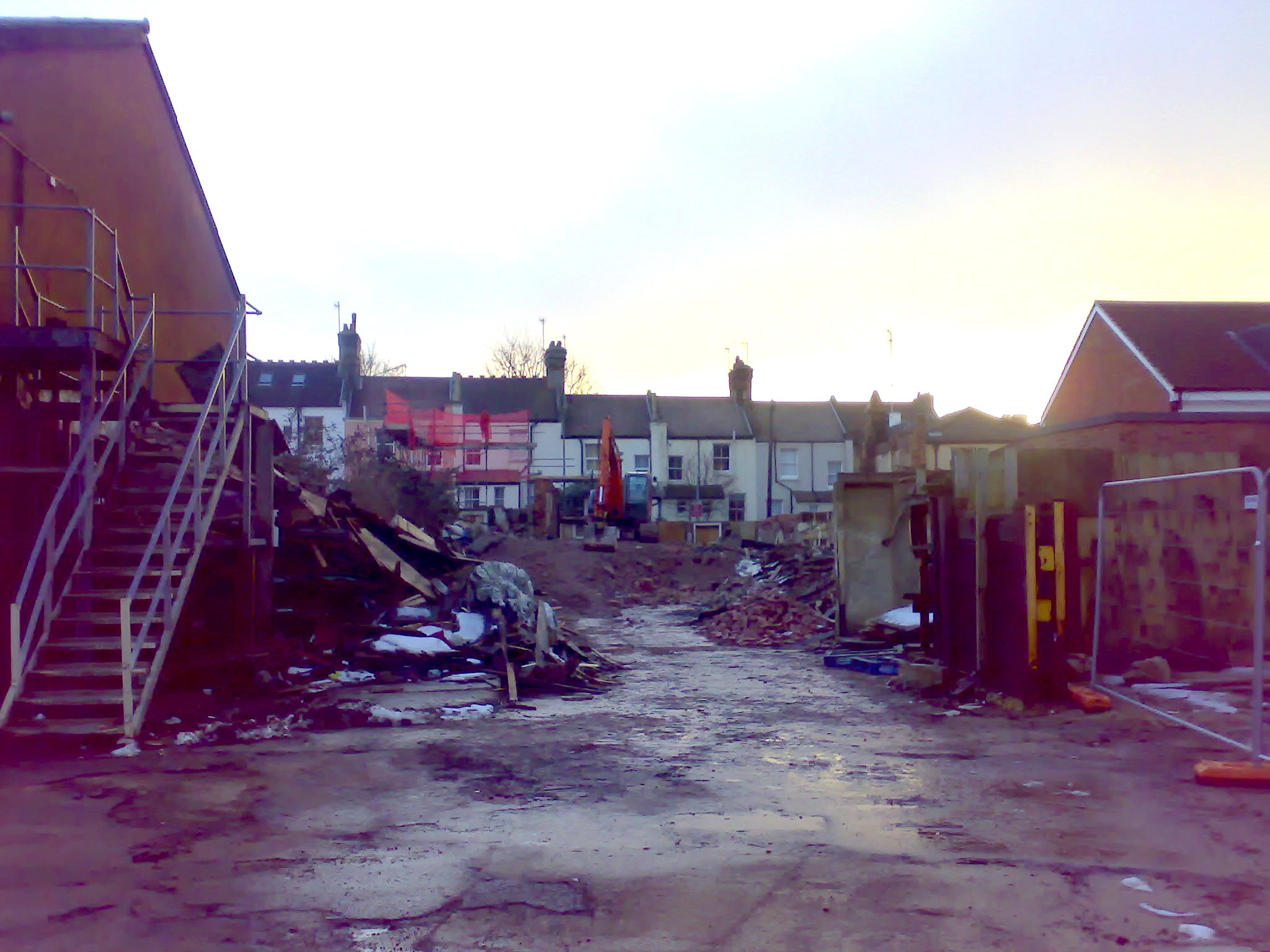
Much to my horror, demolition has been going on for quite a while and the majority of the site has now been cleared. I was really hoping that the developers would try and integrate such a characterful building into the frontage of any future development, but it looks as though this will not be the case - very sad.
This webpage now serves as the only reminder on the internet of this fantastic and very beautiful building and testament to the characterless dross that will invariably replace it.
Ed.
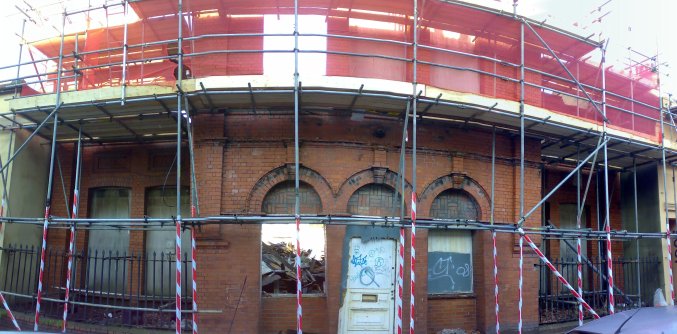
ABOVE: Going...going... The top third of the beautiful terracotta brick facade has gone! I will be back over the next couple of weeks as it comes down. The building beyond has vanished, as is evident from the pile of rubble visible through the window.
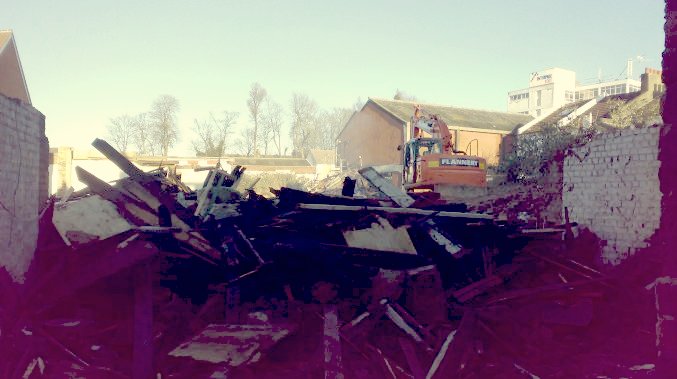
ABOVE: Connaught house has been razed to the ground and with the exception of the last 2/3 of the facade, is little more than a pile of rubble now. The building just beyond the excavator is the building where we sheltered from the rain on the first visit.
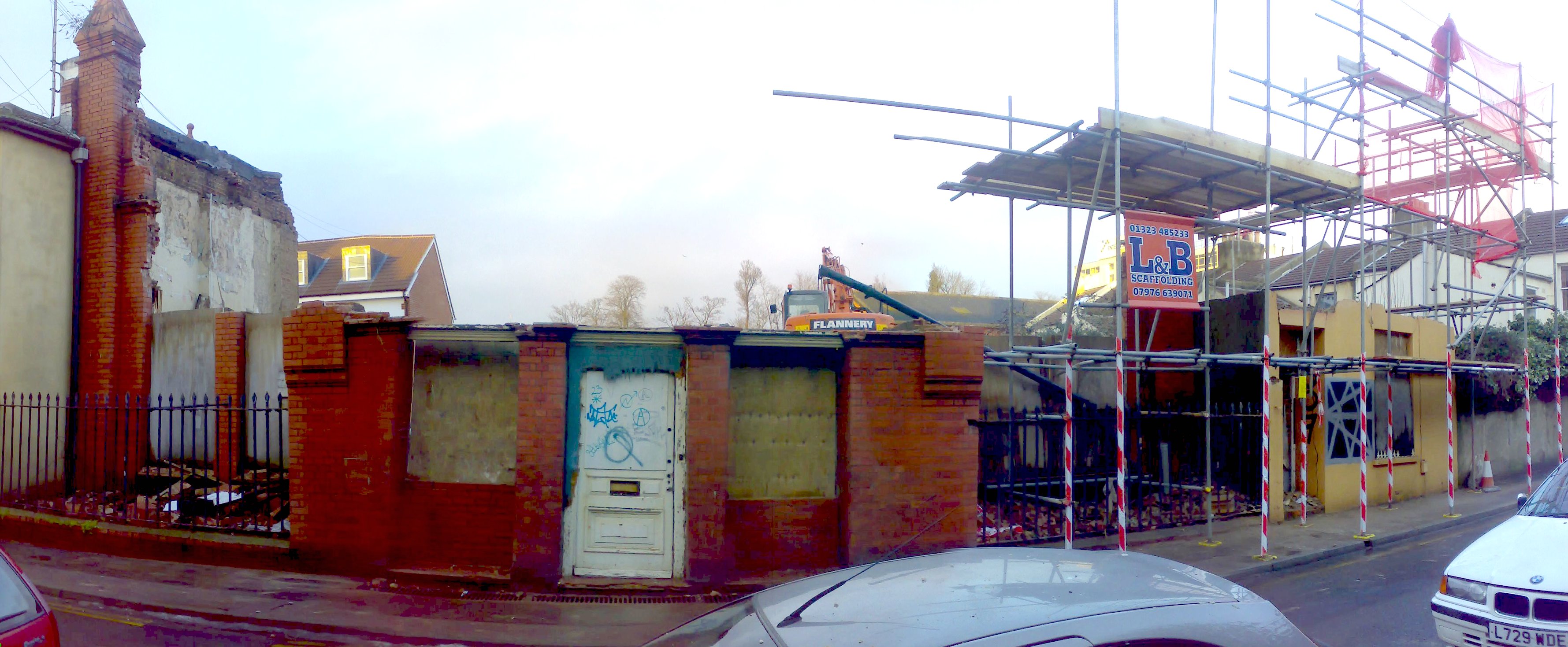
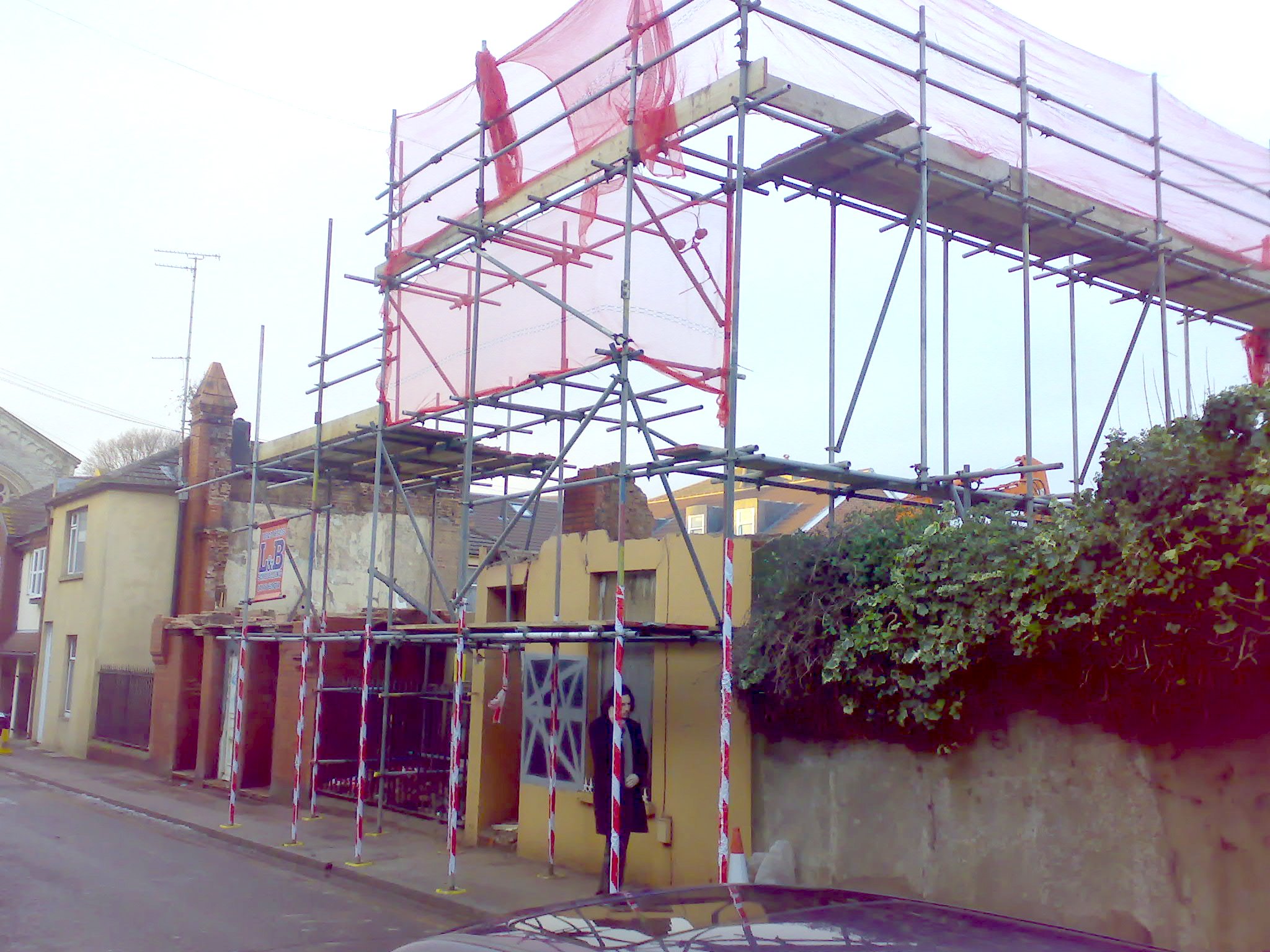
ABOVE & BELOW: A few days later and another storey has been taken off the height of the old frontage. Sadly, on subsequent visits to the site, the developers couldn't even be bothered to afford the building the dignity of completing the demolition. They took the height of the frontage down to just above the height of the hoardings and then left it, along with any brickwork attached to the adjoining properties and this is the way it has remained ever since. As at 7th February 2012, the site behind is in the process of being redeveloped and a multistorey block of flats (totally out of keeping with the surrounding area) has suddenly sprung up. The frontage hasn't been touched at all.
***************************************************************************





****************************************************************************